
Semen Indonesia Drives Building Materials Innovation Through Global Collaboration
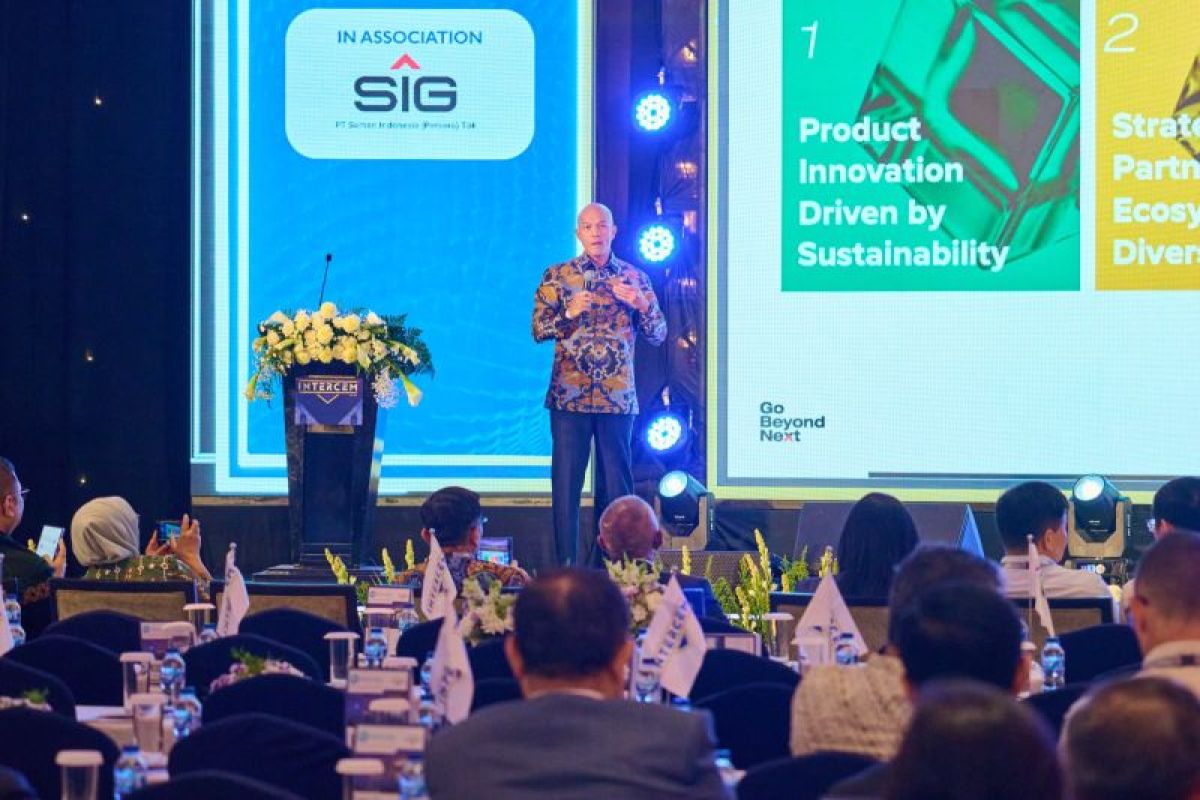
Jakarta (ANTARA) - PT Semen Indonesia (Persero) Tbk (SIG) is promoting strengthened global collaboration to develop innovations in building materials and sustainable supply chains through the INTERCEM Asia 2026 event.
SIG’s Deputy Director Andriano Hosny Panangian stated that this initiative forms part of the company’s transformation towards a more customer-oriented (customer-centric) and high-value-added business.
“The building materials industry in Indonesia has a very large ecosystem, where the cement industry only contributes around 11 percent of the total construction material costs for buildings,” said Andriano in his statement in Jakarta on Wednesday.
He noted that there remains 89 percent potential in other building materials that can be developed in line with the continuously increasing construction needs.
According to him, SIG also possesses significant distribution capabilities and networks in the industry, enabling the optimisation of derivative product development.
“Therefore, SIG is moving towards a more customer-centric and value-driven business by continuously innovating to introduce derivative products,” he said.
Andriano emphasised the importance of improving energy efficiency so that the company can be more adaptive to business dynamics.
He explained that SIG incorporates sustainability principles as the foundation of its operations, including strengthening digitalisation and expanding collaborations to build sustainable supply chains.
In addition to product innovation, SIG is also enhancing energy efficiency and operational sustainability through the use of alternative fuels such as biomass, refuse-derived fuel (RDF), and the development of renewable energy, including the utilisation of solar panels and waste heat recovery power generation (WHRPG).
The company recorded an increase in the thermal substitution rate to 9.77 percent in 2025 from 7.56 percent in 2024.
SIG also reduced the Scope 1 greenhouse gas emissions intensity to 561 kg CO2 per tonne of cement equivalent, a 21 percent decrease compared to the 2010 baseline.
“This step is taken to deliver more environmentally friendly and low-carbon building materials products,” said Andriano.
Meanwhile, the Head of the Industrial Service Standards and Policy Agency of the Ministry of Industry, Emmy Suryandari, stated that the cement and non-metallic minerals industry plays a strategic role in national development.
In 2025, the sector grew by 6.16 percent with an investment value of Rp25 trillion and export value of US$1.79 billion.
“INTERCEM Asia 2026 serves as a strategic platform to strengthen global collaboration and accelerate industrial innovation,” said Emmy.
She added that the sector also absorbs more than 900,000 workers, making the enhancement of industrial competitiveness crucial in supporting national economic growth.