
Sembur Island Solar Power Plant Ready to Support 100 GWp Solar Programme
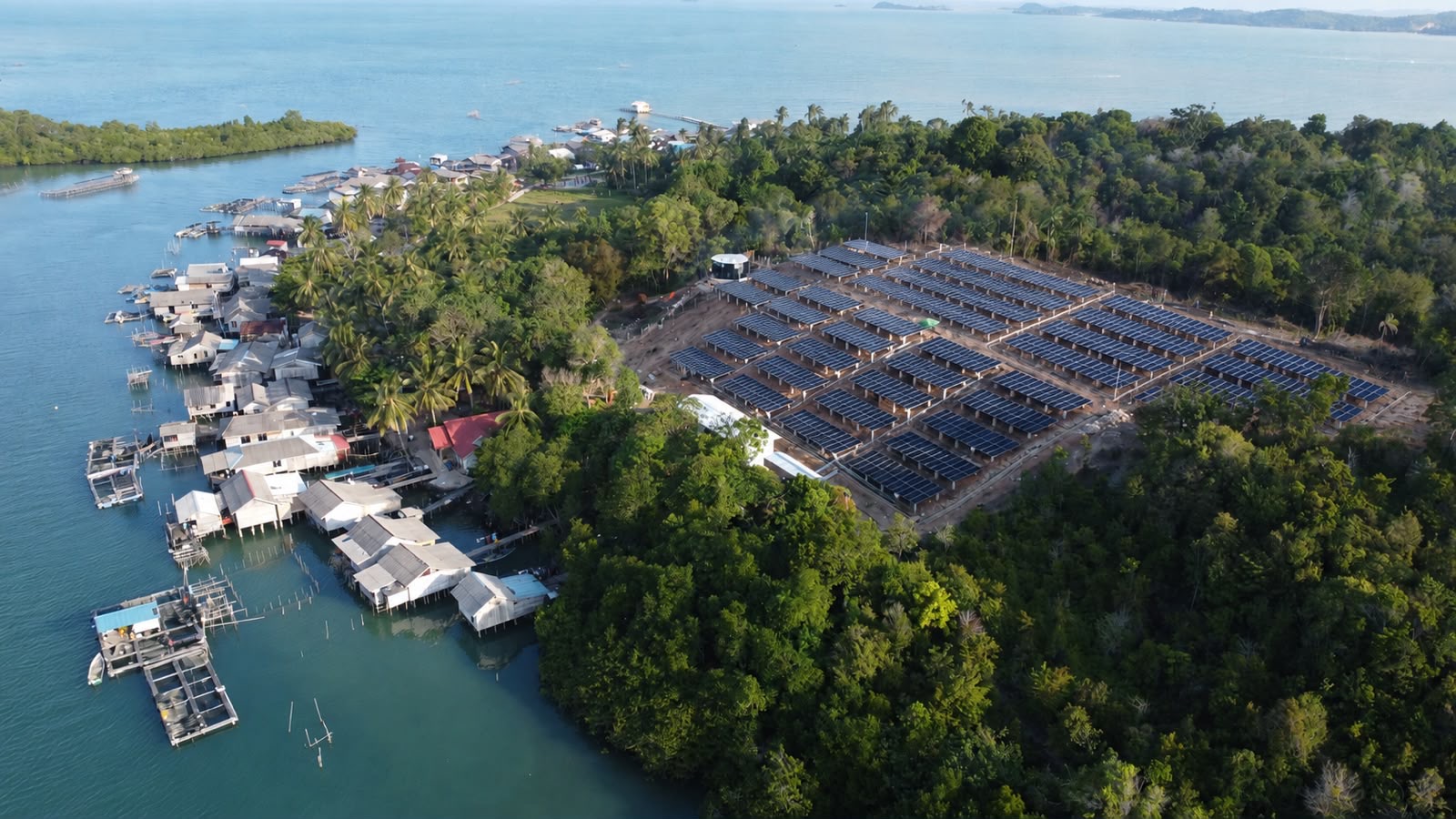
President of the Republic of Indonesia Prabowo Subianto has inaugurated the construction of a mega-project of solar power plants with a total capacity of 100 gigawatt peak across various regions of Indonesia. The inauguration, held at the Gilimanuk Operation Monument in Jembrana Regency, Bali, on Tuesday, also marked the launch of several solar power projects, including a 1 MWp village solar plant on Sembur Island, Batam, Riau Islands, developed by Pertamina New & Renewable Energy.
The inauguration of the 100 GWp Programme is part of the government’s efforts to accelerate the use of clean energy while achieving national energy independence and sovereignty. On that occasion, President Prabowo stressed the importance of developing renewable energy capacity as a foundation for national energy resilience.
“With 100 GW, we will become a nation that truly stands on its own feet,” said Prabowo at the Operation Monument in Gilimanuk, Bali, on Tuesday.
Meanwhile, Vice President Director of PT Pertamina Oki Muraza said the presence of the Sembur Island solar plant is a tangible manifestation of the government’s vision to promote energy independence, strengthen cooperatives, and support village economic growth.
“Today we are witnessing the vision of energy independence beginning to be realised. Pertamina, together with the Ministry of Energy and Mineral Resources, the Ministry of Cooperatives, and local governments, has successfully delivered a 1 MWp solar plant on Sembur Island, while strengthening the role of cooperatives and opening space for village economic growth,” said Oki.
In line with this, the Secretary of the Directorate General of New Renewable Energy and Energy Conservation at the Ministry of Energy and Mineral Resources, Haris, assessed that synergy among stakeholders is key to realising the 100 GWp solar programme, with the Sembur Island plant serving as one of the pilot implementations.
“Collaboration needs to continue to be strengthened by involving all stakeholders to make the 100 GWp programme a success. Because the presence of solar power brings real benefits to the community, such as on Sembur Island, which can now enjoy 24-hour electricity,” he stressed.
The Sembur Island solar plant itself has undergone a phased development process. The project broke ground on 20 December 2025, followed by the start of construction on 13 March 2026, and finally reached the commissioning stage on 17 August 2026.
The 1 MWp solar plant is equipped with a 1 MWh Battery Energy Storage System to support the energy needs of the community on Sembur Island.
President Director of Pertamina NRE John Anis said the development of the Sembur Island solar plant is designed not only to provide access to clean energy but also to create economic benefits through the concept of productive use of energy.
“The Sembur Island solar plant is an example of how clean energy can drive productive community activities. The presence of more reliable electricity will support the development of cold storage, ice makers, and the economic activities of cooperatives and fishermen,” said John.
Through this approach, the Sembur Island solar plant is targeted to provide direct benefits to communities that were previously not connected to electricity and still relied on private generators for around three to four hours at night.
The project is designed to electrify around 200 households, including 158 homes, while supporting public facilities and productive community activities. In addition to energy supply, the project is equipped with an ice maker with a capacity of four tonnes per day and cold storage with a capacity of five tonnes to support the cold chain for fishery products.
The use of the solar plant is projected to save fuel consumption of up to around 877 litres per day or 320,000 litres per year, with potential fuel cost savings of around Rp3.5–5 billion per year. The development of Sembur Island is one example of renewable energy development implementation aimed at delivering economic impact while strengthening the national energy transition agenda.