
Semarak Budaya 2026: An Effort to Drive Cultural Preservation Beyond Mere Ceremony
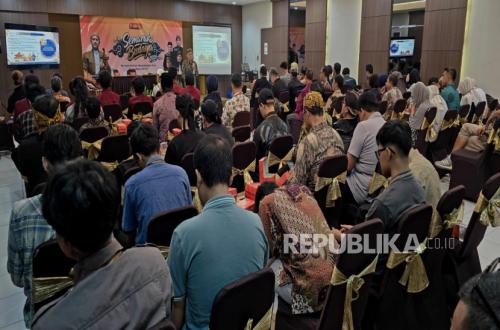
Cultural activist Budhi Hartanto is urging cultural preservation to move further than mere ceremonies, performances, or the storage of historical artefacts. The greater challenge, according to him, is ensuring that the knowledge and values behind cultural heritage remain understood and possess heirs in the next generation.
This idea serves as the driving force behind ‘Semamen Budaya 2026’, organised by Omah Budhi Solo in collaboration with the Ministry of Culture of the Republic of Indonesia, held at D’Lima Resto, Jebres, Surakarta, on Sunday (20/09/2026).
Carrying the theme ‘Nurturing Heritage, Reviving Values, Strengthening Identity’, the event brings together cultural activists, kris practitioners, artists, and the public into a single cultural learning space.
“Our issue is not simply whether the kris still exists or whether macapat is still being sung. The more important question is: does the next generation still understand why all of this was bequeathed to them?” said Budhi.
Kris and Macapat as Learning Spaces
Budhi, who is active in PSTA Nunggak Semi Surakarta and helped initiate the Nusantara Palm-leaf Manuscript Study Centre, believes that culture should not stop at being an object of nostalgia.
A kris, for example, is not merely a sacred heirloom. Behind it lies history, knowledge of forging technology, aesthetics, symbolism, ethics, and the worldview of the society of its time.
Similarly, macapat. This traditional Javanese song is not just a matter of sound and metre. For centuries, macapat has served as a medium for delivering moral teachings, education, and reflections on the human journey.
“If the kris ceases to be more than a display item and macapat becomes merely a song heard at specific events, we lose an important part of the inheritance process. What must be passed on is not just the form, but the knowledge and values behind it,” he stated.
Therefore, Semarak Budaya 2026 does not position the public merely as spectators. Participants are invited to enjoy the arts, understand history and philosophy, engage in dialogue with cultural practitioners, and witness the direct practice of kris maintenance.
Bringing Practitioners and the Public Together
Semarak Budaya 2026 features Tri Wahyunianto from PSTA Nunggak Semi, discussing the philosophy and moral values of the kris, and Rosnendya Yudha Wiguna from the Nusantara Palm-leaf Manuscript Study Centre, exploring the history of the kris.
In the realm of performing arts, Sunu Purniadi, alongside Girli Budting Budaya Sejahtera, presents the Bambangan Cakil traditional dance. Sri Widada from PSM Sekar Wening leads participants through moral teachings via macapat.
Meanwhile, Ady Sulistyono, a senior kris practitioner, provides demonstrations and practical kris maintenance. The event series also features Ma’ruf Pujinto through Macapat Umbul Donga.
According to Budhi, bringing cultural practitioners together with the public is a vital part of regeneration. This is because much cultural knowledge is not only stored in books and museums but lives within the experiences of artists, singers, practitioners, collectors, and the communities that maintain tradition.
Preventing the Loss of Roots for Future Generations
Technological changes and shifts in communication patterns are also a concern for Budhi. The generation growing up with the internet and social media, he notes, cannot always be approached using the cultural inheritance patterns of the past.
The substance of tradition must be preserved, but the method of communicating it must be able to keep pace with modern developments.
“Young people do not have to be made like previous generations to love culture. Our task is to make them understand why those values are still relevant to their lives today,” he said.
Consequently, cultural spaces need to be present in universities, communities, public spaces, and digital platforms.
“We must not let algorithms know our younger generation better than we introduce them to their own cultural roots,” Budhi remarked.
However, such adaptation does not mean altering tradition solely for popularity. According to Budhi, while the method of delivery may evolve, the knowledge regarding history, context, and cultural values must remain accountable.
Preservation Must Lead to Regeneration
This is the idea that Budhi believes must be strengthened in the cultural movement: preservation must result in regeneration.
Maintaining important artefacts and documenting knowledge is important. However, both are insufficient if new people do not emerge who are willing to learn, maintain, and continue them.
The collaboration for Semarak Budaya 2026 with the Indonesian Ministry of Culture is also seen as part of an effort to align national cultural policy with cultural work growing within communities.
“Cultural work cannot be done alone. The government, communities, academics, artists, practitioners, and the public need to meet. Most importantly, culture must not stop being an agenda of activities. It must return to being knowledge and values that live within society,” said Budhi.
For him, modernity and tradition do not have to be placed as two opposing poles. One can master technology and interact with the globalised world while still possessing strong cultural roots.
“Being modern does not require us to lose our roots. We may learn from the world, but we must still know where we come from,” he said.
This is the spirit encapsulated in the theme ‘Nurturing Heritage, Reviving Values, Strengthening Identity.’
For Budhi, the measure of success in cultural preservation is ultimately not just how many activities are organised, how many heirlooms are stored, or how many performances are staged.
The more fundamental measure is whether that knowledge and those values still have heirs.
“One day, our generation will pass. The kris may still exist, the manuscripts may still be stored, and recordings of macapat may still be playable. But there is a far more important question: who will understand it all?”
Source: jawawa.id (https://jawawa.id/newsitem/semarak-budaya-2026-an-effort-to-drive-cultural-preservation-beyond-mere-ceremony-1789901665)
Originally published by Republika (https://rejogja.republika.co.id/berita/tlnr1c291/semarak-budaya-2026-ikhtiar-untuk-dorong-pelestarian-kebudayaan-tak-sekadar-seremoni), translated from Indonesian