
Self-Sufficiency in Plywood 2045: A Strategy to Strengthen the National Economy
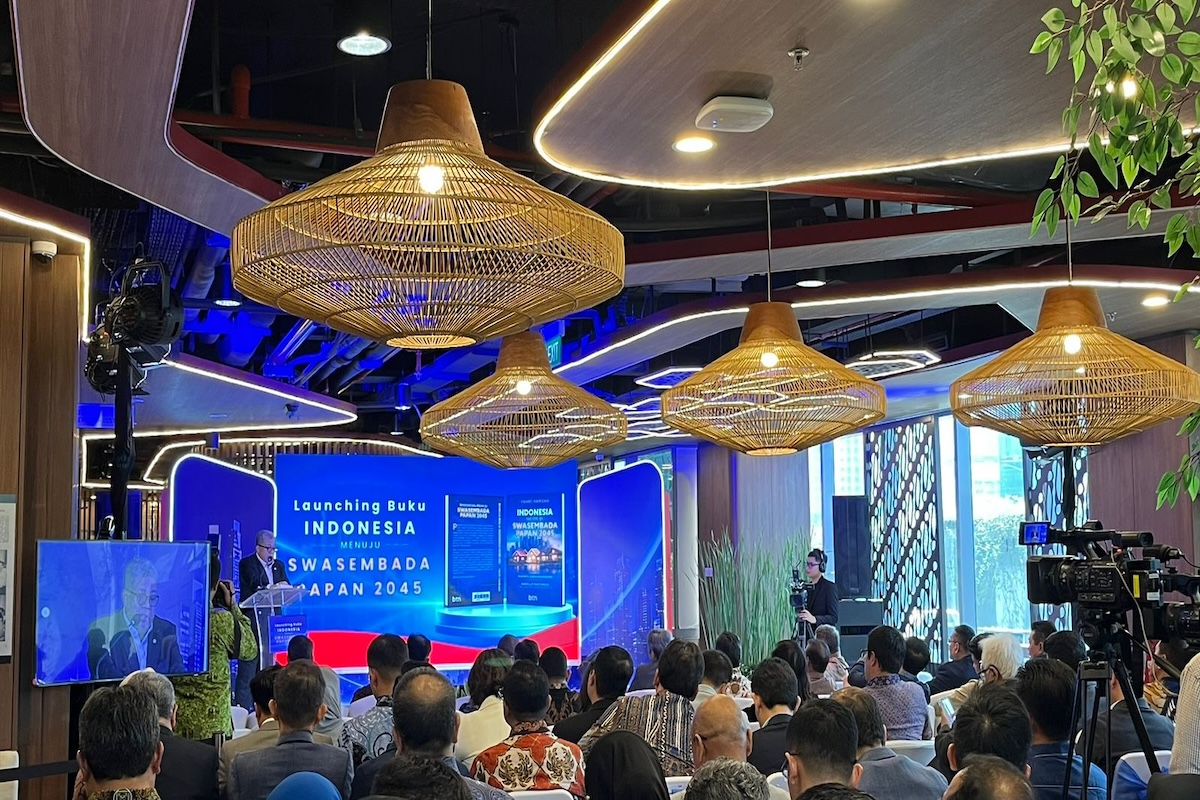
Self-Sufficiency in Plywood 2045 is seen as a key strategy to tackle the national housing crisis. Currently, the backlog of home ownership is estimated at 10 to 12 million units, while around 20 million citizens still live in substandard housing. Of these, about 6 million people live in substandard housing that is not their own.
Fahri Hamzah, Deputy Minister of Public Works and Public Housing (PKP) and Commissioner of Bank Tabungan Negara (BTN Persero), said that the 2045 plywood self-sufficiency is a major ambition to ensure all Indonesians are free from housing problems by 2045. He added that the 3 million housing programme should not be seen as an ordinary property project, but part of a national transformation strategy. ‘Self-Sufficiency in Plywood is non-negotiable if we want to build a social and economic foundation for the future,’ he said at the launch and discussion of the book Indonesia Menuju Swasembada Papan 2045 (Indonesia Towards Plyood Self-Sufficiency 2045) by Fahri Hamzah at BTN Tower, Jakarta, on Thursday (21/5).
He noted that housing is still a major challenge. In addition to the 10–12 million backlog in home ownership, about 20 million people live in substandard housing. Of this number, around 6 million people live in substandard housing that is not their own.
Hashim Djojohadikusumo, Chairman of the Housing Task Force, said his team is orchestrating a major strategy to accelerate the 3 million housing programme. The main focus is to ensure housing assistance reaches low-income households (MBR). ‘This is long-term work spanning generations. The Housing Task Force is now orchestrating a major strategy to accelerate the 3 million homes. Our focus is clear: to ensure the programme targets low-income groups.’
Hashim praised the launch of the book. He sees the Swasembada Papan 2045 vision aligning with the ideas of predecessors, including Margono Djojohadikusumo in broadening access to affordable housing and Soemitro Djojohadikusumo in placing the housing industry within the national economy.
As a housing financing institution, BTN says it is ready to guard the roadmap toward that target. BTN Chief Executive Nixon LP Napitupulu said the company continues to formulate an inclusive financing strategy so that access to housing can reach workers in both formal and informal sectors. ‘We are drafting this strategic roadmap so that no segment of society is left behind. The synergy between the Housing Task Force, the ministry, and BTN will be the key to realising Swasembada Papan 2045,’ Nixon said.
According to Nixon, one solution is to provide affordable financing with long tenures, starting from 20 years, 30 years, and up to 40 years. The scheme is deemed essential to maintain affordability for households, especially low-income groups, amidst rising housing prices. Nixon added that the book Indonesia Menuju Swasembada Papan 2045 also highlights three fundamental issues in the housing sector: spatial planning, land democratisation, and financing instruments. The biggest challenge for the industry today is securing long-term, cheap, sustainable funding. ‘Cheap’ can take many forms; for us, the main indicator is affordability. The challenge is to formulate the right financing instruments so that home installments do not choke the pockets of the people,’ he asserted. (Z-10)
Fahri Hamzah launched the book titled Indonesia Menuju Swasembada Papan 2045.
The Gen Z phenomenon sees Gen Z preferring to rent rather than buy homes or property. In response, Deputy Minister Fahri Hamzah said the trend is seen in many countries.
Deputy Minister Fahri Hamzah notes that the housing backlog should not yet be treated as real demand because it has not been mapped and consolidated as a need.
The Homelife Indonesia Series 2025 international exhibition officially opened on Wednesday (26/11) at Jiexpo Kemayoran, Jakarta, and will run until 29 November 2025.
Deputy Minister Fahri Hamzah highlights a double backlog affecting 6 million families, emphasising the importance of single-source data, regulation, and an offtaker for decent housing for the people.
Change in trend at Summarecon Tangerang: the growing-house concept is being abandoned; the current generation prefers ultimate, ready-to-occupy housing.
The government has raised the target quota for the Housing Financing Liquidity Facility (FLPP) to 350,000 units for the 2025 fiscal year.
BTN commits to making home ownership more accessible, even for those without formal salary slips.
Source: jawawa.id (https://jawawa.id/newsitem/self-sufficiency-in-plywood-2045-a-strategy-to-strengthen-the-national-economy-1779542433)
Originally published by Media Indonesia (https://mediaindonesia.com/ekonomi/892619/swasembada-papan-2045-strategi-perkuat-ekonomi-nasional), translated from Indonesian