
Seize the Assets of Forest Arsonists to Prevent the Cycle from Repeating
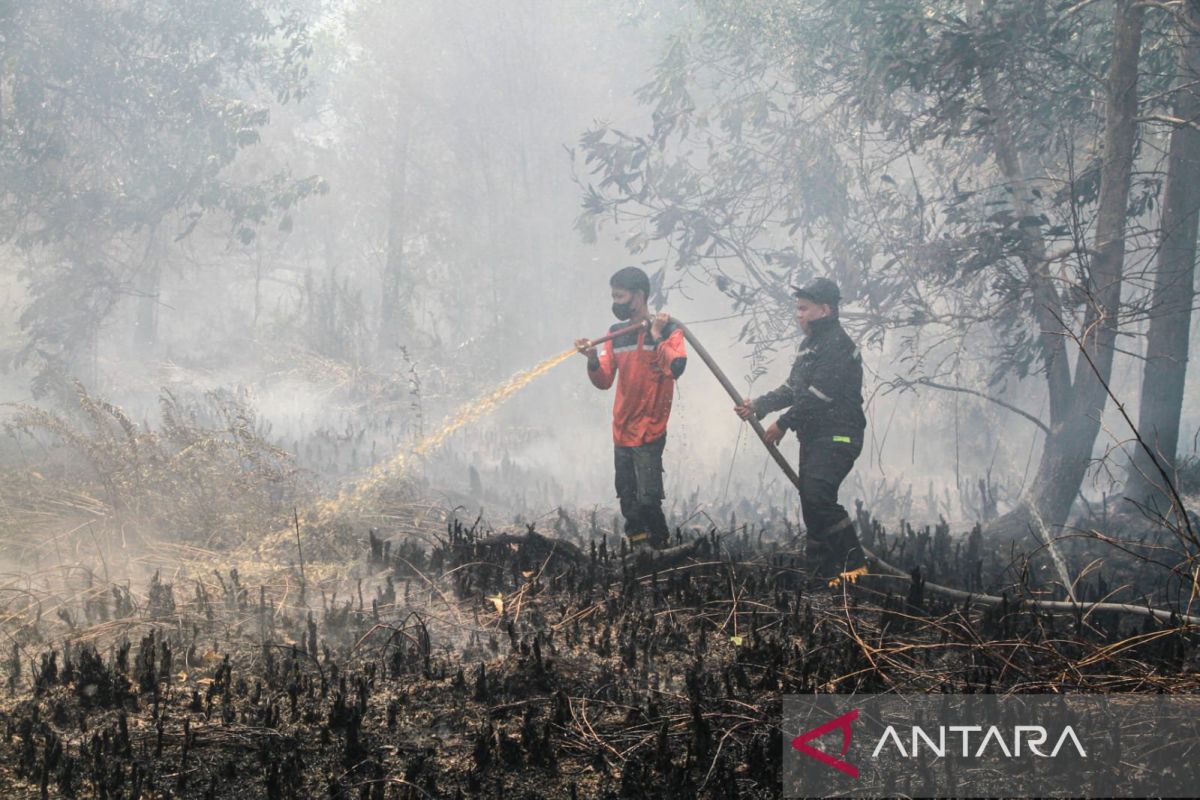
The state must not only have the courage to punish those who start fires, but also lose its nerve when it comes to tracing the parties who profit from them.
Jakarta (ANTARA) – Forest and land fires expose one of the greatest ironies in environmental law enforcement in Indonesia.
The state spends public funds to extinguish fires, while communities bear the health and economic losses. Yet those who profit from burning forests may still retain their wealth.
Not all forest and land fires are deliberate. But when burning is planned for economic gain, it must no longer be treated merely as an environmental violation. It is a crime that uses ecological destruction as a means of making a profit.
Unfortunately, Indonesia’s legal approach remains too focused on punishing offenders, rather than removing the gains obtained from crime.
Yet crimes driven by economic profit cannot be effectively stopped so long as those gains can be kept. The debate on the Asset Confiscation Bill should therefore be an opportunity for Commission III of the Indonesian House of Representatives (DPR RI) to strengthen law enforcement against environmental crimes, particularly forest and land fires involving corporate interests.
Indonesia is not short of legal instruments to prosecute forest burning. Law No. 32 of 2009 on Environmental Protection and Management provides for criminal penalties, administrative sanctions and civil liability. The problem lies in the effectiveness of enforcement and the state’s ability to reach assets connected to criminal activity.
Court rulings ordering companies to pay environmental damages do not automatically ensure that the money is recovered. When assets are dispersed among affiliated companies, held through layers of ownership or moved in transactions that are difficult to trace, recovery can face serious obstacles. As a result, there is a gap between the state winning in court and successfully recovering environmental losses.
This problem is even more complex in corporate crime, because the person who carries out the act may not be the one who benefits most. A worker may be held responsible for starting a fire, while the resulting economic gains flow to a broader business structure.
The law must therefore be able to distinguish between the direct perpetrator, the decision-maker and the economic beneficiary. Otherwise, enforcement will reach only the lowest level of the criminal chain, while the economic incentives driving the crime remain intact.
A legal system that punishes those who set fires but fails to confiscate their illegal profits risks turning criminal penalties into merely another cost of doing business—and will, of course, be deeply damaging to Indonesia’s long-term interests.
Source: jawawa.id (https://jawawa.id/newsitem/seize-the-assets-of-forest-arsonists-to-prevent-the-cycle-from-repeating-1793591502)
Originally published by Antara (Indonesian) (https://www.antaranews.com/berita/5825611/rampas-aset-pembakar-hutan-cegah-siklus-berulang), translated from Indonesian