
Sefri Afikar: Planting mangroves, atoning for the past
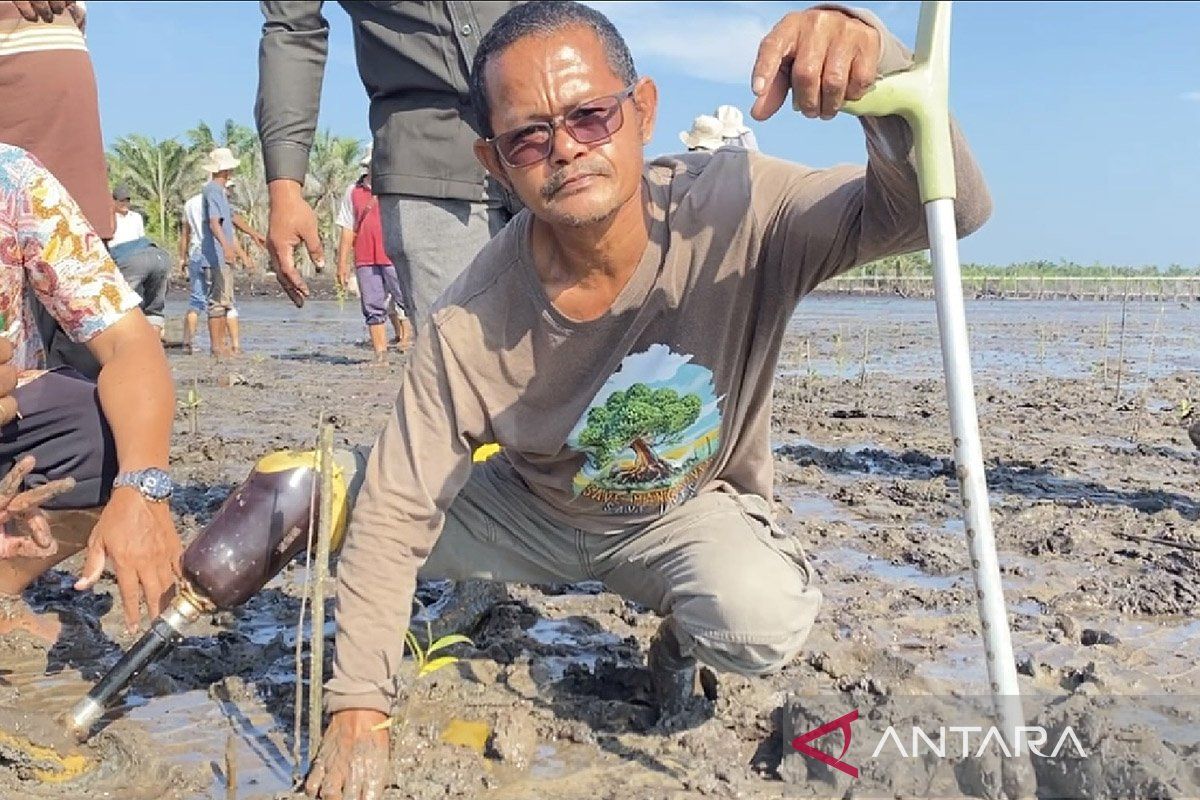
On the coast of Sepahat Village, Bengkalis Regency, Riau, a man walks slowly among thousands of mangrove seedlings. His left leg has been amputated and replaced with a prosthetic that occasionally sinks into the mud.
His name is Sefri Afikar. Villagers more often call him Asep.
He turned 54 on 1 July. His hair has begun to grey, and his skin is dark from the coastal sun. Every day, he visits a simple nursery on the shore to care for mangroves growing in black polybags.
“This is my daily activity,” he said, gazing at the rows of mangrove seedlings filling the narrow yard of the nursery.
Ten years ago, Asep’s life changed in a single night. A hit-and-run accident took his left leg. He had to learn to walk again while facing the reality that many jobs he once could do were no longer possible.
He tried various ventures. But none met his expectations. Physical and economic limitations made life difficult.
“After that I returned to the mangroves. I left other work behind. My focus is on the mangroves,” he said.
There is no guarantee of a large income from planting mangroves. The work is instead familiar with mud, heat, and mosquitoes. The results only become visible years later.
But in that place, Asep found something he did not get from other work.
“We used to be destroyers of nature,” he said.
Source: jawawa.id (https://jawawa.id/newsitem/sefri-afikar-planting-mangroves-atoning-for-the-past-1787665963)
Originally published by Antara (Indonesian) (https://www.antaranews.com/berita/5710621/sefri-afikar-menanam-mangrove-menebus-masa-lalu), translated from Indonesian