
Seepage Appears in Lapindo Mud Embankment, Residents Anxious
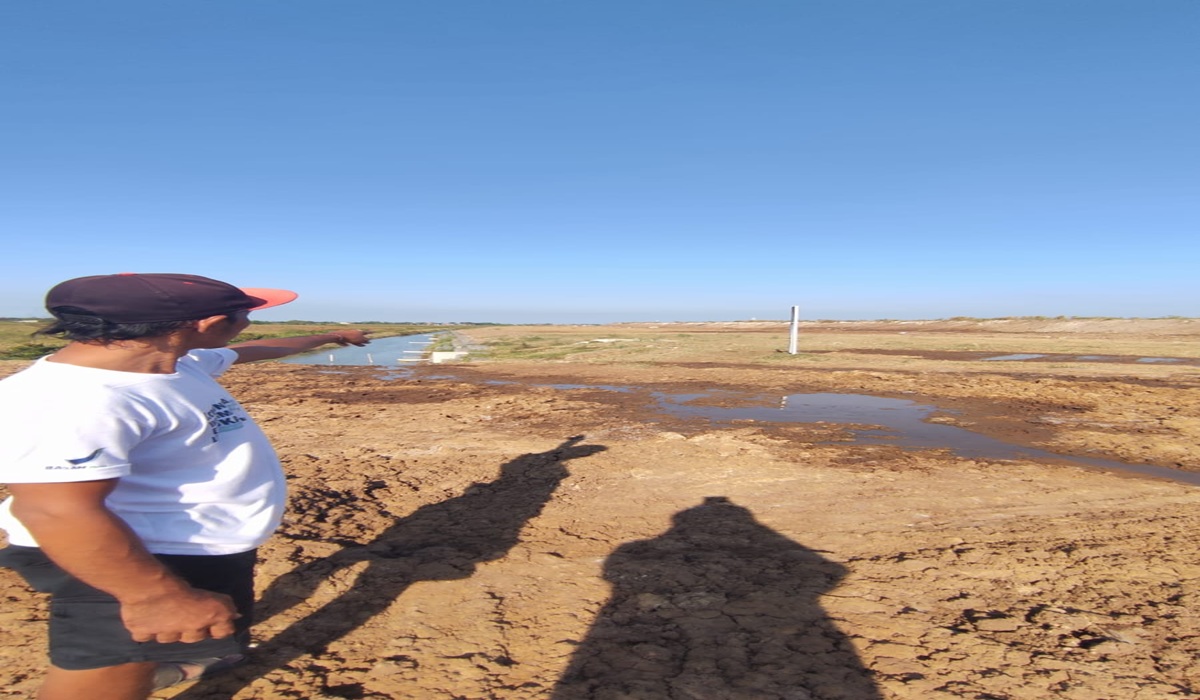
Residents living around the Lapindo mud retaining embankment in Sidoarjo, East Java, are gripped by anxiety after water seepage appeared at point 68. This location marks the boundary between Glagaharum Village, Porong District, and Gempolsari Village, Tanggulangin District, Sidoarjo. The condition is exacerbated by the increasing volume of water and mud in the holding pond, which has not yet been channelled into the Porong River. Currently, the water level is reported to be only about one metre from the top of the embankment. The Sidoarjo Mud Control Centre (PPLS) has taken emergency action by localising the seepage and directing it to a nearby small river. However, this measure has not been sufficient to calm residents. Sudarmawan, head of RT 11 RW 2 in Gempolsari Village, revealed that the small river used for disposal is now prone to overflowing. In fact, some of the seepage flow has been observed seeping onto the village road. “The river itself is already prone to overflowing. There is even a small flow that has reached the village road. Residents are certainly worried if this condition continues,” Sudarmawan said on Thursday (11/6). The threat of a potential embankment collapse triggers deep trauma for the local community, recalling a similar breach that occurred several years ago. As a result, residents are forced to conduct independent surveillance every night to anticipate undesirable events. “We cannot sleep soundly. Almost every night, residents take turns monitoring the environment because they fear something might happen at night,” Sudarmawan added. He stated that if a structural failure or embankment breach occurs at point 68, the disaster’s impact would directly hit the settlements below the embankment. The vulnerable zone encompasses at least six neighbourhood units (RT), with an estimated population of 1,000 to 1,500 people. Given the magnitude of the risk, residents are urging PPLS to immediately take more optimal and measurable action. Their primary demand is the prompt reduction of water and mud volume in the holding pond, along with reinforcement of the embankment structure to ensure their safety from the looming trauma.