
Seeking the Ideal Scale for Free Nutritious Meal Kitchens
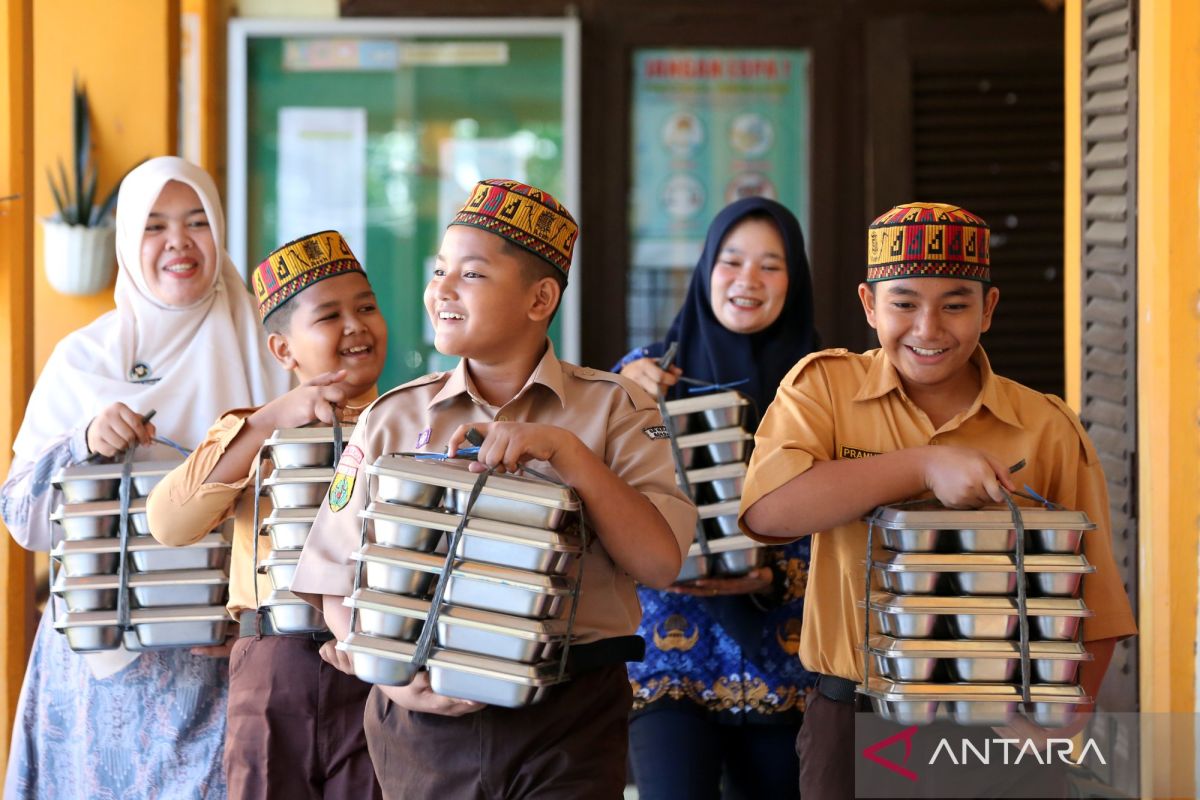
Without strong institutionalisation, the decentralisation of kitchens risks merely shifting the point of failure from a single overburdened central kitchen to hundreds of small kitchens lacking standardised protocols.
Jakarta (ANTARA) - The case of mass food poisoning within the Free Nutritious Meal (MBG) programme in Sidoarjo proves that the primary issue is not the programme’s underlying intention, but rather the design of centralised kitchens being forced to serve loads beyond their capacity.
On 1 September 2026, hundreds of students at the Manba’ul Hikam Islamic Boarding School in Tanggulangin fell ill after consuming MBG menus from the Kalitengah Nutrition Fulfilment Service Unit (SPPG). As of Thursday (3/9), data from the Sidoarjo Regency Health Office recorded the number of victims swelling to 730 people. The victims were spread across 19 educational institutions around Tanggulangin and required treatment at eight different hospitals.
Revealed chronologies show that the food had exceeded safe consumption limits. SPPG staff began processing ingredients at 00:00 and finished cooking by 05:00. However, the food containers were only distributed after 11:00 and were consumed by students towards midday and after lunch.
The Head of the National Nutrition Agency (BGN), Sudaryono, described this incident as negligence rather than a mere technical accident, as such distribution delays should have been preventable through disciplined kitchen work schedules.
The deeper root of the distribution problem actually lies in the imbalance between kitchen capacity and the assigned production volume. SPPG Kalitengah is required to provide approximately 2,800 portions per day for 19 educational institutions, including around one thousand portions for the boarding school. Such a heavy load forces small-scale kitchens to cook in the early hours of the morning, store the cooked food for several hours, and then distribute it gradually to scattered schools.
Results of BGN’s national investigation show that 80 to 90 per cent of MBG poisoning cases are related to violations of standard operating procedures, covering consumption timing discipline, storage, raw material reception, and food temperature regulation.
In response to this poisoning incident, the BGN has taken decisive action by halting the operations of SPPG Kalitengah and placing it under heavy suspension, while simultaneously evaluating 174 other nearby SPPG units.
The BGN has also split SPPG working hours into two sessions: a production and distribution session from the early morning until the morning, and an evaluation session in the afternoon to inspect raw material reception and record food leftovers. Furthermore, every food container must now be labelled, supervision will be conducted online, and staff evaluations will be held every afternoon at 17:00, with strict sanctions ranging from warning letters to dismissal for those found negligent.