
Seeking a Balance in the Labour Protection Bill
The drafting of the Labour Protection Bill needs to prioritise a balance between labour protection and economic competitiveness.
Protecting workers does not always mean tightening all employment relationship regulations. Amidst changes in the business world and technology, the Labour Protection Bill is required to maintain this balance by providing space for businesses to adapt, while ensuring that workers do not personally bear the risks of job loss.
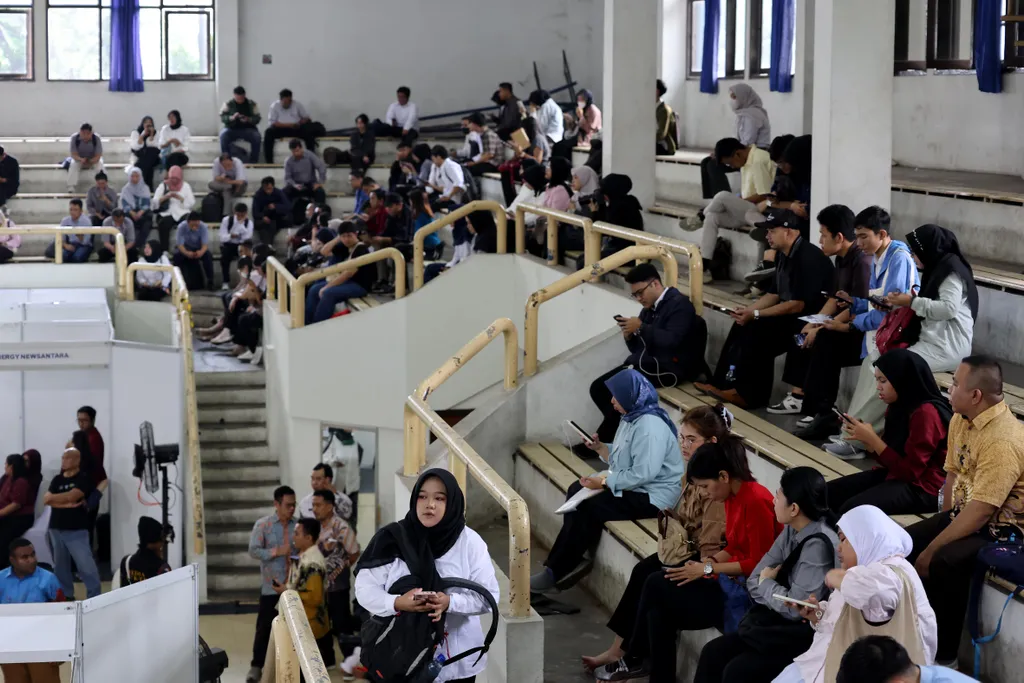
This issue emerged during a public discussion titled “Seeking a Regulatory Format for Labour that Protects and Supports Competitiveness” at the Centre for Strategic and International Studies (CSIS) Auditorium, Jakarta, on Thursday (24/9/2026). The event, organised by CSIS, featured several stakeholders as speakers, including members of the DPR’s Working Committee for the Labour Protection Bill, officials from the Ministry of Manpower, representatives from the Indonesian Employers Association (Apindo), the Confederation of All Indonesian Trade Unions (KSBSI), and CSIS researchers.
Deni Friawan, Senior Researcher of the Economics Department at CSIS, stated that labour issues are inseparable from industrial competitiveness. However, labour-intensive industries tend to lose their competitive edge. Indonesia’s labour market produces few formal jobs, and legal protection only reaches a small fraction of workers. According to CSCS data, only 36 per cent of Indonesian workers receive wages above the minimum wage, and only 26.6 per cent are able to enjoy severance pay.
With high population growth and increasing labour force participation, the Indonesian economy requires at least 3 million new jobs every year. However, almost 60 per cent of the current workforce is in the informal sector, characterised by low protection and low wages.
The government has been criticised for relying on employers to bear the obligation of job creation and the costs of formal workers. Rigid regulations are seen as unable to increase investment flows. Consequently, employers find it difficult to recruit large numbers of workers, and weak enforcement perpetuates informal recruitment, uncertain contracts, outsourcing, and the substitution of labour with machinery.
“A lack of balance does not benefit all parties or the Indonesian economy as a whole,” said Deni.
The drafting of the Labour Protection Bill is deemed necessary to prioritise the balance between labour protection and economic competitiveness. The regulation must be able to address the need to increase formal employment and labour protection simultaneously, while enforcing effective protections.
Deni added that the ability to provide formal jobs requires efforts to encourage manufacturing industries that provide large-scale employment. However, he warned that flexibility for employers without protection for workers would shift risks onto the employees, while adding obligations without considering company capabilities could reduce formal recruitment.
Executive Director of CSIS, Yose Rizal Damuri, noted that the manufacturing industry, which is a labour-intensive sector, continues to shrink. Over the last 10-15 years, the manufacturing industry has grown at less than 5 per cent, which is below the national economic growth rate. Exports from the labour-intensive sector fell from 15 per cent in 1995-1997 to 7.2 per cent in 2024-2025.
“With a population of 280 million, Indonesia needs industry and manufacturing to provide sufficient decent employment guarantees,” said Yose.
Bob Azam, Chairman of the Labour Sector at the Indonesian Employers Association (Apindo), hopes that the Labour Protection Bill can encourage labour absorption in the formal sector and increase Indonesia’s competitiveness. Currently, the number of informal workers continues to rise and now dominates the labour market.
According to BPS data, out of 148.19 million workers as of May 2026, 87.88 million people, or 59.30 per cent, work in the informal sector, which involves self-employment or independent business that generally lacks official contracts, social security, or wage certainty.
The increase in informal workers is inseparable from the declining contribution of the manufacturing industry to Indonesia’s Gross Domestic Product (GDP) since 1999. The highest contribution from manufacturing sectors, such as automotive, footwear, and textiles, reached a peak of 30 per cent in the 1990s.
However, following the implementation of Law Number 13 of 2003 concerning Manpower, its contribution has steadily declined to 19 per cent in 2025. This is despite the fact that the manufacturing industry is the backbone of the Indonesian economy in absorbing formal workers, accounting for 61 per cent of other industrial sectors.
For this reason, Bob hopes that the new labour regulation can increase formal employment. His side is also encouraging the DPR to implement a “flex-security” model in this Bill, which means flexibility for the business world, but guaranteed formal employment for workers.
“According to Apindo, protection for workers is the job itself. If workers have no jobs, what is there to protect?” said Bob. This flexibility is reflected in regulations that are not rigid but adaptive, as every industry has different operational needs.
He cited the hospitality sector, where holidays for workers do not necessarily fall on public holidays, and the shipping sector, where workers generally follow shipping schedules, making permanent mechanisms difficult. “There is no ‘one size fits all’ regulation. We must allow for each sector…”