
Seeing MBG as an engine of economic equalisation
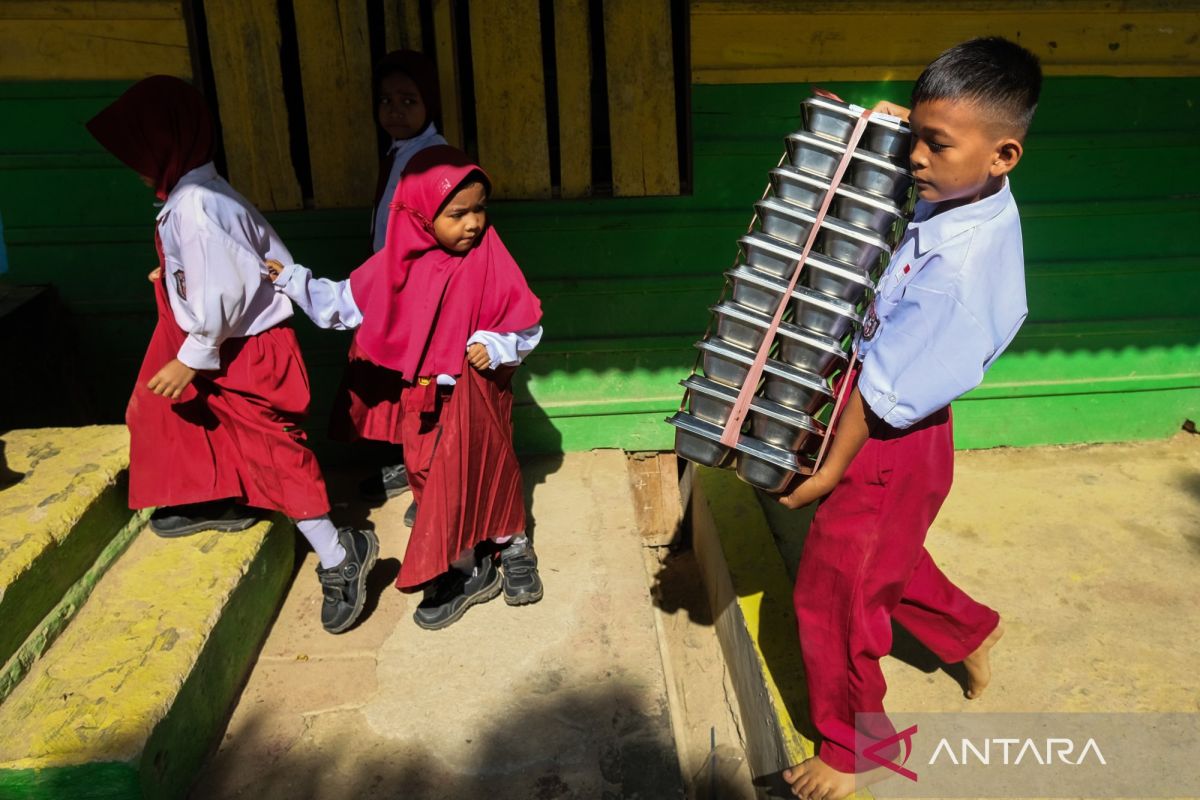
Ultimately, development is not only about how much money the state possesses. Development is about where that money flows, who receives it, and how long it circulates among the people.
Jakarta (ANTARA) - Since the Free Nutritious Meals (MBG) programme was launched by President Prabowo as a government priority programme, it has not been free from criticism. Some criticism has arisen because MBG is viewed solely as a social programme to improve the nutrition of schoolchildren and reduce stunting.
That view is not entirely wrong, but seeing MBG only from a nutritional perspective means we have not yet seen the full design of this policy.
If MBG is viewed through the lens of the political economy of development, this programme actually has a far greater function: distributing purchasing power, creating markets, opening up employment, driving MSMEs and strengthening regional economies. In other words, MBG is not merely a policy about what Indonesian children eat. MBG is also a policy about where state money flows and how that money circulates within society.
First, MBG is an instrument of economic equity. One of the classic problems of Indonesian development is the inequality of economic activity. Growth centres are still largely concentrated in urban areas and certain regions, while some areas face limitations in markets, investment and purchasing power.
It is in this context that MBG becomes interesting. State funds are not only spent at the centre, but are channelled through Nutritional Fulfilment Service Units (SPPG) spread across various regions. BGN states that most of the programme’s budget is disbursed directly through mechanisms connected to SPPGs. In fact, one SPPG can on average receive around Rp1 billion per month to then be spent within the regional economic ecosystem. This means MBG has the character of decentralising state spending.
Second, MBG creates a relatively certain market for local food producers. One of the problems often faced by farmers, livestock breeders, fishermen and MSME actors is market uncertainty. Production can increase, but if the market is not available, prices can fall. Conversely, when demand increases while production is limited, prices can soar. MBG has the potential to become one of the instruments to bring these two sides together.
BGN states that around 70 percent of SPPG operational funds are used to purchase raw materials, so most of the programme’s budget is directed towards food needs. Imagine the scale of demand when tens of thousands of SPPGs are operating. A single SPPG alone requires rice, eggs, chicken, vegetables, fruit, milk and various other foodstuffs on a regular basis.
BGN provides an illustration that one SPPG can require around five tonnes of rice in one period, thousands of eggs, hundreds of chickens, hundreds of kilograms of vegetables, and up to hundreds of litres of milk. This means MBG creates large and recurring demand. If these needs are met by local producers, then this programme can become a market anchor for farmers, livestock breeders, fishermen, market traders, cooperatives, village-owned enterprises (BUMDes) and MSMEs. It is here that MBG has an economic dimension that often escapes attention.
Third, MBG creates employment from the kitchen level to the supply chain. This programme also creates new jobs at the local level. One SPPG, according to BGN, can absorb around 47 direct workers.
By early 2026, BGN stated that the number of workers directly involved in SPPGs had reached around 700,000 to 890,000 people. This number has the potential to continue increasing as SPPGs expand.