
Securing East Java's Homecoming Travel, BMKG's Weather Modification Reduces Heavy Rain by Up to 70%
Potential extreme weather in East Java during the period of 11–20 March 2026 has prompted active mitigation measures from various parties. According to a release from the Class I Juanda Meteorological Station, the region is forecasted to experience increased rain with moderate to heavy intensity, potentially accompanied by lightning and strong winds.
This condition is triggered by atmospheric dynamics, such as the Madden-Julian Oscillation (MJO), Kelvin waves, and unstable atmosphere that supports the growth of convective clouds. This situation risks triggering hydrometeorological disasters, from floods to landslides, especially during the Eid homecoming traffic period in 2026.
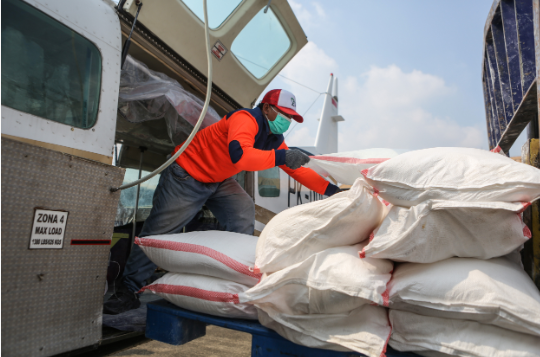
As a precautionary step, the Meteorological, Climatological, and Geophysical Agency (BMKG) along with the East Java Regional Disaster Management Agency (BPBD) has conducted a Weather Modification Operation (OMC). The operation runs from 16-25 March 2026 and is centred at the Juanda Lanudal Post, focusing on controlling rainfall in vulnerable areas.
BMKG supervisor, Alif Kurniawan, revealed that in the first three days of implementation, the team has carried out seven flight sorties with a total duration of 14 hours and 1 minute. A total of 6,800 kilograms of seeding materials were used, consisting of 1,000 kg of NaCl and 5,800 kg of CaO, which were dispersed into potential clouds in the East Java region.
“This active measure has proven effective in reducing average rainfall by up to 40% compared to normal conditions without intervention,” said Alif.
Preliminary evaluation results show significant impacts. Heavy rain intensity has been recorded to decrease by around 70%, while very heavy rain has reduced by about 25%. Rainfall distribution has also become more controlled and tends to be in the light category, thereby minimising disruptions on homecoming routes.
East Java Deputy Governor, Emil Dardak, who directly inspected the operation at Lanudal Juanda, expressed his appreciation for the team’s performance. He assessed that the use of weather modification technology is concrete evidence of the effectiveness of a science-based approach in protecting the community.
Meanwhile, the Head of the Juanda Meteorological Station, Taufiq Hermawan, explained that the seeding strategy was carried out based on real-time WOFI weather radar analysis. He mentioned that CaO material is used to suppress cloud growth over land, while NaCl is seeded into clouds in sea areas so that rain falls earlier before reaching the land.
BMKG forecasts that rain potential in East Java will continue until 23 March 2026. On 19-20 March, light to heavy rain is potentially occurring in several areas. For 21–23 March, conditions are generally dominated by light to moderate rain, although there is still potential for heavy rain in some spots.
The government urges homecomers to remain vigilant and regularly monitor official BMKG information channels for safety during the 1447 Hijriah Idul Fitri journey.
BPBD East Java has established 38 emergency response posts or alert posts across all regencies/cities and prepared 300 personnel for disaster handling as a readiness effort.