
Secondary Housing Prices Continue to Grow Amid Rupiah Weakness
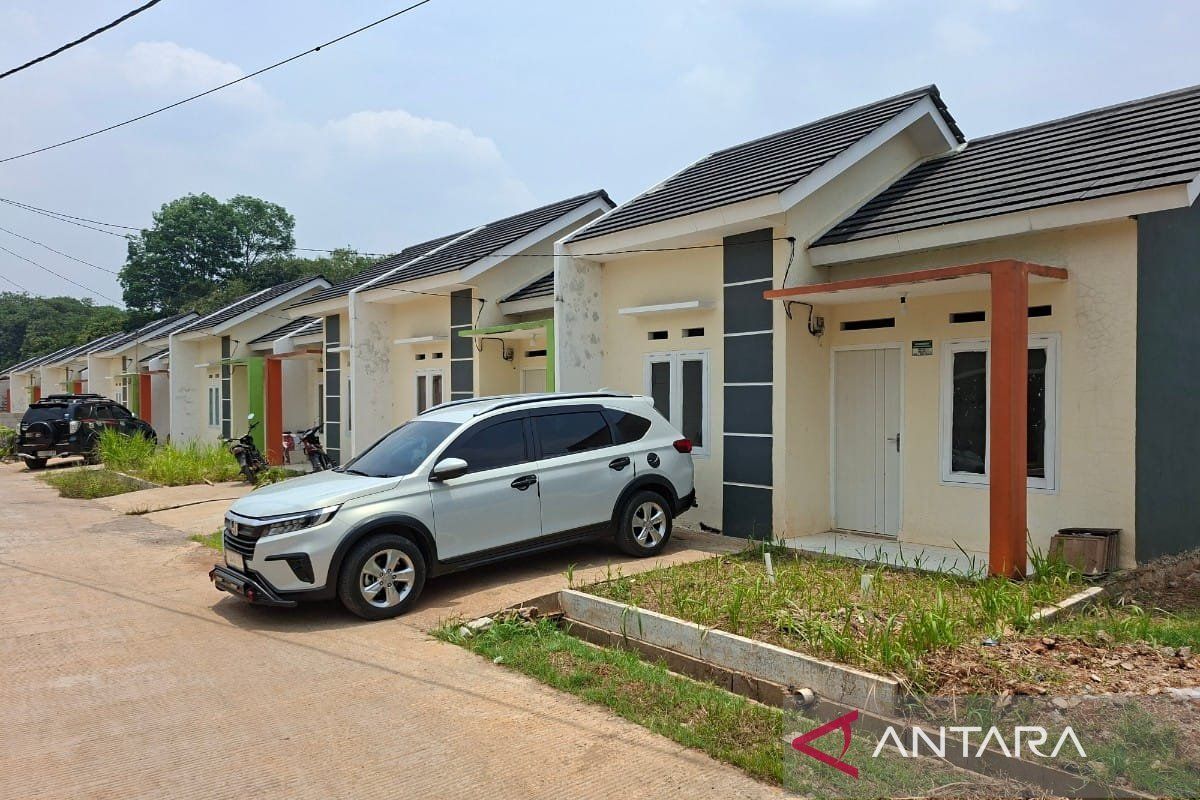
Jakarta (ANTARA) - Property marketplace Rumah123 has revealed that secondary housing prices continue to grow in 11 Indonesian cities amid the weakening Rupiah.
Head of Research at Rumah123, Marisa Jaya, stated that the Rumah123 May 2026 Flash Report recorded national secondary housing prices still growing by 0.1% monthly (MoM) and 0.8% annually (YoY) in April 2026. Eleven cities still recorded positive annual price growth, led by Denpasar at 2.0%, Bogor at 1.8%, and Surakarta at 1.5%.
“The property market is not fully weakening at present, but is experiencing a repositioning of consumer behaviour. Transaction activity is indeed more selective compared to the previous expansionary period, but the fundamentals of housing needs and end-user demand for occupancy remain intact. As long as financing stability and purchasing power are relatively maintained, the secondary housing market is expected to retain a fairly good level of resilience,” Marisa said in her statement in Jakarta on Thursday.
The secondary market is still supported by end-user needs, more flexible price adjustments, readiness of units for occupancy, and consumer preference for areas with relatively more competitive prices.
Spatially, property search activity remains concentrated in the Jabodetabek supporting areas. Tangerang is the region with the largest national proportion of listing enquiries at 15.1%, followed by South Jakarta at 11.0% and West Jakarta at 9.3%.
Rumah123 views suburban areas as no longer merely alternatives to the city centre, but as having evolved into new growth centres for the end-user housing market.
According to Marisa, suburban areas and supporting cities like Tangerang, Bekasi, and Bogor remain the main market focus because they offer a combination of relatively more affordable prices compared to the city centre, supported by infrastructure development and the expansion of new economic centres.
Amid economic pressures and increasing sensitivity to mortgage instalments, consumers tend to be more cautious in making property purchase decisions. Rumah123 has observed a shift in consumer behaviour over the past few quarters, where buyers now increasingly prioritise affordability, area connectivity, housing readiness, and long-term value appreciation potential over merely premium locations.
Rumah123 also noted that the segment of houses with building areas of up to 60 square metres has become the segment with the highest annual median price growth.
Surakarta recorded a 23.5% increase in median price in this segment, indicating that affordable housing remains the main pillar of societal housing needs amid cost-of-living pressures and economic uncertainty.
“What is changing now is not society’s need to own a home, but the way consumers make decisions. Amid economic pressures and Rupiah weakening, consumers have become far more rational. They are more sensitive to instalments, more considerate of unit readiness, and more focused on areas that offer a balance between price, accessibility, and long-term value appreciation potential,” Marisa said.