
Second Wave of Disaster Relief Assistance Begins, East Aceh Receives Rp100 Billion from Government
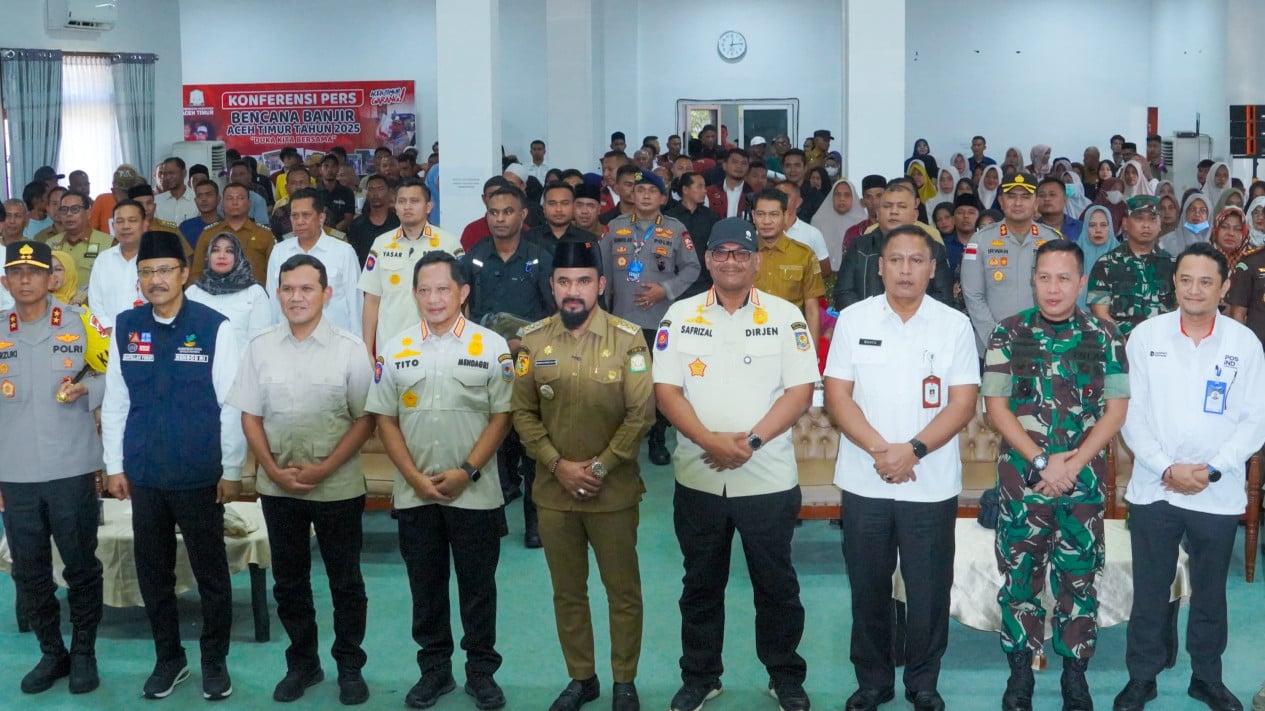
The government has resumed distributing assistance for victims of hydrometeorological disasters in Sumatra. This time, the second wave of relief assistance is being disbursed with substantial funding, particularly for the East Aceh region, which is receiving more than Rp100 billion.
The disbursement of aid was announced by the Head of the Regional Command Post for the Rehabilitation and Reconstruction Acceleration Task Force (PRR) in Aceh, Safrizal ZA, whilst accompanying the Minister of Home Affairs Muhammad Tito Karnavian during the aid handover ceremony in Idi Rayeuk, East Aceh Regency, on Monday, 16 March 2026.
Safrizal explained that post-disaster assistance is being distributed in phases and based on data to ensure targeted delivery. “Post-disaster management is being carried out in phases. The first wave focused on housing damage, whilst the second wave targets individual assistance such as living allowances, economic stimulus, and household goods assistance,” Safrizal said.
He stated that the second phase of assistance is more focused on the direct needs of communities, ranging from living allowances and socio-economic stimulus assistance to household equipment for affected victims.
On the same occasion, Tito Karnavian emphasised the importance of data accuracy in the process of accelerating rehabilitation and reconstruction following disasters. According to him, the quality of data collection is the key to ensuring assistance reaches communities promptly.
Safrizal acknowledged that the data collection process in disaster-affected areas is not straightforward. For this reason, it is being carried out in phases to ensure that the data collected is genuinely valid. “Data collection must be accurate and precise, because from that data, all government support can be distributed correctly to those entitled to receive it,” Safrizal said, citing the directive of the PRR Task Force Commander.
Furthermore, he revealed that the second wave of assistance not only serves to aid victims’ recovery but also stimulates the regional economy. “Economic stimulus funds, living allowances, and other assistance will increase public purchasing power. When this money is spent, economic activity in the region will also be activated,” he said.
On another note, Safrizal reminded local governments to promptly complete data collection on affected homes, which remains incomplete to date. This is important because housing reconstruction cannot proceed without valid data.