
Second phase of Dompu home renovation programme targets 500 houses
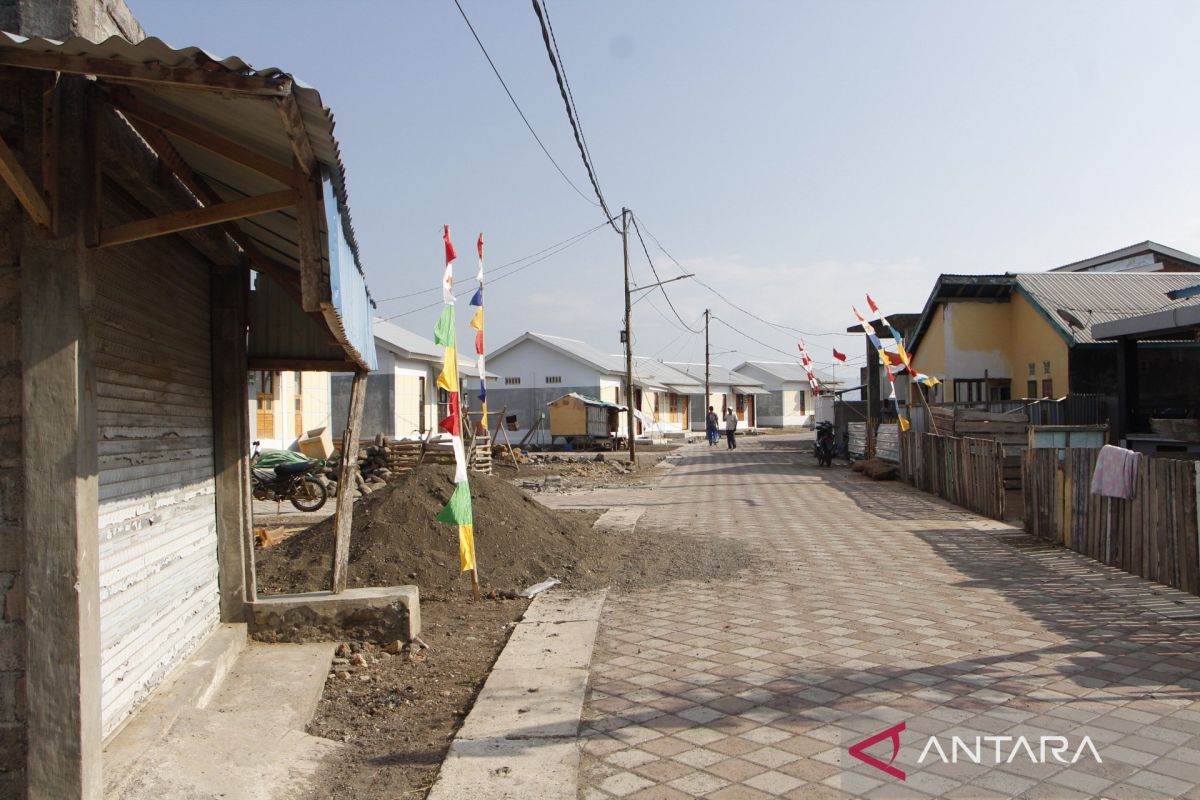
The Dompu Regency Government in West Nusa Tenggara has prepared a second regular phase of its home renovation programme targeting 500 houses belonging to vulnerable residents, with assistance valued at Rp20 million per unit.
Acting Head of the Dompu Regency Housing and Settlement Agency, Rahmat Hidayat, said the quota of 500 houses has been distributed to each village, with an average of 13 houses per village.
“For the second regular phase, the quota has been distributed to each village with an average of 13 houses,” Rahmat told reporters in Dompu on Friday.
With assistance of Rp20 million per unit, the total stimulus value for 500 houses in the second regular phase reaches Rp10 billion.
The programme is a continuation of the first regular phase, which previously targeted 226 houses. In total, the home renovation programme in Dompu Regency now targets 726 houses.
Rahmat explained that the programme is funded by the Ministry of Housing and Settlement Areas (PKP). The programme, previously known as the Self-Help Housing Stimulant Assistance (BSPS), now uses the home renovation nomenclature with a data collection and beneficiary nomination system through an application.
“It has now been changed to home renovation. The programme in the application has also changed,” he said.
He said the Rp20 million assistance per unit is used to support self-help repairs of beneficiaries’ homes. Of that amount, Rp17.5 million is allocated for the procurement of building materials, while Rp2.5 million is used for labourers’ wages.
Home repairs are carried out through mutual cooperation by beneficiaries together with the community, in accordance with the programme mechanism.
According to Rahmat, the change in the data collection system means the process of determining prospective beneficiaries must be carried out in greater detail to ensure assistance is given to people who meet the requirements.
Prospective beneficiary data includes names, national identity numbers (NIK), family card numbers (KK), as well as documentation of the condition of the house from various angles, complete with location coordinates.
Rahmat said data updating is an important part of programme implementation because the socio-economic conditions of the community can change.
Some residents who were previously included in the prospective beneficiary data have now experienced economic improvement. Conversely, there are new families who need assistance but are not yet in the database.
“The important thing is that this data must continue to be updated. Because much of the old data is no longer in line with current conditions,” he said.
He stressed that the regional government does not rely solely on data submitted by village and sub-district governments in determining prospective beneficiaries.
The Housing and Settlement Agency continues to carry out updates and verification to ensure the condition of houses and the eligibility of prospective beneficiaries meet programme requirements.
“Now we do not simply trust data from villages. Updates and verification are still carried out by the agency to ensure the conditions,” he said.
Rahmat also encouraged synchronisation of prospective beneficiary data with the Social Agency, particularly the Integrated Social Welfare Data (DTKS), so that data on recipients of various government programmes can be updated regularly.
According to him, outdated data can affect the accuracy of targeting for various assistance programmes. Old data can result in residents whose economic conditions have changed still being listed, while new families in need of assistance have not yet been accommodated.
“Ideally, the DTKS should remain the master data for everything. Names proposed by villages and sub-districts must be reported to the Social Agency so they are included in the DTKS,” he said.
To ensure beneficiary eligibility, facilitators at the sub-district level will carry out re-verification of the condition of houses and prospective beneficiaries.
“Sub-district facilitators will carry out re-verification, while also ensuring whether the person concerned is eligible to receive assistance,” he said.
Once the data is declared to meet the requirements, the next process is carried out through an integrated system in accordance with the government programme mechanism.
Rahmat said the programme is expected to improve the quality of community housing while supporting the arrangement of settlement areas in Dompu Regency.
He assessed that updating and verifying data are important factors so that government intervention in the housing sector can provide benefits to people who truly need it.