
Second Phase Economic Stimulus of Rp26.34 Trillion: Can It Maintain Purchasing Power?
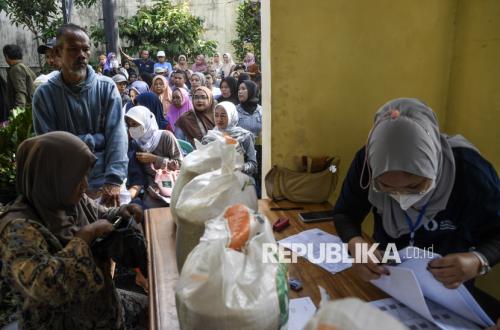
The government has disbursed a second phase economic stimulus package worth Rp26.34 trillion, consisting of tax incentives, internship and vocational programmes, and food assistance. Mohammad Faisal, Executive Director of the Center of Reform on Economics (CORE) Indonesia, assessed that the stimulus is indeed necessary and can help maintain public purchasing power.
According to him, the three groups of stimulus—food assistance, transport incentives, and internship and vocational programmes—each have their own targets and benefits for the public.
“Looking at the three types of stimulus provided, yes, the impact reaches everyone. All three are necessary and help from the purchasing power side,” Faisal told ANTARA in Jakarta on Tuesday (18/8/2026).
In detail, the stimulus consists of incentives worth Rp2.04 trillion, internship and vocational programmes worth Rp6.26 trillion, and food assistance worth Rp18.04 trillion.
Faisal explained that food assistance primarily provides support to lower-income groups, while transport incentives can help the middle class, particularly the lower-middle class, with travel.
For the transport stimulus, he assessed that the benefits are still felt by the public even though part of the incentive is provided over a relatively short period, including during the Christmas and New Year period.
“Although the note is that this is only provided during the Christmas and New Year period, so the timeframe is short. But if we say it helps, it does help,” he said.
Meanwhile, Faisal assessed that the internship and vocational programmes have a more productive character and have the potential to generate a multiplier effect if they can help participants enter the workforce.
“The more productive ones are the vocational assistance and internships for vocational high school graduates and those who have been laid off,” he said.
However, although the three groups of stimulus are considered necessary, Faisal noted that their coverage is still relatively limited, especially the internship and vocational programmes when compared with the needs of job seekers.
According to him, these needs come not only from workers affected by layoffs, but also from people who are looking for work, including graduates of secondary education and vocational high schools.
Statistics Indonesia (BPS) recorded an Open Unemployment Rate of 4.68 percent in February 2026, down 0.08 percentage points compared with February 2025. Of a labour force of 154.91 million people, 7.24 million were unemployed, while the number of employed people reached 147.67 million.
Faisal said the impact of the internship and vocational programmes on the economy could be even greater if participants subsequently obtain employment, which could ultimately affect purchasing power.
“If this succeeds, and actually if the assistance were larger, this could have a multiplier effect because if they can work, it will ultimately have an impact on purchasing power,” he said.
Therefore, according to Faisal, the implementation of the programme needs to be accompanied by efforts to place or channel participants into suitable jobs or business sectors, both domestically and abroad. For domestic placement, he assessed that the linkage between the programme and the needs of industry and the business world needs to be strengthened.
“This means the linkage with industry and the business world needs to be considered. Because what they need is not just the internship itself, but also government assistance to channel them into suitable workplaces,” Faisal said.