
Second Global Business Summit on BRI Infrastructure to Accelerate SDGs Held in Singapore
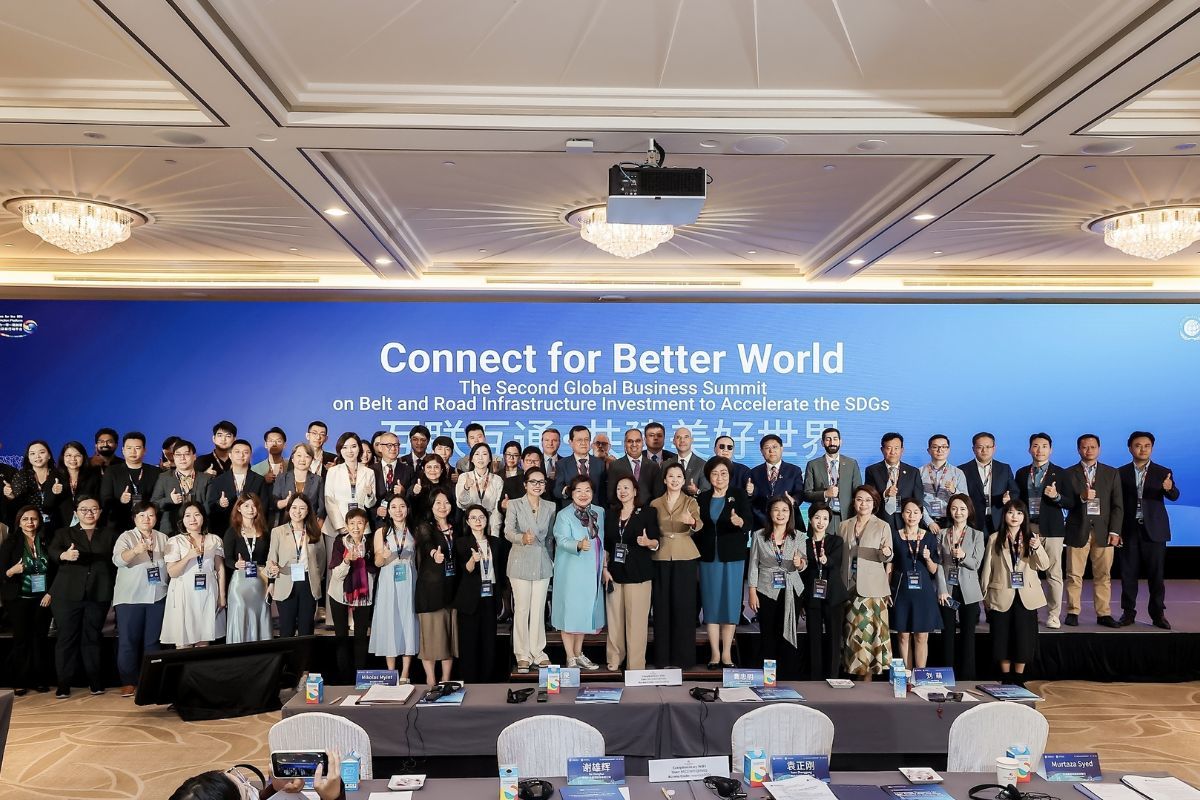
Singapore, (ANTARA/PRNewswire) - The Second Global Business Summit on Belt and Road Infrastructure Investment to Accelerate the SDGs was held in Singapore under the theme “Connect for Better World”. The summit was organised by the Sustainable Infrastructure for the Belt and Road Initiative to Accelerate the SDGs Action Platform of the UN Global Compact, together with the UN Global Compact Network Singapore.
The summit brought together more than 300 senior leaders and representatives of international organisations, global and regional companies, civil society organisations, academics, and think tanks. On this occasion, around a dozen sustainability-based joint actions and innovative private-sector-led partnerships were launched, with the aim of opening up opportunities for BRI infrastructure cooperation to advance the 2030 Agenda for Sustainable Development.
The summit adopted a declaration setting out the priorities of the business world in the areas of sustainable infrastructure, responsible artificial intelligence (AI), a just energy transition, global supply chain resilience, sustainable financing, the empowerment of women and young people in the digital era, and international cooperation in traditional medicine.
The summit also launched expert groups on sustainable energy and sustainable digital infrastructure, whilst producing twelve SDG-oriented outputs. These outputs encompass green mining, electricity carbon footprint standards, biodiversity conservation, marine protection, sustainable transport, women’s micro-enterprise development, and inclusive global development, led by pioneers from the private sector.
Assistant Secretary-General of the UN and CEO of the UN Global Compact, Sanda Ojiambo, stated that resilient infrastructure is key to long-term sustainable development. She affirmed:
“The initiatives launched today — from new expert groups on sustainable energy and digital infrastructure to new guidance on biodiversity, green minerals, and responsible AI — demonstrate that meaningful progress depends on collaboration across borders, sectors, and value chains.”
Through the BRI for SDGs Action Platform, she added, “companies come together to develop practical guidance, share expertise, and collaborate on solutions that can be applied across industries and regions.”
Special Adviser to the UN Secretary-General on Climate Action and Just Transition, Selwin Hart, said:
“Through the Belt and Road Initiative, Chinese companies and financial institutions can help connect China’s remarkable clean energy capabilities with the enormous growth opportunities in developing countries. The next chapter of the energy transition must demonstrate what can be achieved through cooperation on a large scale. Because in a divided world, our greatest opportunities will not come from retreating behind national borders, but from building bridges — connecting markets, mobilising investment, sharing solutions, and creating shared prosperity.”
The year 2026 marks the start of the UN Decade of Sustainable Transport. The UN Secretary-General’s Special Envoy for Road Safety, Jean Todt, stated that the Belt and Road Initiative is one of the world’s largest infrastructure and connectivity endeavours. According to him, that scale must be matched by an equally strong commitment to safety.
UN Under-Secretary-General for Economic and Social Affairs, Li Junhua, closed the summit with a call to action:
“No single country can overcome today’s complex connectivity challenges alone. Cooperation between governments, international organisations, financial institutions, and the private sector is essential to keep us connected. The Belt and Road Initiative is one of the prime real-world examples of cross-border connectivity.”
UNESCAP Executive Secretary Armida Salsiah Alisjahbana, UN Resident Coordinator in China Stephen Jackson, and UN Resident Coordinator for Malaysia, Singapore, and Brunei Darussalam Nikolas Myint highlighted the summit’s important role in promoting cross-border collaboration. They also emphasised the contribution of China, Singapore, and the ASEAN region to regional stability and global progress towards achieving the SDGs.