
Seats That Must Not Be Sold
There is something far more costly than the Rp25 million or Rpund Rp50 million involved in the practice of illegal levies (pungli) during government employee recruitment. What is at stake is the trust that government positions should be earned through merit, rather than through payment.
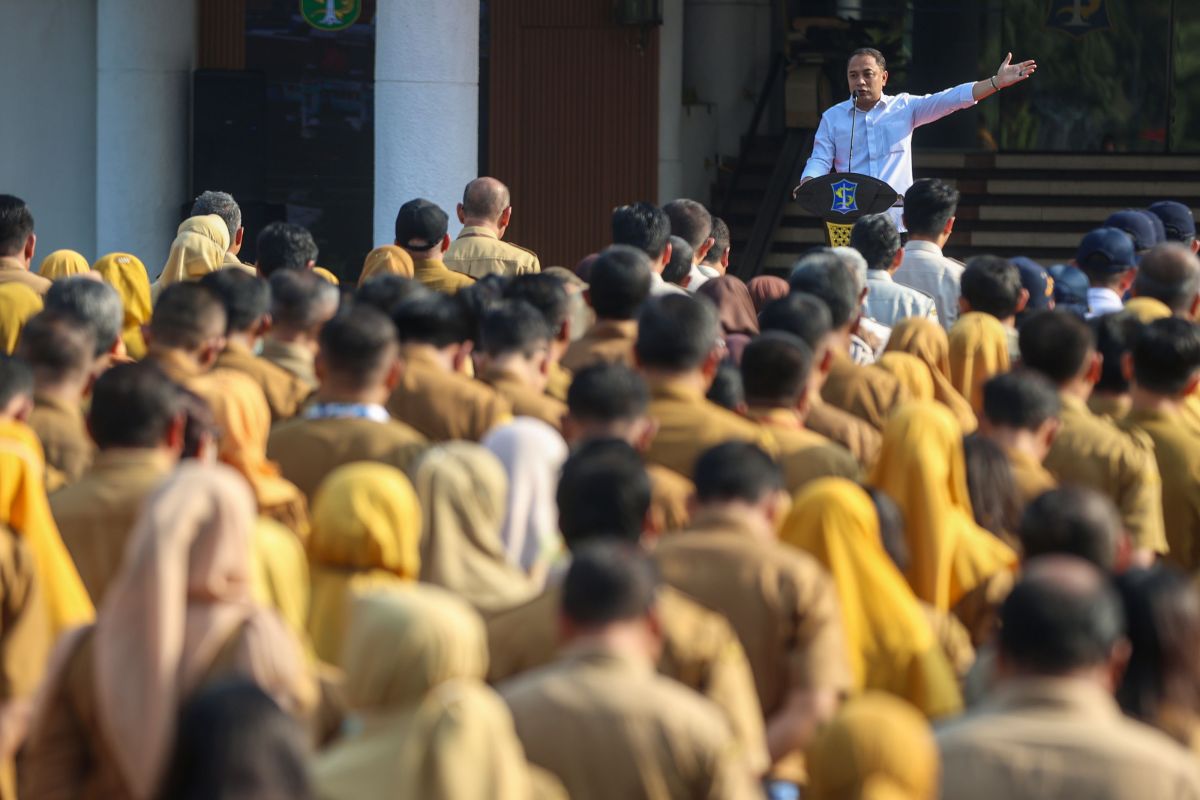
A case in Surabaya, East Java, in September 2026, demonstrates how such vulnerabilities can emerge amidst a recruitment process that is intended to be open. The Surabaya City Government is currently investigating allegations of illegal levies involving certain officials.
Previously, a member of the Municipal Police (Satpol PP) was dismissed after allegedly promising jobs in exchange for money. In another instance, two officers from the Environmental Agency were also sanctioned after being proven to have extorted traders.
The city government stated that the alleged recruitment extortion was uncovered after a citizen reported it via a direct message on social media. The citizen claimed they were asked for Rp25 million to join the Satpol PP and Rp50 million to join the Department of Transportation.
The officials allegedly involved reportedly admitted to having promised jobs in 2022 and had been returning the victim’s money in instalments. However, the repayment of the money does not negate the employment sanctions imposed.
This case is significant not merely because of the monetary value. The figures indicate a perception that government job positions can be treated as commodities with a price tag.
As this perception grows, the selection process loses its meaning, and members of the public who lack access to ‘insiders’ are placed at a disadvantage.
Entry Points
Recruitment extortion rarely exists in isolation. It grows from the intersection of the public’s need for employment, information asymmetry, and excessive trust in individuals who claim to have access to selection committees or specific officials.
On the other hand, the formal system for Civil Servant (ASN) recruitment is built on opposing principles. The Ministry of PANRB emphasises that ASN procurement must be competitive, fair, objective, transparent, free from corruption, collusion, and nepotism, and involve no fees. Selection is also designed to be technology-based, with participant scores accessible openly.
Therefore, any demand for money in recruitment is not merely a minor procedural violation. Illegal levies erode the principle of meritocracy, which serves as the foundation of ASN management.
Law Number 20 of 2023 places the strengthening of the meritocratic system as a key regulation in ASN management, asserting the role of ASN in providing professional public services free from practices of corruption, collusion, and nepotism.
The problem is that transparent procedures on paper do not automatically close the door to transactions outside the system. It is precisely here that it is important to view illegal levies as a governance issue. If applicants still believe that passing can be purchased, it means there is a ‘dark space’ that has not been fully reached by digitalisation.
Surabaya actually possesses important assets to narrow this space. In September 2026, the City Government opened 2,150 job opportunities through the ‘Mini Job Fair Surabaya Siap Kerjo’, with registration processes and vacancy information provided through official mechanisms.
This fact shows that the government has legal channels to connect job seekers with employment opportunities without the need for paid intermediaries.
However, information transparency must reach a more detailed level. Applicants need to know who the official committee members are, how the selection stages proceed, when results will be announced, where to complain when money is demanded, and how such reports are followed up.