
Sealing Is Not the Finish Line
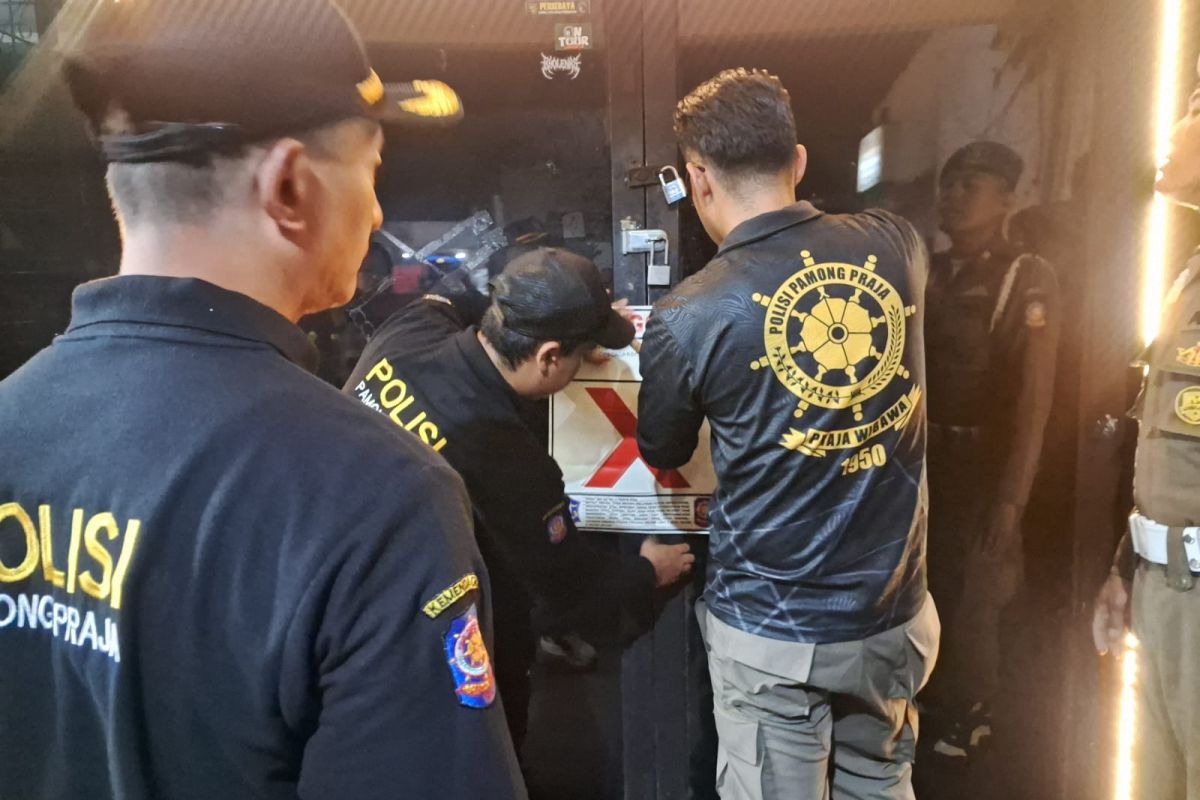
Sealing is the beginning, not the end, of the responsibility to protect the community’s living environment and the future of younger generations.
Surabaya (ANTARA) — At first glance, an alcoholic-drinks shop appears to be an ordinary retail business. Its shelves are neatly arranged, bottles are on display and transactions take place as in any other shop.
But behind this appearance are legal boundaries that must not be ignored. Business licences determine which goods may be sold, to whom they may be distributed and where transactions are permitted.
Enforcement of these rules has returned to the fore in Surabaya, East Java. The Surabaya municipal government, through the Civil Service Police Unit (Satpol PP), has taken action against 10 alcohol-sales locations suspected of breaching regulations: five liquor shops and five coffee stalls.
The alleged violations include retail sales by businesses licensed as sub-distributors and the suspected concealed sale of alcoholic drinks at coffee stalls.
The crackdown matters not merely because the government has sealed businesses or seized bottles. More fundamentally, it raises the question of how the city can ensure that trade rules genuinely protect the public, especially children and teenagers, without undermining legal certainty for businesses operating lawfully.
As access to alcoholic drinks is said to be becoming easier, the issue goes beyond shops operating in breach of their licences. Distribution chains, neighbourhood monitoring, concealed transactions and changes in public behaviour all need to be understood together.
A licence is not merely an administrative document; it is a tool for ensuring that trade complies with the permitted type of business, location and restrictions. Holding a licence is not enough if actual practices go beyond its scope.
According to the Satpol PP, some of the shops targeted held sub-distributor licences but were suspected of selling alcoholic drinks directly to consumers. Sub-distributors are expected to distribute goods within the scope of their licences, not act as retailers without meeting the applicable requirements.
Surabaya Regional Regulation No. 1 of 2023 on Trade and Industry restricts the sale of alcoholic drinks. Article 69 stipulates that sales for consumption on the premises may take place only at designated venues, including hotels, restaurants and bars, subject to the relevant rules.
Retail sales of Category A drinks are restricted to supermarkets and hypermarkets, while Category B and C drinks may be sold only at specific venues designated by the mayor.
These provisions are set out in greater detail in Surabaya Mayor Regulation No. 116 of 2023. Buyers of Category A alcoholic drinks must be at least 21 years old and show identification. Sales of Category B and C drinks for consumption on the premises are also subject to location restrictions and licensing requirements.
On 13 October 2026, the Satpol PP targeted three shops in the districts of Pabean Cantian, Sukomanunggal and Rungkut. Officers seized 16 bottles at the first location and 15 at the second, while the third shop was found to be closed. The municipal government sealed the business premises and said the cases would be processed in accordance with the rules.
The action demonstrates enforcement, but its success cannot be measured simply by the number of shops inspected or bottles seized. The real test is whether the violations stop and access that breaches the rules is reduced. Sealing must be followed by investigation, resolution of the cases and sanctions imposed on the basis of evidence and lawful procedure.