
SEAFAST IPB: Palm Oil Plays Strategic Role in Supporting Food Security
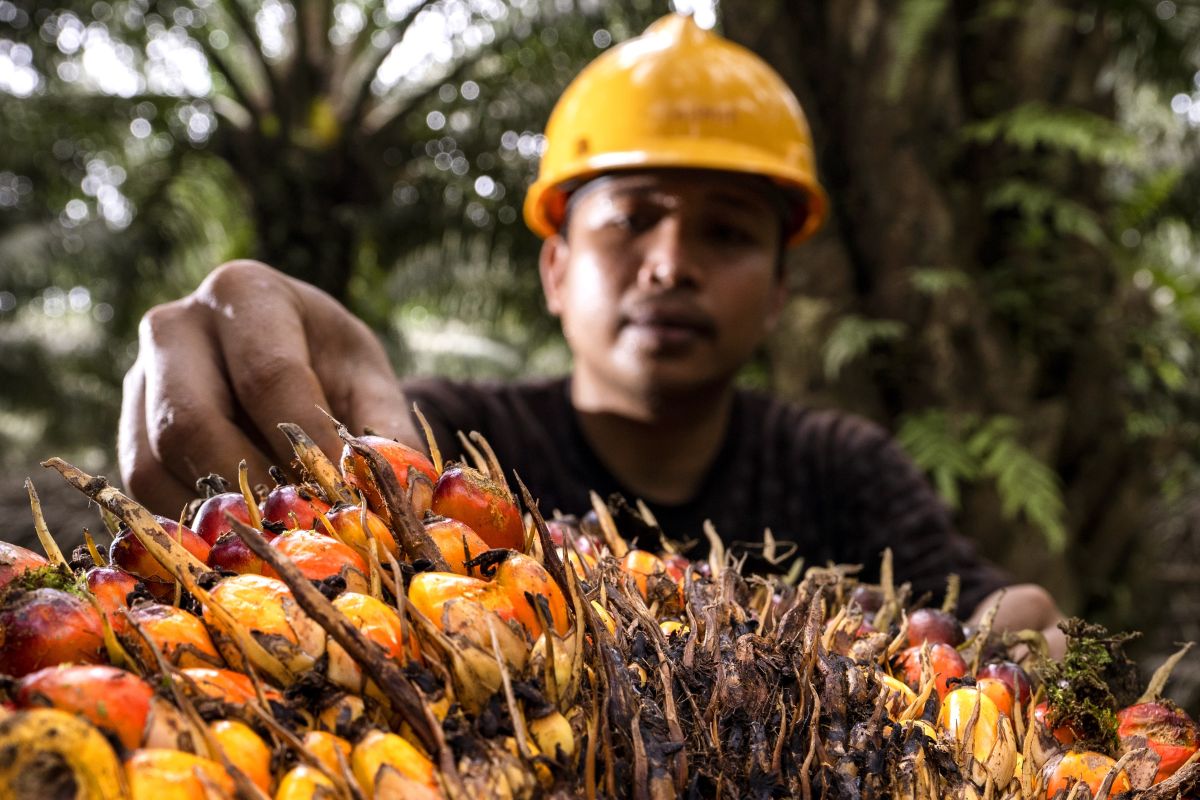
Indonesia’s palm oil industry is considered to have a strategic role in supporting national food security, from supply availability and price affordability to environmental sustainability, according to the Head of the South East Asia Food and Agriculture Science & Technology (SEAFAST) Center at IPB University, Puspo Edi Giriwono. He noted that Indonesia has the advantage of being the world’s largest palm oil producer, with crude palm oil (CPO) production reaching approximately 53 million tonnes per year. “Our palm oil can meet 100 percent of Indonesia’s needs, and even results in a surplus that can supply the global vegetable oil market,” he said in a statement in Jakarta on Saturday. This production capacity not only fulfills all domestic vegetable oil needs but also positions Indonesia as a major supplier to the global market. Puspo believes the strategic role of palm oil will become increasingly important in the future as the world’s population grows. He estimates the global population will reach around 10 to 11 billion by 2050, with a global demand for vegetable oil of about 250 million tonnes per year. With increasingly limited land availability, he argued that improving the productivity of oil palm plantations could be an effective solution to meet global vegetable oil needs sustainably without encouraging further deforestation. “What commodity can be so productive with diminishing land? Palm oil productivity will answer and supply the needs of a global population reaching 10 to 11 billion,” he stated. Beyond its productivity advantages, he added that the development of the downstream palm-based food industry must continue to be encouraged so that Indonesia does not merely become a raw material supplier but is capable of producing high-value-added products. Currently, palm oil is used for various food products, ranging from cooking oil and margarine to chocolate and various processed foods. He noted there is still room for the domestic industry to develop palm-based food derivative products. He cited examples of food industries abroad that process raw materials through up to ten advanced stages, resulting in specialized food products with much higher economic value. “Everything we consume contains palm oil. It is so flexible and has a very affordable price,” he said. To support downstream industrial development, the government, through the Plantation Fund Management Agency (BPDP), has implemented a Food and Downstream Programme aimed at increasing the added value of palm oil products through research funding, infrastructure development, and strengthening industrial partnerships. The programme initiated by the BPDP is expected to realise Indonesia’s vision of becoming a centre for a sustainable and innovative palm-based industry, particularly in the food sector. According to Puspo, the programme needs to be continuously strengthened, especially to encourage research and development of red palm oil, which has significant prospects from both a health and economic perspective. He added that this product could become a high-value downstream palm commodity capable of expanding the national food industry market.