
SE2026: Mapping the Economic Strength of Gerbangkertosusila to Support an Advanced Indonesia
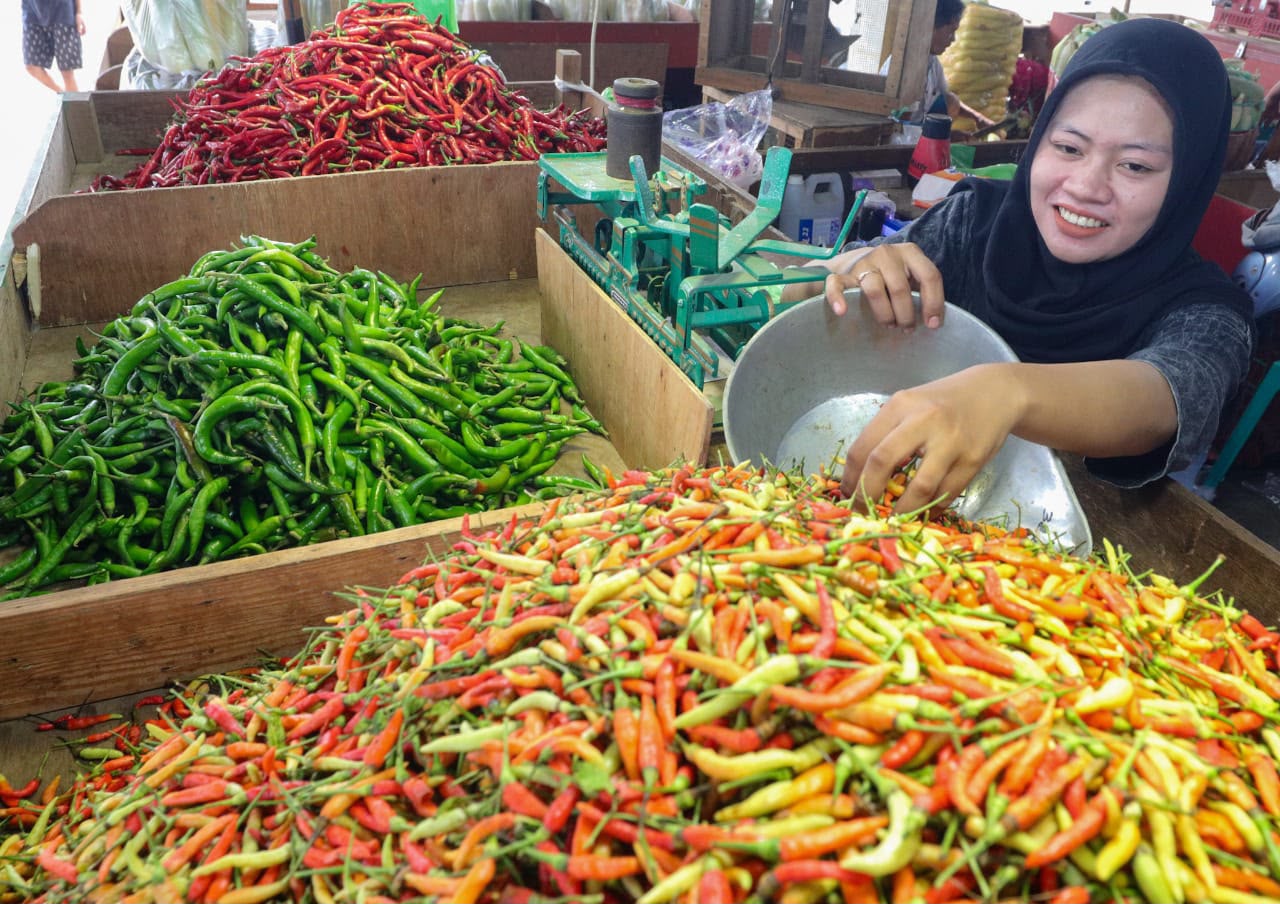
At 4.30 a.m. WIB, activity in a traditional market in Sidoarjo Regency begins to stir. Amidst the rows of stalls filled with fresh vegetables, Sulastri (48) is busy arranging spinach, water spinach, chillies, and tomatoes that have just arrived from suppliers. The sound of bargaining between traders and buyers fills the air, while food stall owners arrive early to secure the best ingredients before sunrise. Having traded for more than 20 years, Sulastri has experienced the ups and downs of business. Fluctuating commodity prices, rising operational costs, and a public purchasing power that has yet to fully recover are daily challenges. Amidst these dynamics, she hopes that small businesses like hers are not overlooked by the government. “I hope small businesses like ours are also given attention. If there is data collection that can help the government understand the condition of traders, I am certainly willing to provide the necessary information,” she said earnestly.
Sulastri’s story reflects the reality faced by millions of micro-business operators in the Gerbangkertosusila metropolitan area (Gresik, Bangkalan, Mojokerto, Surabaya, Sidoarjo, and Lamongan). As the second-largest megapolitan area in Indonesia, this region is the main economic engine of East Java. Interdependence between areas is very high; food supplies from Lamongan and Sidoarjo sustain the residents of Surabaya, while industries in Gresik and Mojokerto absorb labour across administrative boundaries. However, behind this massive economic pulse, inequality and uneven development between regions remain a significant challenge. The need for precise data capable of capturing dynamics down to the smallest business unit underpins the urgency of implementing the 2026 Economic Census (SE2026) by Statistics Indonesia (BPS). Through this decennial programme, BPS will comprehensively record all business activities outside the agricultural sector. This data collection is designed not merely to count the number of businesses, but to capture in-depth characteristics, labour absorption, local supply chains, and the extent to which digital transformation has been adopted by business actors to accelerate progress towards the grand vision of an Advanced Indonesia.
Airlangga University Surabaya economist, Gigih Prihantono, assessed that comprehensive economic data is an absolute prerequisite for effective regional development policies. According to him, the economic character of Gerbangkertosusila is highly dynamic because the mobility of workers and goods occurs almost without regional barriers every day. Without integrated micro-data, inter-regional development policies risk running independently without strong synergy. “Often the government wants to provide the right intervention, but the available data is not detailed enough. Through the 2026 Economic Census, the government can identify which business sectors are growing rapidly, which areas need infrastructure stimulus, and which business fields are most effective in absorbing local labour. Policies must no longer be formulated based on assumptions, but must be based on real field data,” Gigih stressed. He added that the utility of the census results actually goes beyond bureaucratic interests. For independent business actors, the aggregate data from SE2026 can serve as a business navigation guide to read market saturation, see new investment opportunities, and map the need for skilled labour in the Gerbangkertosusila area.
The urgency of providing precise data is closely linked to tactical steps by the East Java Provincial Government in creating an increasingly conducive investment ecosystem. The Governor of East Java, Khofifah Indar Parawansa, emphasised the importance of strong collaboration between the central government, regional governments, Bank Indonesia, business actors, and all stakeholders to generate sustained economic growth with a spirit of quality investment and public welfare. “Accelerating the economy on the ground requires a number of strategic, measurable breakthroughs, from harmonising spatial planning, providing investment land, developing industrial areas, to improving connectivity and supporting infrastructure. The availability of quality data from SE2026 will be a crucial anchor for the validity of these policies,” she explained. Therefore, the 2026 Economic Census is positioned as a vital initial step to provide accurate, up-to-date, and comprehensive economic data to support all evidence-based development policy formulation. Through this precise data blueprint, MSME empowerment programmes and regional strategic projects can be mapped in a targeted manner, so that budget allocation is truly effective and able to narrow the development gap between regions in East Java.
Source: jawawa.id (https://jawawa.id/newsitem/se2026-mapping-the-economic-strength-of-gerbangkertosusila-to-support-an-advanced-indonesia-1784620218)
Originally published by kilasjatim.com (https://kilasjatim.com/2026/07/21/se2026-memetakan-kekuatan-ekonomi-gerbangkertosusila-sebagai-penopang-indonesia-maju/), translated from Indonesian