
SCVC Successfully Performs First M-TEER in Bali Without Open Surgery
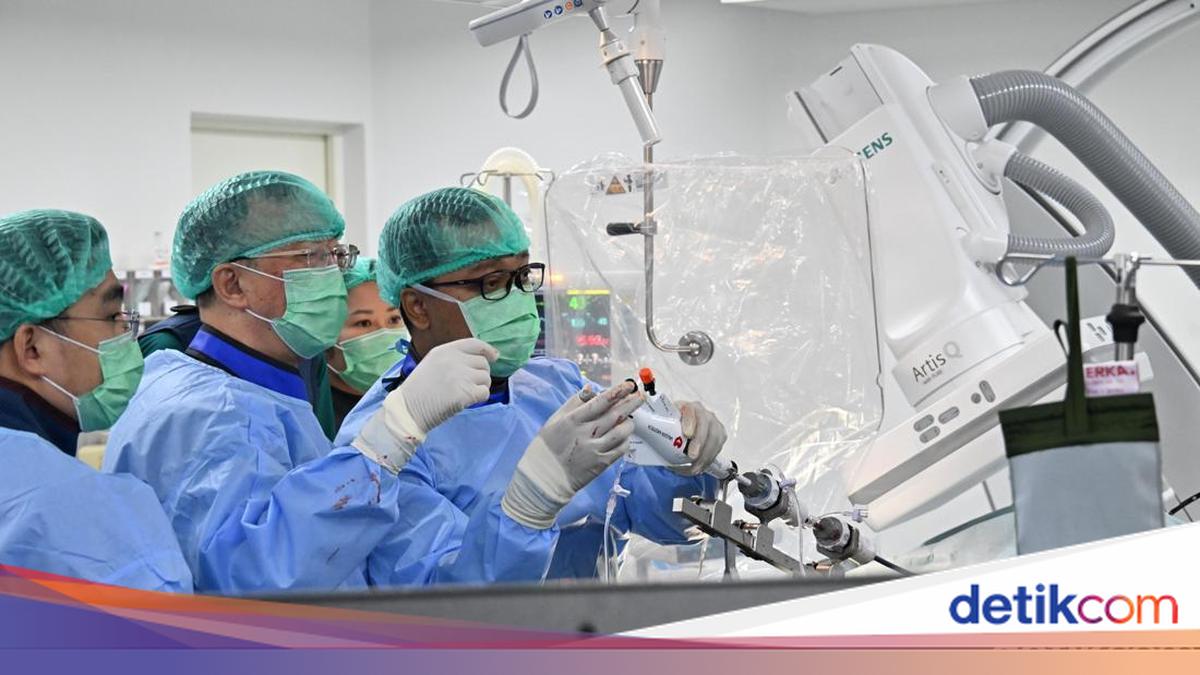
Treatment for heart valve leakage can now be performed without open-heart surgery in Bali. Sapporo Cardio Vascular Clinic (SCVC Bali) has successfully carried out the first Mitral Transcatheter Edge-to-Edge Repair (M-TEER) procedure at Bali International Hospital (BIH).
M-TEER is a minimally invasive procedure to treat mitral regurgitation (MR), or leakage of the mitral valve. The procedure is performed using a catheter inserted through a blood vessel to the heart without opening the breastbone.
The procedure was carried out by dr. I Dewa Gde Dwi Sumajaya, M.Biomed, Sp.JP(K), FIHA, FICA, Consultant Interventional Cardiologist at SCVC Bali, together with dr. Ni Made Ayu Wulan Sari, M.Biomed, Sp.JP(K), Subspecialist in Echocardiography at SCVC Bali, on 2 August. The procedure also involved international doctors, including Prof Lam Yat Yin from Hong Kong and Prof Su Xi from China.
The success forms part of the development of advanced cardiovascular care and advanced structural heart services at SCVC Bali to handle cardiac cases requiring high levels of precision, technology, and coordination among specialists.
The patient who underwent the procedure was a 68-year-old man with severe mitral regurgitation due to a degenerative process. The patient had experienced symptoms of heart failure, including swelling in the legs.
After considering the patient’s condition and the risks of open surgery, the medical team chose M-TEER as a minimally invasive approach suited to the patient’s clinical condition.
In this procedure, doctors used a special device to perform an edge-to-edge repair by bringing together the leaking portions of the mitral valve leaflets. This approach aims to prevent blood from flowing back into the heart chamber.
“The success of this procedure is determined not only by the device used, but also by the precision of planning and team coordination during the procedure,” said dr. Suma on Friday (21/8/2026).
He explained that each stage of the procedure also requires direct guidance and precise decision-making. Collaboration with the international team provided an opportunity to combine experience and expertise in handling complex cases, while strengthening knowledge transfer to medical teams in Indonesia.
The M-TEER procedure took less than two hours. Using transoesophageal echocardiography, doctors were guided in real time to determine the position of the device, ensure the valve clipping was performed accurately, and directly evaluate whether the leakage had been optimally reduced.
The recovery process was also faster compared with open-heart surgery.
This service was made possible through cooperation between SCVC Bali and Artivis, a company engaged in the distribution of medical devices. SCVC and Artivis are committed to continuing to help patients in Indonesia obtain the best healthcare services.
Steven Tse, CEO of HKAMG, said the success of M-TEER at SCVC Bali is part of the commitment to continue expanding access to more advanced cardiovascular and structural heart services in Indonesia.
“We want to ensure that patients do not always have to seek treatment abroad to obtain advanced medical technology and expertise. At SCVC Bali, we are building collaboration between Indonesian doctors and experts from the HKAMG network in Asia to deliver high-quality services while strengthening medical capacity in Indonesia. This is part of our vision in developing cardiovascular services in Southeast Asia,” he said.
Meanwhile, Suma noted that public awareness of heart valve disease remains a concern. Mitral valve leakage can develop slowly and its symptoms are often considered part of the ageing process or ordinary fatigue.
In fact, easy fatigue, shortness of breath, reduced exercise tolerance, or swelling in the legs can be signs of a heart disorder requiring further examination.
“Many people still think that heart valve abnormalities can be adequately treated with medication. In fact, medication essentially helps control symptoms and the patient’s condition, not to repair the structure of the leaking valve. Therefore, if someone has complaints such as easy fatigue, shortness of breath, or swollen legs, especially in old age, further cardiac examination should be carried out so that the condition can be identified and treated as early as possible,” explained Suma.
Through the development of structural heart services and collaboration with medical personnel from Indonesia, Hong Kong, and China, SCVC Bali is committed to continuing to expand minimally invasive cardiovascular service options in Bali.
The presence of M-TEER services is expected to support the development of internationally standardised cardiovascular care capacity in Indonesia.