
Scientists' Wild Plan to Save Earth from Doomsday
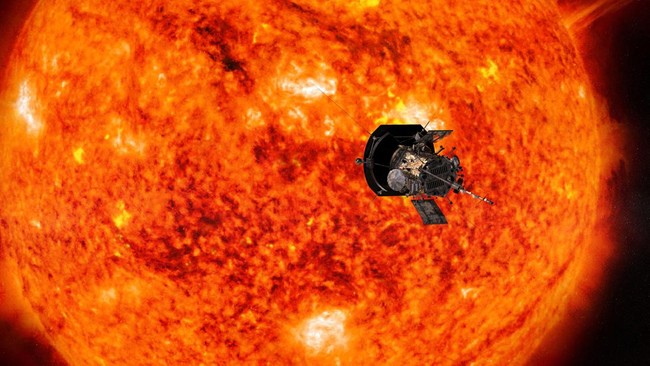
For decades, astronomers have debated whether Earth’s fate will end along with the Sun. When the Sun runs out of hydrogen in about 5 billion years, the star is expected to expand into a red giant large enough to engulf Mercury, Venus, and possibly Earth.
However, recent research published in the journal Astronomy & Astrophysics in June shows that Earth’s chances of escaping that grim end are actually greater than previously estimated.
Researchers used the latest models of how ageing stars interact with surrounding planets. The results show that the gravitational forces pulling Earth toward the expanding Sun are weaker than older models predicted.
This gives Earth more time to move away as the Sun begins shedding its outer layers into space. Even so, the findings do not guarantee that Earth will definitely survive.
Lead author Mats Esseldeurs from the KU Leuven Institute of Astronomy in Belgium said the greatest uncertainty is no longer the calculation of tidal forces.
“The greatest uncertainty is no longer the calculation of tidal forces, but how much mass the future Sun will lose,” Esseldeurs said, as quoted from Space on Wednesday (12/8/2026).
According to him, observations of Sun-like giant stars currently point to the possibility that Earth could survive, although better observations are still needed.
During the red giant phase, the Sun will undergo two competing processes. Gravitational tidal forces pull planets inward, while the star’s mass loss due to strong stellar winds pushes planets into more distant orbits.
Esseldeurs explained that Earth’s fate depends on the balance between these two effects.
“If tidal interactions dominate, Earth will be swallowed. If mass loss dominates, Earth will escape to a wider orbit,” he explained.
Unlike previous studies, the latest research uses more advanced tidal force calculations that account for changes in the internal structure and dynamics of ageing stars. The model also incorporates various possible rates of solar mass loss during the final stages of its evolution.
The results show that Mercury and Venus are still unable to avoid the expanding Sun, meaning both are certain to be engulfed. In contrast, Earth and Mars are expected to survive the red giant phase and eventually orbit farther around the remnant of the Sun, which will have become a white dwarf.
The researchers also used data from L2 Pup, a red giant star located about 183 light-years from Earth with a mass similar to the Sun. By incorporating that star’s mass loss rate into the model, they found that Earth moves away quickly enough to avoid being swallowed.
Nevertheless, astronomers stress that Earth’s final fate cannot yet be determined because the mass loss rate of Sun-like stars in the final stages of their lives cannot yet be observed with precision.
For humans, this finding provides more academic reassurance than practical solutions. Most scientists agree that the Sun will continue to heat up, causing Earth’s oceans to evaporate and making the planet uninhabitable in about 1 billion years, long before the Sun enters its red giant phase.
Although humans will likely not witness that event, the research is considered important for understanding how planetary systems evolve as their stars age. The researchers hope that observations of dying Sun-like stars will clarify the future of the Earth-Sun system.