
Scientists Warn of Environmental Risks from AI Data Centre Construction in Space
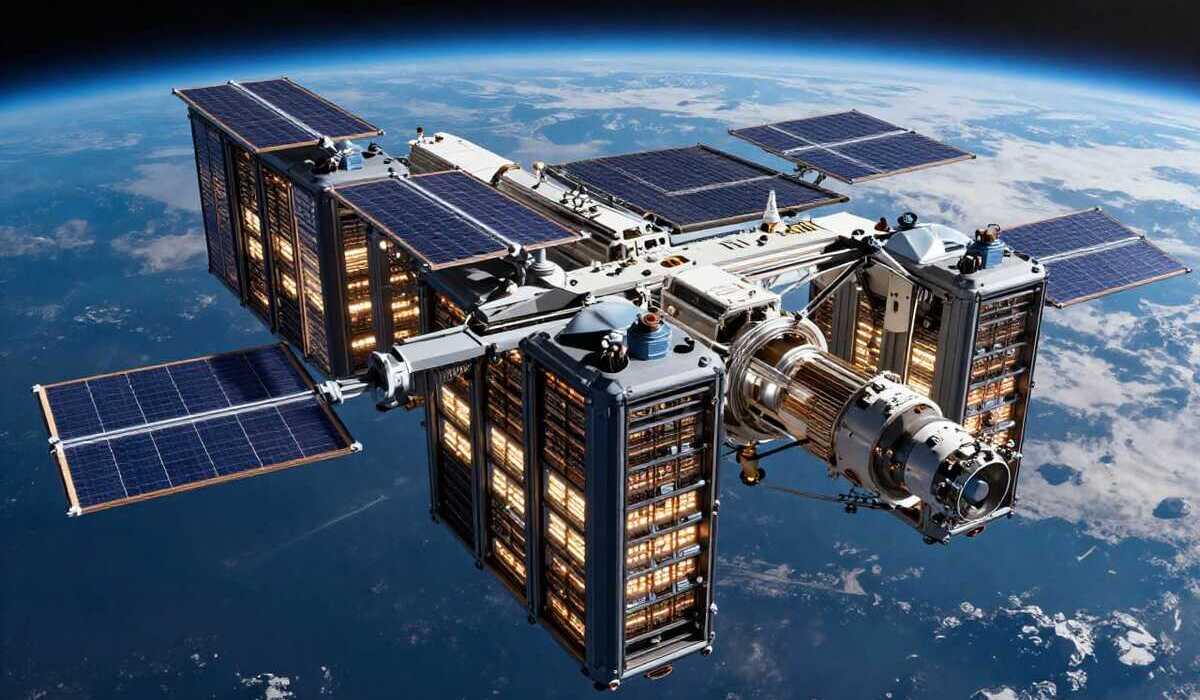
The growing computational demand for developing artificial intelligence (AI) is driving the emergence of an ambitious idea: building data centres in space. The concept, which is being studied by several space and technology companies, is seen as a way to optimise solar energy use and reduce electricity consumption on Earth. However, behind this potential, scientists are beginning to voice serious concerns about the possible environmental impact.
Orbital data centres are designed to be placed in Earth’s orbit, utilising solar panels as their primary energy source. This system is expected to overcome the high electricity and water requirements for cooling AI servers, which has been a major challenge for terrestrial data centres.
According to a report by the U.S. Government Accountability Office (GAO), this concept does have the potential to support future computational needs, but it still faces complex technical and environmental challenges.
One of the greatest concerns among experts is the increased frequency of rocket launches needed to send the data centre infrastructure into orbit. Each launch produces exhaust emissions and harmful particles such as black carbon, aluminium oxide, and nitrogen oxides that can affect atmospheric quality. Several studies indicate that if launch activity increases dramatically, the impact on the ozone layer and global climate must be seriously considered. The accumulation of particles in the upper atmosphere could alter the Earth’s thermal balance.
In addition to rocket emissions, researchers are highlighting the potential increase in space debris. The placement of thousands of new satellites to support data centre operations risks raising the probability of collisions in orbit. The resulting satellite fragments can persist for years and threaten future space exploration missions.
The astronomy community has also voiced concerns about light pollution in the night sky. Light reflected from new satellite constellations could interfere with ground-based telescope observations. Based on a study in the Monthly Notices of the Royal Astronomical Society, the increase in the number of satellites could degrade the quality of celestial object observations, particularly at dawn and dusk.
Environmental organisations such as Earthjustice, Public Employees for Environmental Responsibility (PEER), and DarkSky International are urging regulators in the United States to mandate comprehensive environmental impact reviews before operational permits are granted.
On the other side, technology developers see great opportunities. By processing data directly in orbit (edge computing in space), information from Earth observation satellites and space telescopes can be analysed more quickly without having to send it all back to Earth. This approach is considered capable of improving the efficiency of AI computation, whose capacity continues to swell.
Scientists assess that this innovation is indeed promising but must be accompanied by clear regulations. They caution that the success of technology is measured not only by its sophistication but also by its responsibility towards long-term sustainability, both on Earth and in space.