
Scientists Warn Earth Nears Critical Tipping Points Threatening Human Existence
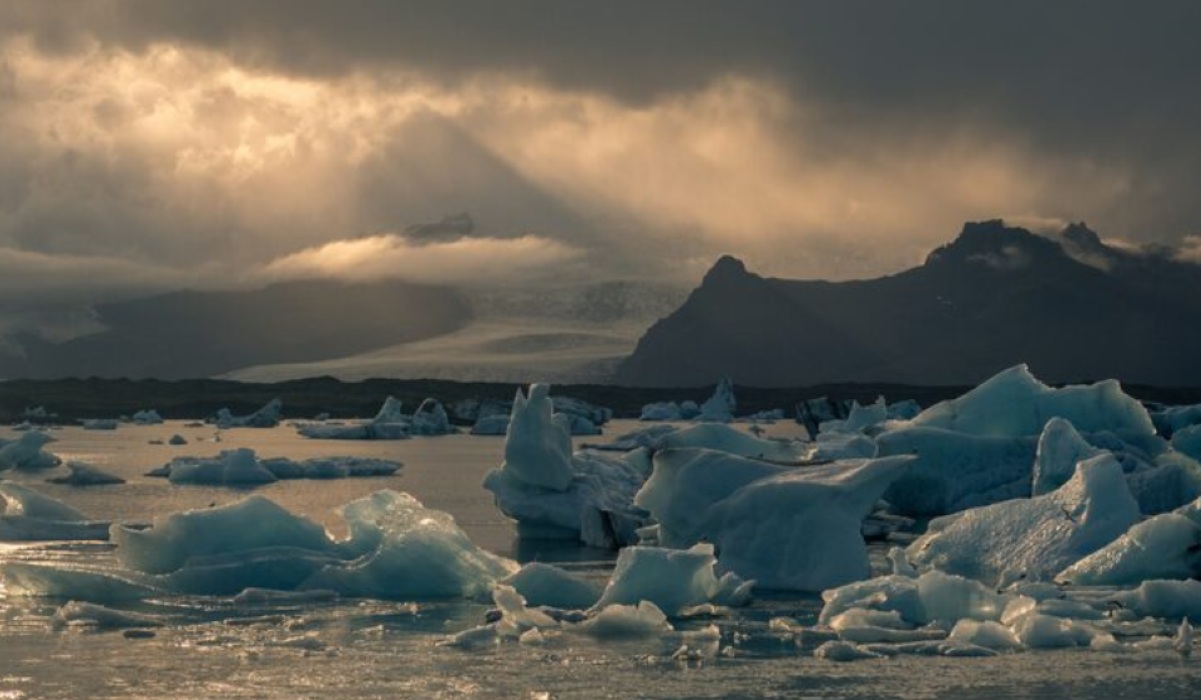
Scientists have issued a stark warning that climate change has become an existential threat to humanity. The global community is currently struggling to cope with intensifying pressures from a planetary environment that continues to change drastically.
The Earth is reported to be hurtling towards several global tipping points that risk triggering catastrophic consequences for human survival. Among the most alarming milestones on the horizon are the collapse of the Amazon rainforest, the complete melting of polar ice sheets, and uncontrolled global temperature rises.
This situation is exacerbated by the explosion in human population, which, when combined with these climatic elements, could unleash widespread catastrophe. The warning comes as several regions in Europe have just experienced their hottest summer on record.
According to a report from the Daily Star, as ice sheets melt, sea levels will rise dramatically. This will shrink the habitable space available to humans at a time when the population continues to explode, forcing displaced communities to move far inland.
Continuously rising temperatures are predicted to render large parts of the Earth uninhabitable. This phenomenon will create waves of climate migrants on a massive scale. Meanwhile, the destruction of the Amazon and the loss of other tropical forests will accelerate the overall trajectory of planetary warming.
Will Steffen, Emeritus Professor at the Australian National University, warned that humanity needs at least 30 years to change course. However, he fears that by that point, the damage may already be irreversible.
In an interview with Voice of Action, Professor Steffen painted a grim picture of humanity’s current position. “Given the momentum in both the Earth system and the human system, the gap between the ‘reaction time’ needed to steer humanity towards a sustainable future and the ‘intervention time’ remaining to prevent catastrophe is widening,” he said.
He added that in many cases, the remaining intervention time has shrunk to less than the time required to transition to a more sustainable system. Professor Steffen used the analogy of the Titanic to explain the crisis.
Global temperatures continue to rise relentlessly, with scientists confirming that the mercury increases by approximately 0.15 to 0.20 degrees Celsius every decade. In addition to the loss of polar ice, researchers are also deeply concerned about the thawing of permafrost.
Permafrost is a layer of permanently frozen soil beneath the surface, covering an area of 18 million square kilometres in the northern hemisphere. This frozen zone stores the remains of plant life and microorganisms that have been buried for thousands of years.
The main problem is that carbon dioxide (CO2) from dead vegetation and these microorganisms is stored in the Earth’s giant natural freezer. As permafrost melts at an alarming rate, this CO2 will be released into the atmosphere. Current estimates suggest there is up to 1.5 trillion metric tonnes of carbon stored in permafrost, ready to exacerbate the greenhouse effect if fully released.