
Scientists Stunned to Discover Traces of Antarctica's Past in a Drawer
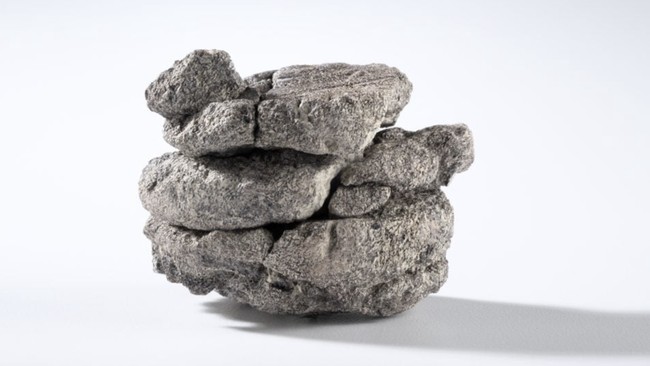
A fossil that had been stored in an archive drawer for more than 40 years has finally been revealed as the first dinosaur bone ever discovered in Antarctica. The fossil was first found around four decades ago when two scientists, British geologist Michael Thomson and German geologist and palaeontologist Reinhard Förster, took part in a British Antarctic Survey expedition on James Ross Island, located on the southeastern side of Antarctica. While mapping rock layers during the summer, the pair discovered various fossils, including invertebrate traces, plants, bony fish scales, and a large vertebral bone. The vertebra was subsequently taken to the UK and stored in the British Antarctic Survey archives. In Thomson’s field notes, the fossil was only briefly described and accompanied by a small sketch as one of many fossil finds that day. For more than four decades, the bone was never studied further. Only a few years ago did palaeontologist Mark Evans, who manages the geological collections and laboratory at the British Antarctic Survey, rediscover the fossil within the institution’s collection. “When I first saw this bone in our collection a few years ago, I suspected it was a dinosaur,” Evans said. After further research, Evans and his team confirmed the fossil is an extremely rare specimen: an upper tail bone from a sauropod dinosaur that lived on the Antarctic continent during the Late Cretaceous period. The find also makes it the earliest collected Antarctic dinosaur specimen and only the second sauropod bone ever found in the region. Antarctica has not been known as a region rich in dinosaur fossils. To date, the continent has the fewest dinosaur fossils compared to other continents. Researchers suspect the scarcity of discoveries is not because dinosaurs never lived there, but because most of Antarctica is now covered by ice sheets, a condition different from the Mesozoic Era when dinosaurs roamed the Earth. So far, scientists have only found 12 dinosaur species in Antarctica, all from Mount Kirkpatrick and James Ross Island, two relatively ice-free areas with many rock outcrops. Through the bone’s distinctive shape, featuring a concave indentation on one side and a convex surface on the other, the research team identified the fossil as a member of the Eutitanosauria group. Based on its internal structure, the fossil was then classified as a lithostrotian titanosaur. Although there is not yet enough evidence to determine the species definitively, the fossil bears a striking resemblance to Muyelensaurus pecheni, a titanosaur species from the Late Cretaceous previously found in Argentina. Titanosaurs are known as one of the largest dinosaur groups ever to live on Earth. However, the size of the fossil found in Antarctica is relatively small, suggesting it came from a young individual or a small-bodied adult dinosaur. The researchers believe this fossil can help reveal how ancient animals dispersed across the supercontinent Gondwana, when Antarctica was still connected to Australia, southern Africa, and South America. “To date, no titanosaurs have been found in Australia, and there is only very limited evidence in New Zealand,” said Paul Barrett, a palaeobiologist at the Natural History Museum in London. “Confirmation of these animals’ presence in Antarctica makes it highly likely they continued their journey to those regions, which were still connected at the time.” Evans also noted that this discovery proves that major scientific finds sometimes come from old collections that have been overlooked for years. “Looking back at Mike’s notebook, he already knew this was a large reptile. So it is very special to be able to confirm his find 40 years later,” Evans said. The research findings have been published in the scientific journal Acta Palaeontologica Polonica.