
Scientists Reveal New Facts: One Bomb Explodes in Indonesian Waters Every 62 Minutes
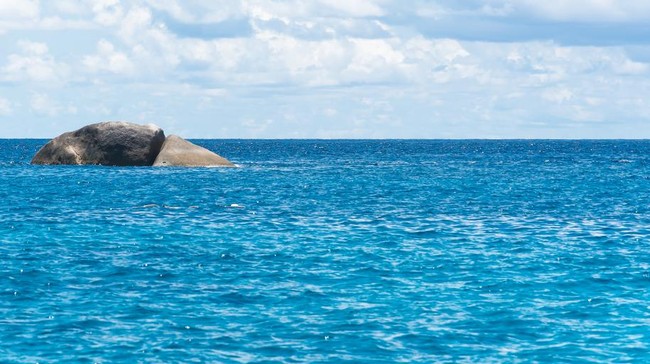
Blast fishing remains widespread in Indonesian waters, with a new study revealing that bomb explosions occur on average once every 62 minutes. Researchers deployed underwater microphones at several locations in the Sangkarrang Islands, also known as the Spermonde Islands, situated in the waters west of Sulawesi, Indonesia. They then used machine learning technology to detect the sounds of bomb explosions across a broad marine area.
The monitoring results indicate an alarming scale of bombing. The microphones recorded 3,570 bomb explosions from 3,650 hours of audio recordings. Projected over a full year, the researchers estimate that bombing activity could reach around 8,500 incidents, equivalent to one explosion every 62 minutes.
Blast fishing is carried out by throwing explosives into the water. The explosion produces a shock wave that can kill large numbers of fish quickly. However, this method also destroys underwater habitats, particularly coral reefs.
Coral reefs cover less than 1% of the world’s seabed, yet this ecosystem provides a habitat for more than 25% of marine species. Damage from a single explosion can persist for a very long time. Dr Ben Williams, a marine biologist from University College London and the Institute of Zoology, said fish populations require decades to recover after being affected by blast fishing. The damage can also have a knock-on effect on coastal communities that depend on the fisheries sector for their livelihoods.
In this study, scientists installed underwater microphones in the Spermonde Islands. The devices captured a variety of sounds, ranging from the natural sounds of healthy coral reef ecosystems to the sounds of bomb explosions. The system was able to detect bombing activity across an area of at least 900 square kilometres, of which around 100 square kilometres is coral reef area.
After collecting the recordings, researchers fed the audio data into a machine learning model to identify explosion events. The technology allowed researchers to map how often blast fishing occurs without having to continuously monitor the marine area directly.
According to the researchers’ calculations, if all detected bombs exploded in coral reef areas, the activity could potentially destroy up to 0.17 square kilometres of coral reef per year. Within three years, the extent of damage could equal the size of Vatican City. However, the researchers stressed that the microphones cannot confirm whether every explosion occurred directly above a coral reef.
The findings demonstrate the scale of the challenge in protecting coral reefs. Nevertheless, the researchers believe that sound detection technology can be a first step towards addressing the problem. By identifying the locations most frequently targeted for bombing, conservationists and local communities can focus protection efforts and seek alternative livelihoods for fishers.
Williams said the next challenge is not only stopping blast fishing but also providing alternative sources of income for communities. According to him, sustainable fisheries could be one option. The tourism sector also has the potential to provide an economic alternative while encouraging communities to protect marine ecosystems.
“When ecosystems are valued as they should be and conservation efforts are funded, people who once exploited wildlife—including blast fishers—actually switch to pursuing careers in the protection and restoration of those ecosystems,” Williams said.
Coral restoration efforts are also beginning to show results. Williams noted that the Spermonde Islands are the site of one of the world’s largest coral reef restoration programmes. The programme uses steel structures called reef stars coated with coral reef sand. The structures are placed to stabilise areas previously destroyed by blast fishing. Each structure is then fitted with 15 coral fragments taken from healthy nearby reefs.
The results have been significant. Within a few years, coral cover at restoration sites can increase from less than 5% to more than 80%. However, Williams cautioned that restoration requires substantial funding. Therefore, conservation efforts cannot rely solely on repairing damage that has already occurred. Researchers believe the most important step remains preventing damage from the outset by tackling blast fishing and creating sustainable economic options for coastal communities.
The study was published in the journal Remote Sensing in Ecology and Conservation.
Source: jawawa.id (https://jawawa.id/newsitem/scientists-reveal-new-facts-one-bomb-explodes-in-indonesian-waters-every-62-minutes-1787287882)
Originally published by CNBC Indonesia (https://www.cnbcindonesia.com/tech/20260821093148-37-761174/ilmuwan-ungkap-fakta-baru-1-bom-meledak-di-laut-ri-tiap-62-menit), translated from Indonesian