
Scientists Reveal Giant's Causeway Formed by Global Volcanic Activity, Not Mythical Giants
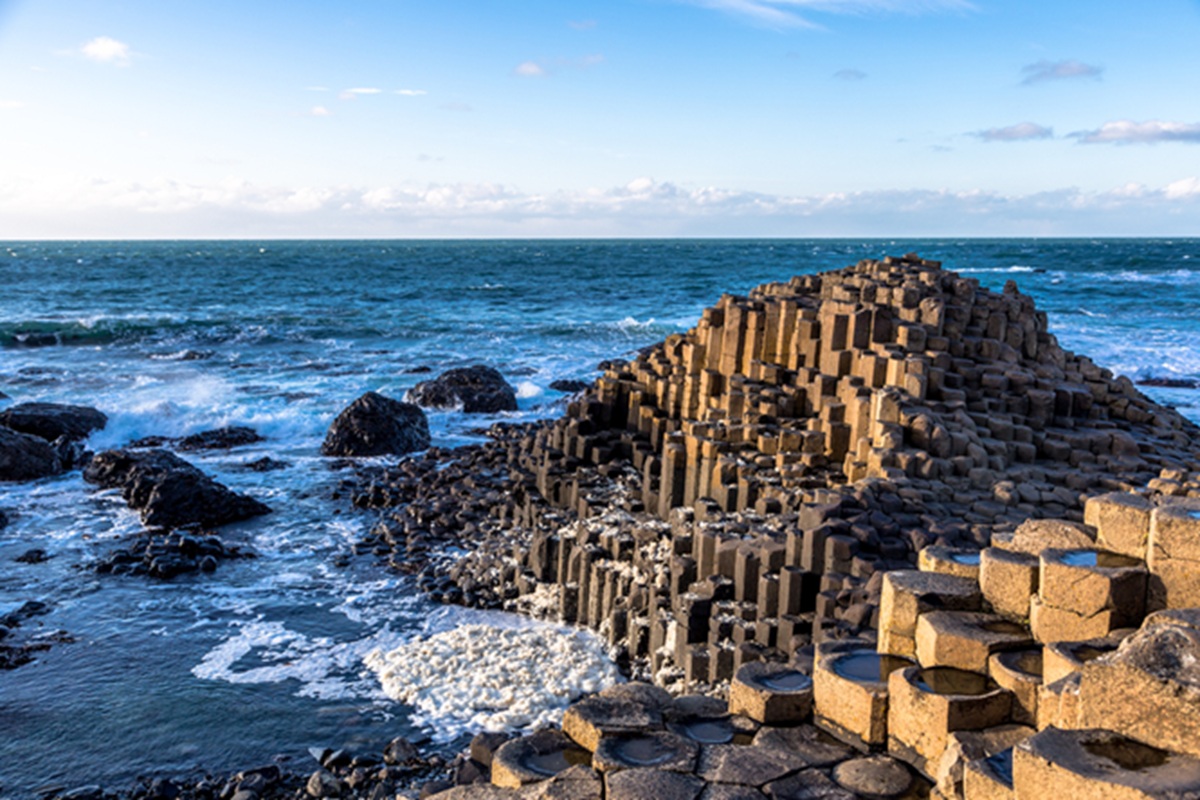
For centuries, a legend has been passed down through generations in Northern Ireland. The story tells of an Irish giant named Finn McCool who built the Giant’s Causeway by hurling chunks of the Antrim coast into the sea to fight his Scottish rival, Benandonner. However, scientists have now uncovered the scientific facts behind the UNESCO World Heritage site. Research indicates that the formation of the 40,000 interlocking basalt columns was the result of intense volcanic activity during a ‘major global volcanic event’ around 60 million years ago.
Geochronologists studying the Giant’s Causeway found that the site formed over a period of 5.5 million years. This duration is 8 million years shorter than experts had previously estimated. Furthermore, the formation process is connected to a significant global volcanic event, traces of which are recorded in rocks in far-flung locations such as Greenland. For the first time, scientists have been able to link the first lava flows on the Northern Irish plateau with the volcanic activity that formed the giant basalt columns in Fingal’s Cave, Scotland. Previously, the rocks in Scotland were thought to have formed millions of years after the Giant’s Causeway.
Dr. Simon Tapster, a geochronologist from the British Geological Survey (BGS), explained the significance of this discovery. ‘Essentially, what we have done is by piecing together these volcanic rock sequences across the North Atlantic, but focusing on Northern Ireland, we have been able to reassess a major, globally impactful volcanic event,’ said Dr. Tapster. ‘In doing so, and in reassessing the timescale, we have shown that the event actually occurred over a much shorter duration.’ Scientifically, the dramatic landscape of the Giant’s Causeway formed when thick molten rock (lava) rose through cracks in the Earth’s crust. As the lava cooled and contracted, stress and tension built up within the rock, forcing it to fracture into mostly hexagonal columns. Dr. Tapster added that by looking at this high-resolution timeline, they can now match the geological data from Northern Ireland with various other locations, such as islands in Scotland, the Faroe Islands, and Greenland.