
Scientists Map Underground Fungal 'Motorway' 1 Billion Times the Earth-Sun Distance
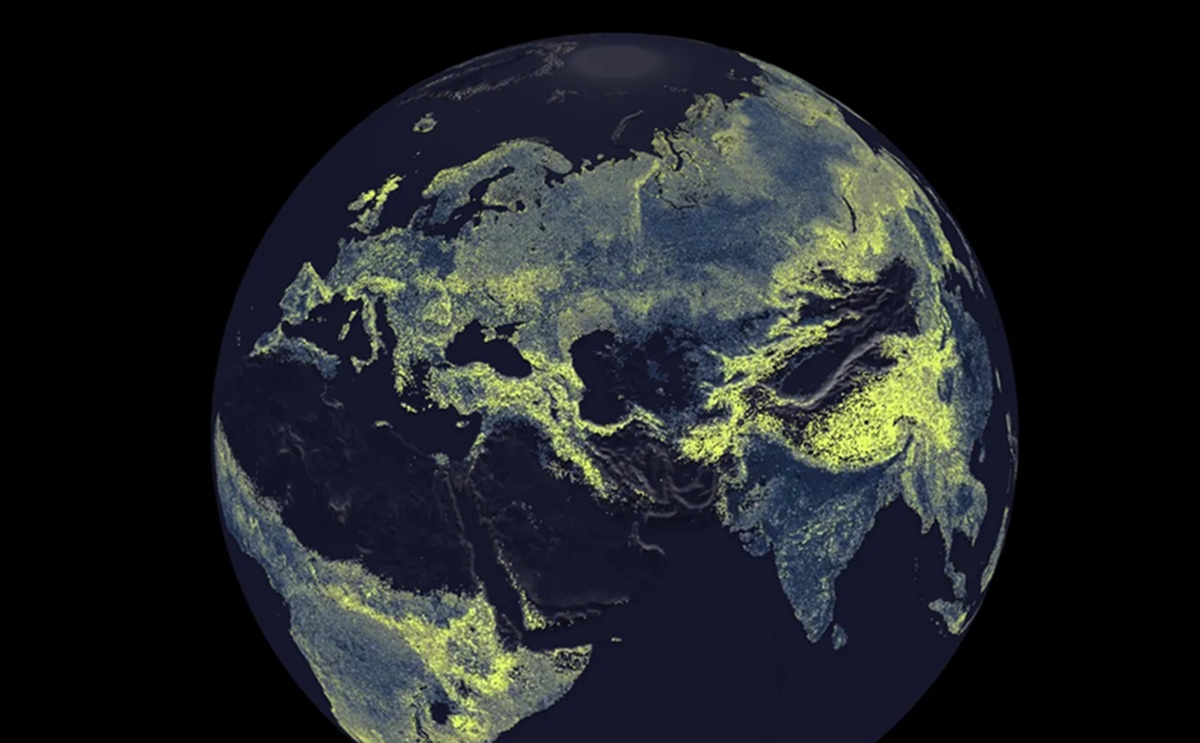
Beneath the ground we walk on lies a giant hidden network that supports much of life on Earth. For the first time, scientists have successfully mapped the underground ‘motorway’ formed by arbuscular mycorrhizal (AM) fungi. In a study published in the journal Science, this network is estimated to stretch 110 quadrillion kilometres, a fantastic distance equivalent to nearly one billion times the distance from the Earth to the Sun. The network of fine threads called hyphae locks away around 300 megatons of carbon, or the equivalent of 4 to 6 times the total mass of all living humans today. “It is very difficult to overstate the importance and sheer scale of these fungi,” said Dr Justin Stewart, lead author of the study from the Society for the Protection of Underground Networks (SPUN). “There can be up to 10 metres of mycorrhizal network in just a single teaspoon of soil.” To compile this global map, the researchers aggregated measurements from 16,000 soil core samples worldwide and then analysed them using machine-learning models. They found that grasslands store around 40% of this fungal infrastructure, with the highest densities predicted in the wetlands of South Sudan, the Everglades in Florida, and the Tibetan Plateau. Ecologically, this fungal network functions like the Earth’s circulatory system. It moves approximately 4 billion tonnes of carbon dioxide into the soil each year, equivalent to 11% of total carbon emissions from human activities. The network also extends the reach of plant roots by up to 100 times to supply water and nutrients. “With the emergence of new technologies in high-resolution imaging, machine-learning, and robotics, we are beginning to uncover what has been hidden beneath our feet,” said Dr Corentin Bisot, one of the co-authors and a biophysicist from AMOLF. However, the report also brings bad news. The density of fungal networks in agricultural land is predicted to be 50% lower than in wild ecosystems. The researchers warn that this decline could damage the soil’s ability to store carbon and withstand environmental stress. More worryingly, 95% of fungal biodiversity hotspots lie outside protected areas. Dr Toby Kiers, Executive Director of SPUN, stressed the need for concrete action. “Fungi have been ignored in climate and conservation agendas for too long. Now is the time to change course,” he said. Meanwhile, Merlin Sheldrake, a biologist involved in the study, described the map as an exciting first step. He believes that understanding this planetary transport system can help humanity face various future global challenges, from food security to climate change.