
Scientists Make Breakthrough: Single Injection Cuts Cholesterol by More Than 50%
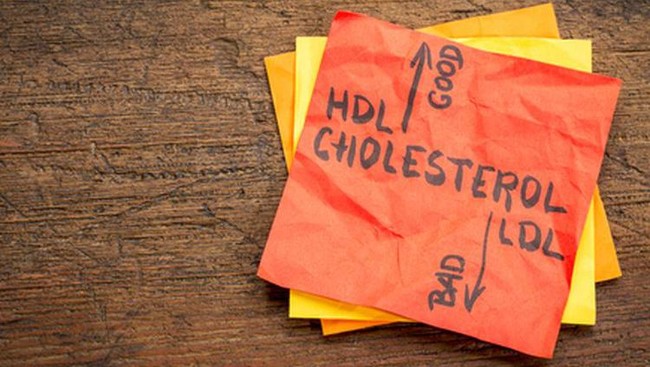
Scientists have reported promising early results from a gene-editing therapy designed to lower levels of ‘bad’ LDL cholesterol. In an initial trial, a single infusion of a CRISPR-Cas9-based treatment reduced LDL by almost 50% and triglycerides by around 50% for more than a year.
The findings come from four patients who received the highest dose in a pilot study. The latest results were published in The New England Journal of Medicine (NEJM).
The research remains at a very early stage. The initial study involved only 15 patients with extremely high cholesterol who did not respond to conventional treatment. It was primarily designed to test the safety of five dose levels of the gene-editing therapy.
The therapy is delivered by infusion and uses CRISPR-Cas9 technology, often described as ‘biological scissors’. It works by cutting a specific gene location to alter or disable the function of the targeted gene.
‘If you had asked me 15 years ago whether we could do something like this, I would probably have thought you were mad,’ said Dr Steven Nissen, chief academic officer of the Sydell and Arnold Miller Family Heart, Vascular & Thoracic Institute at Cleveland Clinic in Ohio.
The latest data released in the NEJM on Friday also sought to answer a key question about the therapy: whether its effects truly last in the long term.
‘Is something like this really a once-and-done therapy? That has always been the question,’ said Dr Luke Laffin, a preventive cardiologist at Cleveland Clinic and lead author of the study.
According to Laffin, the reductions in LDL and triglycerides seen 60 days after treatment were sustained for more than a year.
‘These new data essentially show that the reductions in LDL cholesterol and triglycerides we saw 60 days after treatment have lasted for more than a year. In people who received the highest dose, the reductions appear durable and safe,’ he said.
LDL, or low-density lipoprotein, is known as ‘bad’ cholesterol. It plays a major role in heart disease, one of the leading causes of death among adults in the United States and worldwide. Triglycerides are another type of fat in the blood also linked to increased cardiovascular risk.
If similar results can be confirmed in larger clinical trials, the therapy could become a breakthrough, particularly for younger people with severe cholesterol disorders.
‘If you are 20 years old and have very high cholesterol, it may make far more sense to have a single treatment that does not require you to take a pill every day or receive an injection every two weeks for the next 60 years,’ said Dr Ann Marie Navar, a preventive cardiologist and associate professor of cardiology at UT Southwestern Medical Center in Dallas. Navar was not involved in the research.
According to Navar, the potential of this therapy is considerable. She also found the results compelling because many patients across age groups forget to take their cholesterol medication daily.
‘Despite the many therapies available, most people do not have controlled LDL levels,’ she said.
Researchers estimate that only about half of patients take their cholesterol medication more than 80% of the time. Meanwhile, around 33% to 50% of patients stop taking statins within a year of starting them.
The idea for the gene-editing therapy stems from a natural mutation in the ANGPTL3 gene, or angiopoietin-like protein 3, which helps regulate LDL and triglyceride levels.
In people with this mutation, one or both copies of the ANGPTL3 gene are inactive. The result is striking: very low LDL and triglyceride levels throughout life with no apparent negative effects. The mutation is also known to significantly reduce, and in some cases eliminate, the risk of heart disease.
Experts estimate that around one in 250 people in the United States carries this mutation.
‘This is a naturally occurring mutation that provides protection against cardiovascular disease,’ said Nissen.
‘And now that CRISPR is available, we have the ability to alter other people’s genes so they can also gain this protection,’ he added.
In people with the natural mutation, the inactive ANGPTL3 gene is present in every cell of the body. By contrast, the CRISPR-Cas9 therapy under development targets only the liver.
The liver was chosen because it is responsible for producing triglycerides and cholesterol, while also helping to remove excess amounts from the bloodstream.
According to Nissen, focusing the therapy on the liver provides a degree of confidence in terms of long-term safety. The approach is thought to reduce the likelihood of unintended gene editing in other parts of the body.
In the study, patients received several dose levels, starting at 0.1 milligrams per kilogram of body weight, then 0.3, 0.6, 0.7, up to the highest dose of 0.8 milligrams per kilogram.
The best results were seen in patients who received the 0.8 milligram per kilogram dose. Two months after infusion, this group experienced an average triglyceride reduction of 55%, while LDL levels fell by almost 50%.
After one year, average triglyceride levels in that group remained about 48% lower. Cholesterol levels were recorded as down by almost 53%.
However, currently available medicines can also lower LDL to a similar range as seen in the study.
‘In fact, some drugs are slightly more potent,’ said Dr Pradeep Natarajan, director of preventive cardiology at Massachusetts General Hospital and associate professor of medicine at Harvard Medical School in Boston. Natarajan was not involved in the research.
Typical LDL levels are around 100. But for people who already have heart disease or were born with difficult-to-control cholesterol problems, cardiologists may target LDL levels of around 40 or 50. According to Natarajan, achieving such low levels through diet and lifestyle changes alone is very difficult.
In terms of side effects, early results suggest the therapy is relatively well tolerated. The main side effect was irritation at the infusion site.
One patient experienced a spinal disc herniation, while another had elevated enzymes that can indicate liver damage. However, those enzyme levels returned to normal within two weeks.
One patient died six months after receiving the infusion. Nissen said that patient had extensive and severe cardiovascular disease and had received only the lowest dose of 0.1 milligrams per kilogram, which he said had no effect on cholesterol levels.
‘We do not think his death has any implications for this study,’ said Nissen.
In addition, the US Food and Drug Administration (FDA) recommends that study participants be monitored for 15 years after the full clinical trial programme is completed. The monitoring is intended to detect any possible long-term side effects.
Another point of concern is HDL, or ‘good’ cholesterol. The study found a reduction in HDL of about 20% both two months and one year after therapy.
Follow-up research has now begun in the United States and Australia. The clinical trial will involve up to 40 people receiving the highest dose, with the aim of clarifying how long the therapy’s effects can last.
After that, the research must still pass phase 2 and phase 3 clinical trials before the therapy can be submitted for FDA approval. That process could take years before the therapy becomes more widely available.
Although still in the research stage, public enthusiasm for the gene-editing therapy is already emerging. Laffin said many people have contacted the American Heart Association and Cleveland Clinic to ask about joining clinical trials.
‘People are calling the American Heart Association, calling us at Cleveland Clinic — there is a great deal of enthusiasm. We did not know whether patients would be willing to undergo genetic therapy, but clearly they are,’ said Laffin.