
Scientists Find Reason for the Evolution of Short Arms in Predatory Dinosaurs
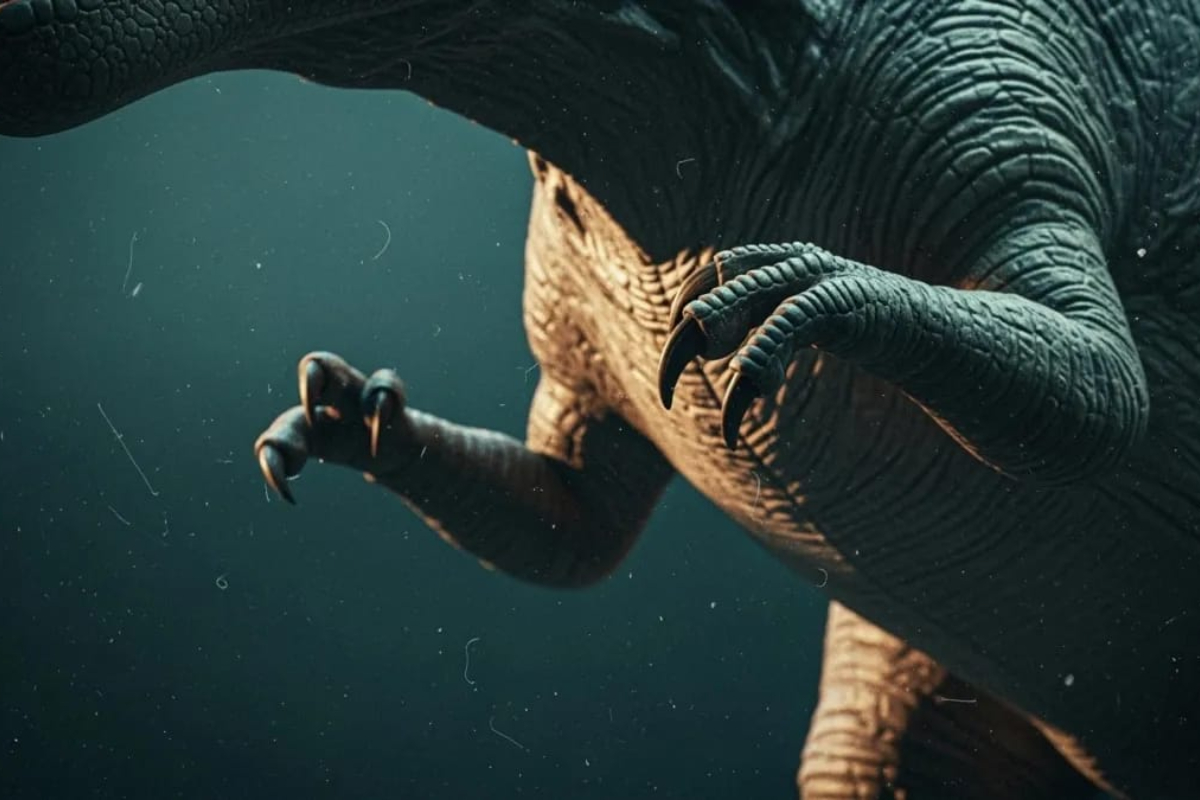
Scientists have shown that the short forelimbs of Tyrannosaurus rex were not merely a consequence of its colossal body size but part of a major shift in hunting strategy among predatory dinosaurs. The study, led by researchers from University College London (UCL) and the University of Cambridge and published in Proceedings of the Royal Society B, analysed 82 theropod species, a two-legged group of predominantly carnivorous dinosaurs. The results indicate that short arms evolved independently in at least five lineages of predatory dinosaurs, including the tyrannosaurids that include T. rex.
Researchers found that dinosaurs with short arms generally possessed large, highly robust skulls. This relationship appears stronger than any link between arm size and overall body size.
The team suggests the change may reflect predators increasingly relying on deadly bites rather than claws when hunting giants such as sauropods.
Lead author Charlie Roger Scherer said the head and jaws gradually assumed the primary role in striking prey. ‘This is a use‑it‑or‑lose‑it principle. As the arms became less necessary, their size continued to shrink through evolution,’ he said. He added that using claws to grasp very large sauropods was less effective than striking with a powerful jaw.
In the study, T. rex was identified as the dinosaur with the strongest skull. Tyrannotitan occupied the next position, a giant predator that lived in what is now Argentina millions of years before T. rex. The researchers hypothesise that the emergence of giant herbivores triggered an ‘evolutionary arms race’ in which predators developed sturdier skulls and jaws to subdue ever-larger prey.
Beyond the tyrannosaurids, the study identified several other theropod groups that show reduced forelimbs, including Abelisauridae, Carcharodontosauridae, Megalosauridae and Ceratosauridae. One example is Majungasaurus, which had very small arms and a robust skull despite being much smaller than T. rex.
The researchers found that each group underwent short‑arm evolution in different ways. Some reduced the hand and forearm, while others reduced the size of the forelimb more evenly across the entire forelimb. The scientists conclude that various predator dinosaurs may have reached similar evolutionary outcomes via different developmental pathways.
Source: Science Daily
Based on fossil embryos and juvenile specimens, baby T. rex hatchlings are estimated to measure around 90 to 120 centimetres in length.
Is it true that T‑Rex had intelligence on a par with modern birds? See Prof. Steve Brusatte’s latest findings on the evolution of dinosaurs into the birds we know today.
The researchers studied 17 tyrannosaur specimens across different ages to construct a more accurate growth picture.
Tyrannosaurus rex (T‑Rex) is known as the apex predator of the dinosaur era. Its jaw was exceptionally powerful, making it seem virtually unbeatable.
Now, a new study published in Nature provides the answer that Nanotyrannus is a distinct species, not a juvenile T. rex.