
Scientists Discover Giant 'Hidden Mountains' 2,000 km Beneath Earth's Surface
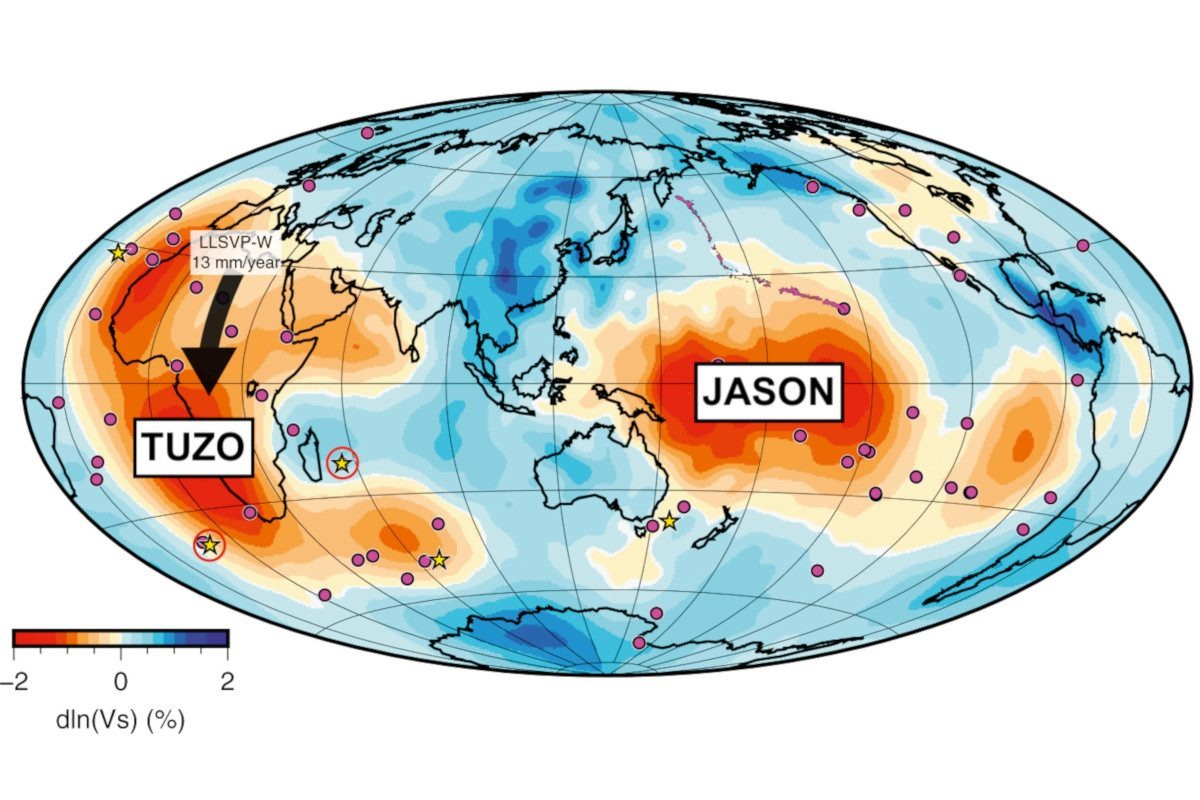
Giant mountains are not only found on the Earth’s surface. Far underground, around 2,000 kilometres from the surface, scientists have discovered two enormous structures often described as “hidden mountains”.
Both are located beneath Africa and the Pacific Ocean, specifically at the very bottom of the Earth’s mantle, near the boundary between the mantle and the core.
The discovery of these structures was revealed through research on seismic waves travelling through the Earth. BBC Science Focus reported that the two large structures are known as Large Low-Velocity Provinces (LLVPs) and have been named Tuzo and Jason respectively.
They are not mountains in the conventional sense, but rather giant regions within the mantle that have different characteristics in terms of how earthquake waves propagate through them.
The giant structures beneath Africa and the Pacific are located around 2,000 kilometres below the Earth’s surface.
BBC Science Focus noted that one of them can rise up to around 1,000 kilometres, more than 100 times the height of Mount Everest, while the structure beneath the Pacific stretches around 3,000 kilometres. Combined, the two are estimated to cover around 6 per cent of the Earth’s volume.
Because they cannot be observed directly, the existence and shape of these structures, known as LLVPs, are identified through differences in the movement of seismic waves as they pass through the Earth’s interior.
The existence of LLVPs has actually been known since seismic research in the 1980s. However, scientists still debate the origin and age of these structures.
Research discussed by BBC Science Focus shows that LLVPs have mineral grains that are much larger than the material in the surrounding “slab graveyards”.
This condition indicates that the structures took a very long time to form and have likely survived for at least half a billion years.
Geodynamic research on LLVPs also shows that the giant structures beneath Africa and the Pacific play an important role in understanding the dynamics of the Earth’s mantle.
Scientists are still investigating whether these structures formed from primordial material that has been inside the Earth since the beginning or are the result of geological processes such as subduction, when tectonic plates sink into the mantle.
LLVPs are located at the bottom of the mantle, just above the Earth’s outer core, making them important for understanding the movement of material and heat from the planet’s interior.
Research published in the journal AGU Advances also links these structures to mantle dynamics and mantle plumes, as well as their possible role in the movement of hot material within the Earth.
Although often called “mountains”, LLVPs are not buried rock mountain ranges, but rather giant structures in the mantle with seismic properties and composition that differ from their surroundings.
Their existence shows that there are still many mysteries inside the Earth that can be studied using earthquake waves as a “scanning tool” to map structures thousands of kilometres below the surface.