
Scientists Calculate Remaining Lifespan of Life on Earth
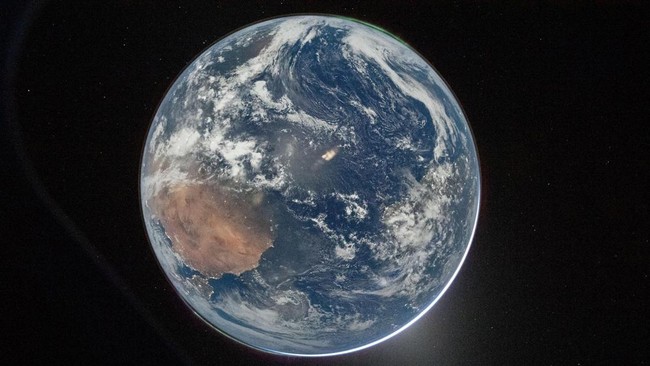
A number of studies have attempted to predict the end of life on Earth, with various versions emerging from their findings. Some scientists argue that in five billion years, the Earth will be swallowed by the Sun, which will have transformed into a red giant, ending all life on the planet. However, another view suggests that due to the Sun’s continuously increasing luminosity, life on Earth will end much sooner. A study reveals that plant life will survive for more than 1.8 billion years, long before the Sun changes its form. “The maximum lifespan of Earth’s biosphere is limited because of the Sun’s increasing brightness over time,” the study authors wrote in the journal JGR Atmospheres. “Earth’s long-term carbon cycle responds by drawing carbon dioxide from the atmosphere, incorporating it into carbonate rocks, thereby reducing the greenhouse effect and offsetting the increased solar radiation.” The study also noted previous research suggesting that the decline of carbon dioxide in the atmosphere would kill off macroscopic organisms, including plants that rely on CO2 for photosynthesis. The end of plant life due to disruptions in the Earth’s carbonate-silicate cycle was previously estimated to occur in 100 million years, but that figure was later revised to 1.5 billion years due to different types of plant photosynthesis. The team in the latest study created 29 climate models to run future biosphere scenarios, simulating an Earth that becomes too hot for life when CO2 remains unchanged, and one where CO2 is insufficient to support life with stable temperatures. Under the unchanged CO2 scenario, plants using CAM photosynthesis could survive for up to 1.87 billion years. In the second model, the end of life ranges around 1.35 billion years from now. The researchers noted that their assessment is based on current photosynthetic performance and does not account for possible future evolution of photosynthesis. “We acknowledge that these results should be examined with other 3D models, and a concerted effort comparing high and low insolation model results could constrain the timescale,” the researchers explained.