
Scientific Study Reveals Findings on the Story of Prophet Moses Parting the Red Sea
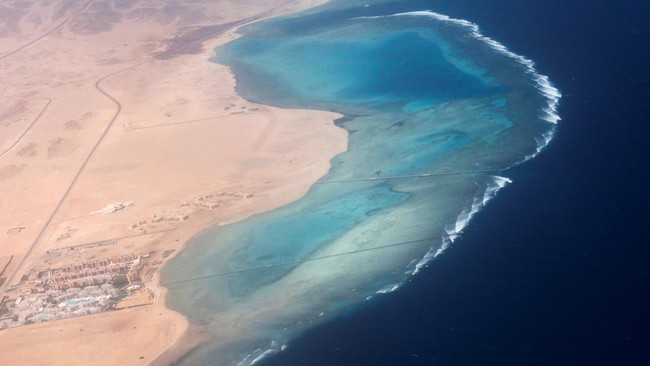
The event of the parting of the Red Sea by Prophet Moses (AS) to save the Israelites from Pharaoh’s army is one of the greatest miracles recorded in sacred texts. After centuries as a religious narrative, this phenomenon has recently piqued the curiosity of scientists seeking to test it from a scientific perspective.
A study conducted by a research team from the National Center for Atmospheric Research (NCAR) and the University of Colorado Boulder (CU) has successfully identified a rational scientific model behind the event. Through computer simulations, scientists attempted to reconstruct how natural conditions could create a gap in the land amidst the waters.
How does science explain this astonishing phenomenon? Through the principles of fluid dynamics and easterly winds.
Based on the laws of physics, this phenomenon of parting seawater can be understood through fluid dynamics. The study’s lead researcher, Carl Drews, revealed that a combination of extreme weather and specific geological conditions in the past made such an event highly possible. “The splitting of the waters can be understood through fluid dynamics. Wind moves the water in a manner consistent with the laws of physics, creating a safe path with water on both sides and then suddenly allowing the water to flow back,” explained Drews, as cited by The Guardian.
In the digitally designed computer modelling, the research team simulated conditions of strong easterly winds blowing at very high, constant speeds throughout the night for approximately 12 hours. These fierce winds were estimated to reach speeds of about 101 kilometres per hour. The intense wind pressure mechanically pushed the volume of water to a single point, exposing the muddy ground beneath. This simulation produced a dry ‘land bridge’ stretching 3 to 4 kilometres in length and 5 kilometres in width.
This emergency path reportedly remained dry for approximately four hours, which was sufficient time for Moses’ group to cross safely. Once the windstorm subsided or ceased blowing, the seawater held on both sides immediately returned to its original position due to gravity, sweeping away and drowning the pursuing army of Pharaoh.
Correcting Ancient Geographical Locations
Interestingly, this scientific study also provides critical notes regarding the exact location of this historical event. Based on the reconstruction of ancient geography in the Nile Delta region, Drews ruled out the modern Red Sea, which stretches from north to south, as the primary crossing point. Physically, the landscape of the modern Red Sea does not align with the scriptural descriptions of water being swept to one side by an easterly wind.
Instead, the research team projected that the legendary crossing site occurred in the southern Mediterranean region, specifically in a shallow lake or lagoon along the coastal area near northern Egypt, close to the current location of Port Said at the edge of the Suez Canal. This ancient U-shaped land formation in the ancient Nile waterway is considered the most plausible site where the laws of physics could facilitate the parting of the waters.
While some other researchers have speculated about the potential for a tsunami (tsunami bore) to cause seawater to recede rapidly, the tsunami hypothesis was deemed less accurate as it does not align with sacred texts describing the parting as a gradual process occurring over an entire night due to strong easterly winds. Through such cutting-edge scientific studies, science does not intend to refute theological values, but rather seeks to uncover the secrets of the universe regarding how the laws of physics may have operated behind historical events that continue to serve as valuable lessons today.