
Scientific Explanation of How Chicken Waste Triggered Fire Terror at Fia's Home
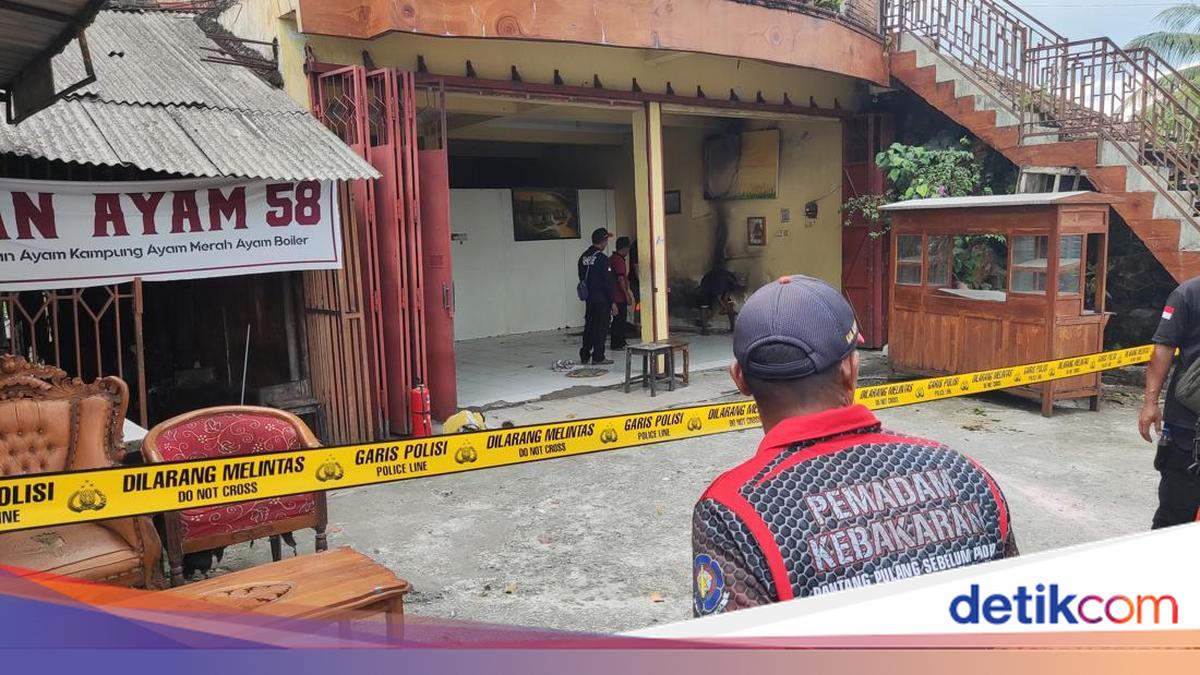
Two weeks have passed since Mutfia’s house in Seyegan, Sleman, was plagued by mysterious fires, prompting researchers to uncover the mystery. A team from Gadjah Mada University (UGM) has recently made a preliminary conclusion that the recurring fires were caused by chicken waste.
How does the scientific explanation work?
The head of the Centre for Entropy Acceleration Studies (PKPE) at UGM’s Faculty of Engineering, Prof Alva Edy Tontowi, explained that based on observations and investigations, the team temporarily concluded that the emergence of fire is related to the presence of hydrogen gas. It is known that Fia’s family runs a chicken slaughtering business on the premises. The fermentation process of this organic waste is strongly suspected to produce hydrogen.
‘Hydrogen gas is strongly suspected to originate from the fermentation process of organic chicken slaughtering waste,’ he said in a written statement on Thursday (4/6/2026).
Additionally, chicken waste materials such as bones and the hard parts of feathers, which are rich in phosphate, can form phosphine gas (PH3). Phosphine gas is said to be more flammable at room temperature.
‘Unfortunately, this phosphine gas is not easily detectable and will burn up upon meeting oxygen. It is very possible that the phosphine gas triggered the ignition of the hydrogen gas that was released simultaneously. However, this still needs to be investigated more deeply,’ he said.
Items in Fia’s house had been mysteriously catching fire over the previous two weeks, occurring up to nine times a day. The bomb squad and academics were deployed to handle the situation.
The team made several observations. Alva explained that the conclusion was drawn from several observations by a cross-disciplinary team at the UGM Faculty of Engineering. The team began observing on Saturday (30/5), taking measurements using a thermal camera, but no significant temperature anomalies were found.
‘The thermal camera brought by the UGM team indicated a temperature anomaly at the location where the fire appeared, but it was not significant, only ranging up to 29°C. This means the temperature in the house and surrounding area was still within the ambient temperature range and no high anomaly was found,’ said Alva.
On Monday (1/6), the team took gas measurements and found a hydrogen (H2) gas anomaly that read quite high. ‘In the bathroom location where a fire had emerged, the reading reached 0.11. At the same time, a fire appeared in one of the bedrooms. The team measured the gas content near the ignition point and the result showed a very high reading of hydrogen gas, reaching 0.40,’ he explained.
Observations were carried out again on Wednesday (3/6), with gas measurements using other tools by another team led by Prof Sarto and Prof Chandra from Chemical Engineering. The results detected no flammable gases other than hydrogen gas. The team considered the need to identify the gas source, with two candidates: liquid waste or ground gas. Therefore, on Thursday (4/6), the team will confirm the presence of gas in the soil by conducting shallow excavations at several points and measuring the gas presence.
‘Meanwhile, the candidate source from liquid waste is currently under laboratory analysis,’ he said.
The UGM team has issued recommendations. For now, the PKPE UGM team recommends that air circulation in the house be maximised by opening windows and doors as wide as possible and installing blowers or fans to prevent possible gas seepage from accumulating at levels sufficient to ignite a fire. Flammable items should also be removed from the house. ‘The UGM team will assist by saturating the soil and house floors with a basic liquid, limewater, to suppress the possibility of Clostridium bacteria playing a role in producing hydrogen gas,’ he concluded.
Separately, a member of the PKPE research team, Dr Sarju Winardi, explained that the conclusion is not yet solid. This is because no similar cases have ever been found at other chicken slaughtering businesses. ‘Why is there a special case at the place of Mrs Fia or Mr Agus that can produce this? The fact is, the disposal site was not opened for 16 years, but there are also reports that it is cleaned often,’ he said.
‘We do not yet have a comprehensive answer as to why the chicken slaughtering waste at this location, let’s say, produces hydrogen compared to slaughtering sites elsewhere,’ he continued. Sarju explained that hydrogen can form naturally, as found in former organic waste disposal sites, or could be due to waste disposal. ‘From the facts we see, what is quite possible is due to this waste disposal. This is an assumption,’ he stressed.