
Scientific Explanation for the Boom Heard During Meteor Flash
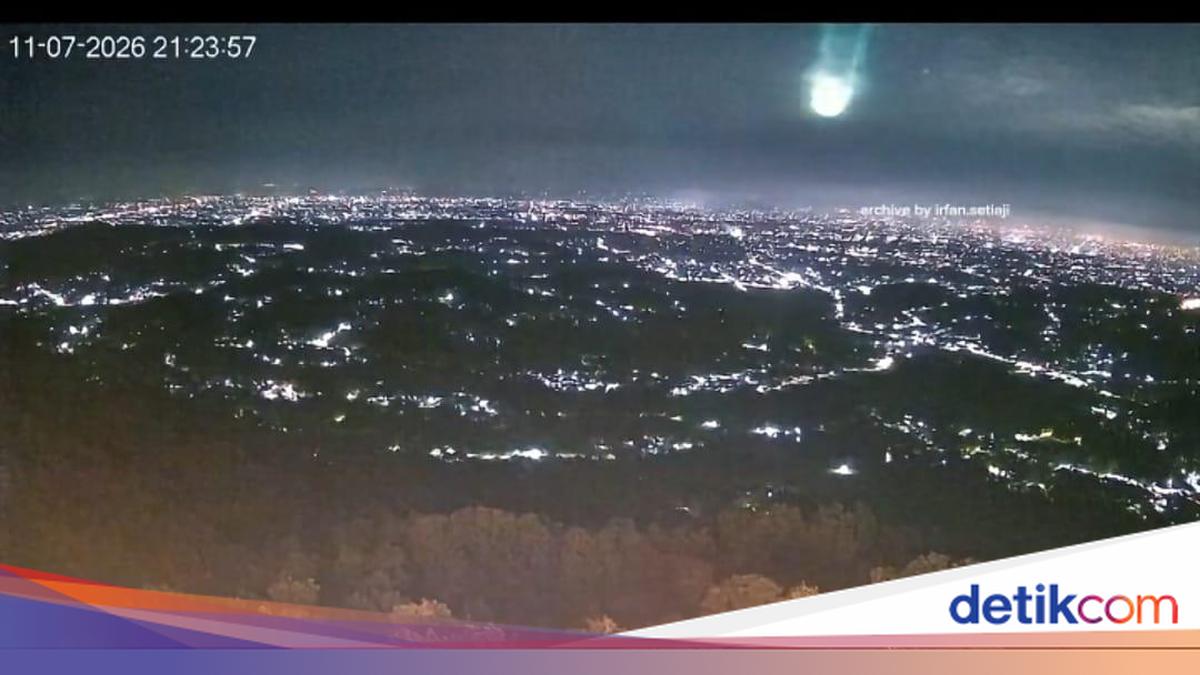
The green flash of light in the sky over Yogyakarta last weekend turned out to be a meteor. Objects streaking across the sky are usually accompanied by a boom. But why?
The flash of light over Yogyakarta was seen on Saturday night (11/7/2026). Thomas Djamaluddin, Principal Researcher in the Astronomy and Astrophysics Division at BRIN, said that hearing a boom when a meteor enters the Earth’s atmosphere is perfectly normal.
“The boom occurs because the meteor travels far faster than the speed of sound. The shockwave is only heard some time after the meteor passes, because sound takes time to reach the surface,” Thomas explained, quoted by detikINET on Monday (13/7/2026).
Thomas then explained how the light appears as the meteor falls to Earth. He said the space rock begins to glow when it enters the atmosphere at an altitude of 120 km. Friction between the meteor and the air also causes the rock to be worn away, emitting a bright light.
“Meteors come from space rocks orbiting the Sun. When their path crosses the Earth’s orbit, these rocks enter the atmosphere at very high speed. Friction with the atmosphere heats their surface until it glows, making them appear as meteors,” Thomas explained.
BRIN said the meteor’s flash was also visible from several cities in West Java, such as Cirebon, Kuningan, Majalengka, and DI Yogyakarta. Thomas also revealed why the flash of the meteor over Yogyakarta appeared bright green.
“Each chemical element has a different light spectrum when heated. The green colour of a meteor is generally related to the magnesium or nickel content burning as it enters the atmosphere,” he said.
He explained that a meteor flash is an ordinary phenomenon in astronomy. According to him, the Earth receives millions of space rocks every day.
“This phenomenon is a fascinating natural event and a reminder that the Earth is constantly interacting with the space environment. As long as the meteor burns up in the atmosphere or lands in an uninhabited area, the public need not worry,” Thomas concluded.