
Schools Must Be Safe Havens, Experts Urge National Collaboration to Prevent Child Violence
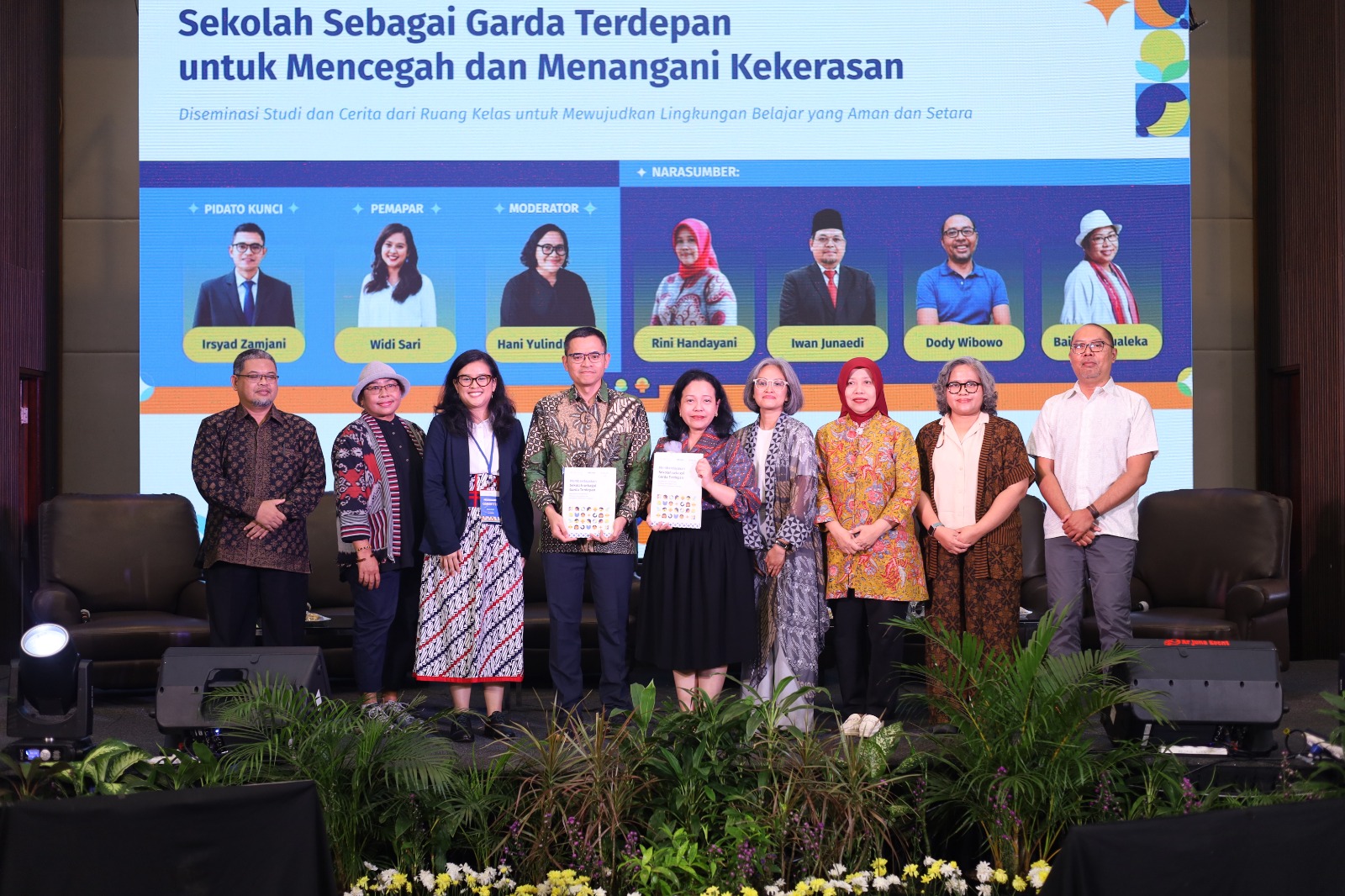
Indonesia has recorded significant progress in expanding access to education over the past two decades. Currently, more than 53 million children are enrolled in education at various school levels across the country. However, behind this achievement, the challenge of ensuring every child learns in a safe, comfortable, and violence-free environment remains unresolved homework. Various data show that violence in the educational environment is still a serious threat to children’s development. The 2022 Programme for International Student Assessment (PISA) results noted that around 25% of female students and 30% of male students admitted to having experienced bullying at least a few times a month. Similar findings were also seen in a survey by the Ministry of Primary and Secondary Education in the same year. The survey showed that around 36% of primary and junior secondary school students were at risk of experiencing bullying, while another 34% were at risk of becoming victims of sexual violence at school. This condition is reinforced by data from the Online Information System for the Protection of Women and Children (Simfoni PPA), which shows an increasing trend in cases of violence in the school environment from year to year. The number of recorded cases rose from 638 cases in 2021 to 2,162 cases in 2025. The proportion of total reported cases of violence nationally also increased from 2.5% to more than 6%. In light of this, the Centre for the Study and Advocacy of Child Protection and Quality of Life at the University of Indonesia (Puskapa), together with the Global Partnership for Education Knowledge and Innovation Exchange (GPE-KIX) and Canada’s International Development Research Centre (IDRC), completed a study titled ‘Schools as the Frontline: Strengthening the Implementation of Violence Prevention and Handling Policies in Indonesian Schools’. The research, which has been ongoing since 2024, was conducted in six schools in Aceh, Banten, and Maluku. The study’s findings were disseminated in a talk show in Jakarta that brought together various stakeholders, from policymakers and academics to civil society organisations, school representatives, and development partners. The Head of the Education Standards and Policy Centre at the Ministry of Primary and Secondary Education, Irsyad Zamjani, stressed that the quality of the learning environment has a major influence on educational success. ‘Student well-being in learning, the quality of the learning environment, and safety from violence are the biggest contributors to learning success,’ he said. The Chair of Commission X of the Indonesian House of Representatives, Hetifah Sjaifudian, assessed that schools must be spaces that educate, protect, and respect every child. She noted that cross-sector collaboration is needed to make schools safe places to nurture the best potential of Indonesia’s young generation. Puskapa’s Lead Researcher, Widi Sari, explained that school violence is a complex issue influenced by various factors. Based on the study, these factors include individual student conditions, school practices and culture, institutional governance, and the local social and cultural context. ‘We see that no single solution can be uniformly applied in all regions. Each school has different challenges and characteristics, including areas with past conflict experiences,’ she said. This finding was reinforced by the Head of the Maluku Women and Children’s Empowerment Institute, Baihajar Tualeka. She assessed that violence prevention approaches need to pay attention to local values in the community. Local wisdom can be an important asset in building a safe school environment. Meanwhile, Dody Wibowo, a lecturer in the Peace and Conflict Resolution Master’s programme at Gadjah Mada University, highlighted the importance of recovery and capacity building for adults who accompany children, especially parents and teachers. He explained that patterns of violence are often passed down across generations, especially in areas that have experienced social conflict. Therefore, prevention efforts cannot only focus on children but must also target the environment that shapes them. A similar point was made by the Director of School Principals, Supervisors, and Education Personnel at the Ministry of Primary and Secondary Education, Iwan Junaedi. He stated that school is a second home for children, so all teachers need to have an understanding of guidance and counselling. The Acting Deputy for Child Rights Fulfilment at the Ministry of Women’s Empowerment and Child Protection, Rini Handayani, acknowledged that many people are still unaware of complaint services like SAPA 129. ‘Many regulations have been issued to protect and fulfil the rights of Indonesian children. However, we admit that these regulations have not yet landed in the community, especially at the grassroots level,’ she said. She therefore emphasised the importance of education with a locally contextual approach and involving children in the policymaking process. Closing the discussion, the Chair of the Engineering Education Profession Study Programme at the Indonesian University of Education, Hani Yulindrasari, asserted that creating a safe learning environment is not solely the responsibility of schools and teachers. She said broader ecosystem support is needed through collaboration between the government, families, communities, civil society organisations, and the media so that child protection policies can be implemented effectively and sustainably.