
School Revitalisation Programme Absorbs 238,000 Local Workers
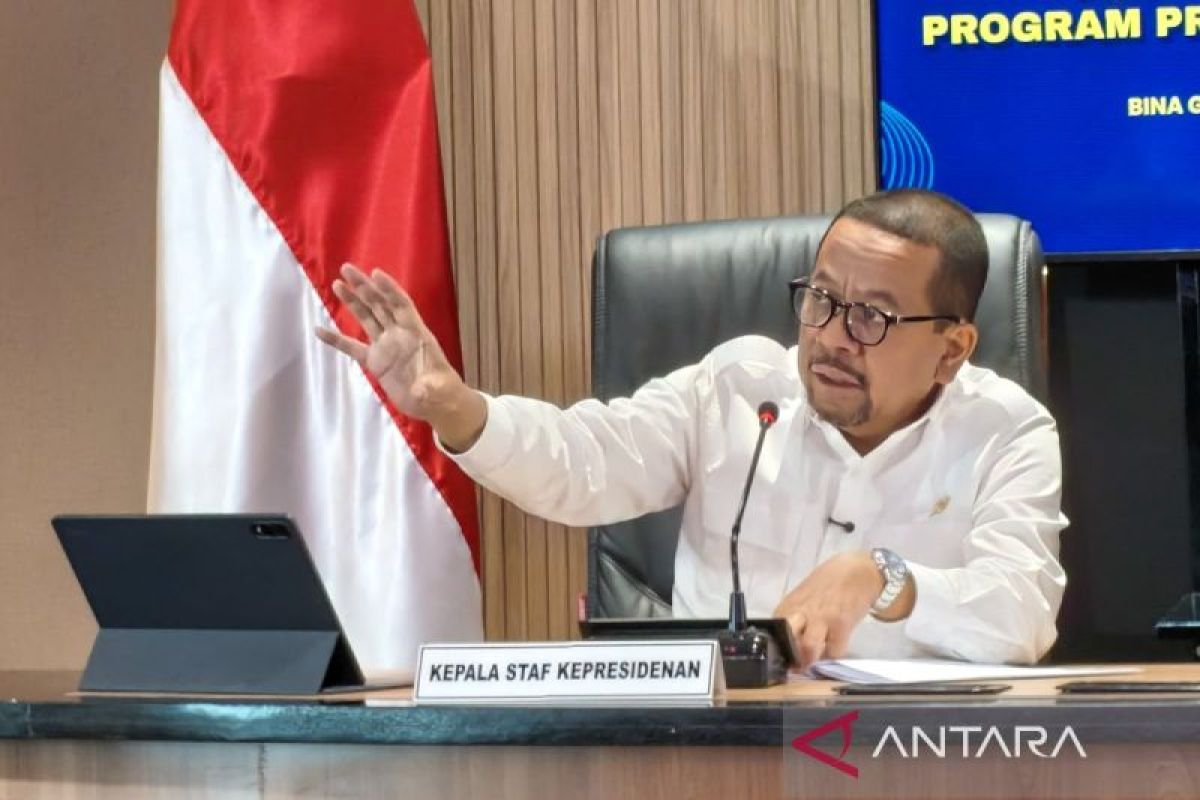
Jakarta (ANTARA) - The Revitalisasi Satuan Pendidikan (Rapid) programme has absorbed 238,131 local workers in its implementation through a self-managed school improvement scheme across Indonesia.
“Overall, 238,131 workers are recorded as involved in this programme as construction workers, ranging from engineers, project supervisors, and other support staff,” said the Head of the Presidential Staff Office, Muhammad Qodari, during a press conference at the Bina Graha Building of the Presidential Staff Office in Jakarta on Wednesday.
Qodari presented data from the Presidential Staff Office (KSP) showing that each school improvement project on average involves around 22 workers from the local community. The physical renovation is carried out in a self-managed manner directly by the school alongside parents.
The implementation of the self-managed system at the educational unit level opens up employment opportunities for construction workers, foremen, and logistics service providers. Qodari explained that this work model provides direct economic impact for residents who were previously unemployed.
Qodari mentioned one resident named Saiful Anam, a construction labourer in Karawang who had been unemployed for seven months, and then regained income through the school revitalisation project at SDN Karawang Kulon 3.
In addition to absorbing construction workers, Qodari stated that the programme mobilises around 58,000 Micro, Small, and Medium Enterprises (UMKM) actors near the school locations. The involved business actors include local building material suppliers to food and beverage stall owners.
Qodari noted that the presence of workers also increases the income of small traders because daily consumption needs are met in the project environment. This increase in economic activity also impacts the transportation and equipment services sectors in the area.
“This is proof that the self-managed Rapid implementation not only improves educational facilities but also opens up job opportunities and mobilises the economy of the surrounding community,” he said.
As of 11 March 2026, 16,062 schools have completed physical construction out of a total target of 16,167 educational units targeted for 2025. The government ensures that the remaining units still in process will soon complete their physical construction.
The programme’s continuity in 2026, targeting around 71,000 schools, is projected to provide a greater contribution to regional income through local consumption.