
School Curriculum Changes: Pharaoh Image Replaced and Historic Cities Removed
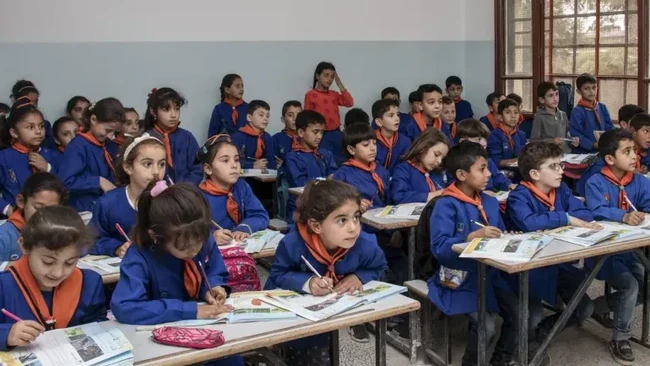
Changes to Syria’s school curriculum have sparked controversy and a wave of criticism on social media. Among the revisions are adding hijabs to images of female figures, removing images of women and children, covering statues, and replacing paintings and other works of art.
According to a report by Euronews, the changes have revived debate over the standards used by the Education Ministry when reviewing the curriculum, and how far those standards take account of Syria’s social and cultural diversity.
Changes to images, illustrations and educational content
A Syrian user of social media platform X posted a comparison of old and revised editions of school textbooks.
The changes are not limited to text: images and illustrations have also been altered using Photoshop. A female teacher character has been replaced with a hijab-wearing version, a female character is shown wearing a long dress, images of women have been removed, statues have been covered, and statues and works of art have been removed or replaced.
Visual changes to paintings and expressive illustrations have become the main focus of the controversy. The committee removed the famous painting Mona Lisa and an image in a textbook for young children showing a girl skipping beside two children.
Pharaoh wearing a shirt
One example that prompted mockery and debate on social media was a statue of a pharaoh wearing a striped shirt, which many users said resembled a prison uniform.
The revisions also extend to school maps. The occupied districts of Iskenderun and the Syrian Golan were removed from one map. A paragraph about Syrian women’s role in resisting the French Mandate was also deleted. This has raised questions about the motives behind the changes and their impact on the historical narrative presented to students.
Critics and observers have accused the government of seeking to impose a particular ideology through the education system. They argue that changing the visual depiction of female characters and removing elements of global artistic heritage reflect an effort to reshape children’s perceptions and foster a new social identity.
The Syrian Education Ministry rejected the accusations in an official statement on Monday. It said the revisions focus only on removing symbols and ideological content associated with the ousted regime and correcting images and materials linked to it. The changes are concentrated particularly in social studies and Islamic education curricula, which have been combined and unified, the ministry said, in order to preserve Syrian society’s diversity and strengthen the representation of all its communities and cultures.