
School-based health education essential for forming healthy habits
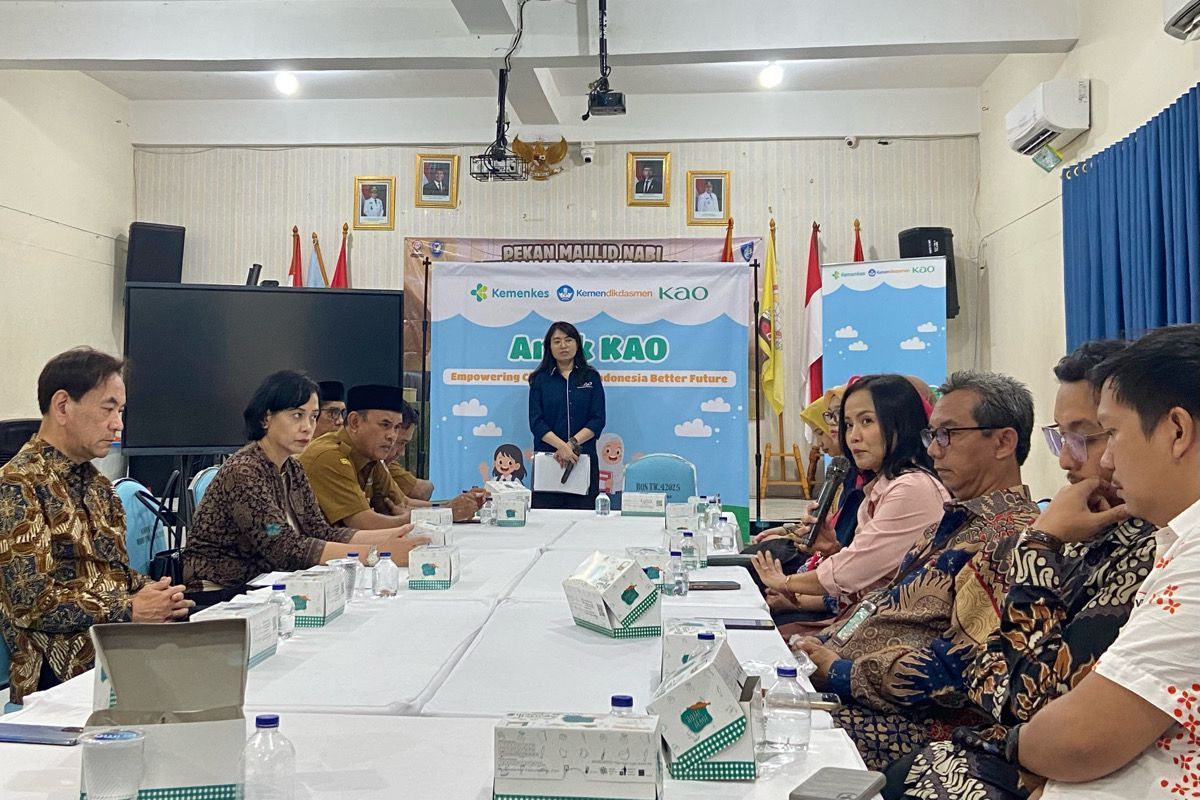
Jakarta (ANTARA) - The Ministry of Primary and Secondary Education (Kemendikdasmen) believes that instilling clean and healthy living habits through school-based education is vital for forming a healthy, intelligent, active, and environmentally conscious generation from an early age.
Dr Maulani Mega Hapsari, Director of Junior High Schools at Kemendikdasmen, stated that education regarding hygiene and health can serve as a foundation for building student character while supporting the realisation of a superior generation.
“Through the Anak KAO programme, children can be taught clean and healthy living habits, which serve as an important foundation in creating an intelligent generation,” she said during the Kick Off of the Anak KAO (Creative, Active, Optimistic) Healthy School Education at SMPN 73 Jakarta on Tuesday.
The Anak KAO 2026 programme focuses on instilling clean and healthy living behaviours, menstrual management, environmental awareness, packaging waste sorting, and efforts to end bullying practices in schools.
President Director of Kao Indonesia, Shoichi Hasegawa, stated that the selection of health, hygiene, and environmental issues is part of the company’s commitment to forming good habits that children can apply in their daily lives.
He added that the programme continues to be developed so that the benefits of the education do not stop at school activities but can be applied by students both within the school environment and at home.
Meanwhile, the Director of Health Promotion and Community Health at the Ministry of Health, Dr Niken Wastu Palupi, stated that private sector involvement is necessary to strengthen the Healthy Living Community Movement (GERMAS) campaign, particularly within educational institutions.
The Ministry of Health is also strengthening the UKS Trias (School Health Unit) through local community health centres (puskesmas), including health education, physical activity, handwashing with soap habits, and health screenings.
Since its inception in 201le, the Anak KAO Programme has reached more than 52,000 students in 257 schools across various regions of Indonesia.
In 2026, the programme aims to reach more than 11,000 students in 50 primary and junior high school educational units across Banten, DKI Jakarta, West Java, and East Nusa Tenggara.