
Sceye Stratospheric Platform Returns to the US After Setting Record Round-Trip Flight Between US and Japan
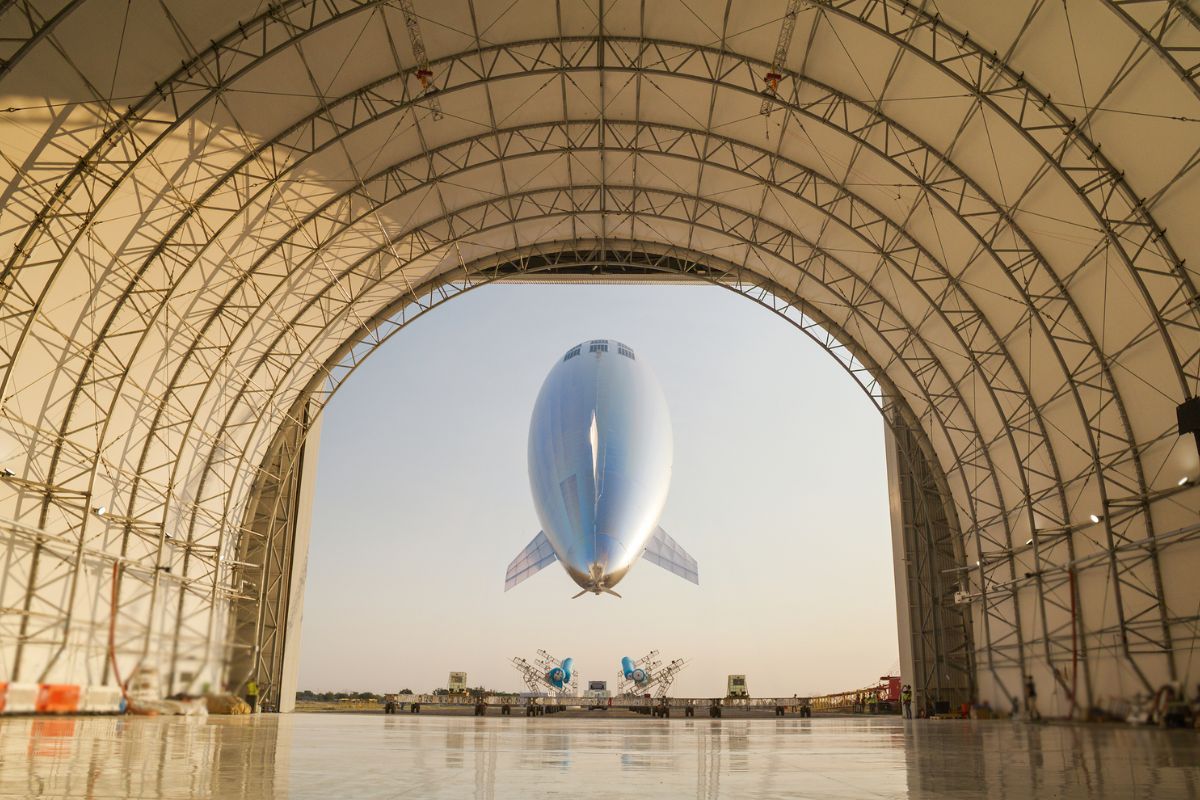
Moriarty, New Mexico — Sceyle, a US aerospace and materials science company developing High Altitude Platform Systems (HAPS) to build stratospheric infrastructure, announced today the successful completion of its Service Test 1 (ST1) mission. The platform has returned to the United States after completing a record-breaking trans-Pacific flight from New Mexico to Japan and back. The ST1 mission commenced its flight on 9 August 2026 and arrived in Japan 13 days later.
During its operations within Japanese airspace, Sceye, alongside its partner SoftBank Corp., successfully tested and verified Direct-to-Device connectivity on unmodified devices, HAPS-based communication with drones, and edge computing from the stratosphere. The journey covered nearly 30,000 km, with the ST1 re-entering US territory on 4 September 2026 and arriving near Sceye’s headquarters in Moriarty, New Mexico, on 5 September 2026. Sceye subsequently conducted additional testing on the vehicle before concluding the flight and landing as planned.
“Our ST1 flight is not just a breakthrough, but a historic milestone. Even that does not fully capture the magnitude of this achievement,” said Mikkel Vestergaard Frandsen, Founder and CEO of Sceye. “This mission proves that our technology, vehicle systems, payloads, and operational infrastructure are ready to support connectivity services. It also demonstrates that the stratosphere will serve as the foundation for future non-terrestrial infrastructure, paving the way for the long-awaited 6G era.”
Conducted in partnership with SoftBank Corp., one of Japan’s leading telecommunications and IT operators, ST1 represents Sceyn’s first flight to Asia and a milestone toward the commercial deployment of HAPS. The mission carried SceyeCELL, an innovative “cell tower in the sky” designed to provide wide-area mobile broadband directly to standard devices from the stratosphere. If deployed at scale, a single Sceye HAPS is designed to cover an area equivalent to approximately 500 terrestrial towers.
The stratosphere provides a strategic advantage: it is close enough to Earth to provide high-capacity connectivity and observation capabilities, yet high enough to allow for vast coverage. Crucially, the stratosphere offers space-like conditions without the high costs of space operations or orbital limitations. Sceye’s HAPS maintains its altitude and coverage area from day to night, similar to a geostationary satellite, but at 1,800 times closer to Earth with significantly lower costs.
Key achievements of the Sceye ST1 mission include:
Completing a nearly 30,000 km journey from New Mexico to Japan and back within one month.
Operating within Japanese-managed airspace for over seven days.
Maintaining position within a 5 km radius of the target location off the coast of Japan.
Operating at altitudes of 16.5 to 17 km while performing telecommunications, drone communication, and emergency communications.
Demonstrating stratospheric mobile broadband connectivity, including text messaging, voice calls, internet access, and video streaming.
Testing emergency calls using alert systems designed for large-scale disasters.
Ensuring communication performance equivalent to terrestrial networks while reducing radio interference with ground-based base stations.
Successfully testing edge computing via onboard servers; Sceye and SoftBank processed data directly on the platform with an average round-trip response time of 68 milliseconds, reducing communication latency by over 40% compared to traditional cloud-based processing.
ST1 marks the first flight conducted as part of Sceye’s Service Test Programme.