
Scarred by Currency Crashes, Zimbabwe Seeks to Ditch the US Dollar
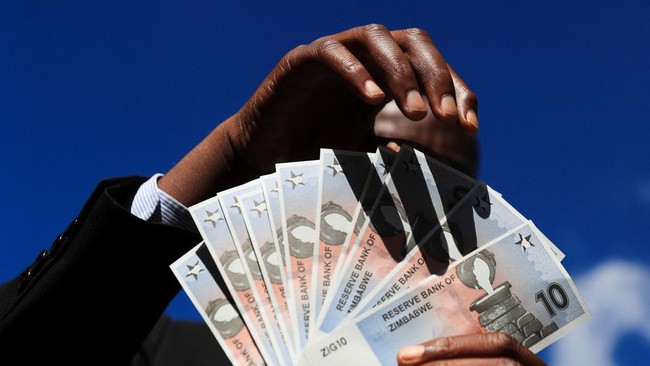
Zimbabwe is seeking to reduce its reliance on the US dollar by encouraging the use of its local currency, the Zimbabwe Gold (ZiG). But the ambition faces a major challenge: people remain scarred by repeated currency crises and do not yet fully trust money issued by their own government.
According to a report published by Al Jazeera on Friday (16 October 2026), ZiG was introduced in April 2024 as the Zimbabwean government’s latest attempt to restore confidence in the national currency. The central bank says the currency is backed by foreign-exchange reserves and precious metals, including gold.
Even so, gold reserves have not been enough to persuade people to keep their income and savings in ZiG. The bitter experience of previous currency crises has led many to favour the US dollar, which they see as more reliable for transactions and preserving wealth.
Scarred by Currency Crashes, Salaries Lose Their Value
One person who remains concerned is Charles Mbwandarikwa, a primary-school teacher in Zimbabwe. He receives about a third of his salary in ZiG, but exchanges the money promptly because he does not want to risk losing its value if the local currency falls again.
His concern stems from past experience. Mbwandarikwa lost his pension savings during the 2009 crisis. When the local currency was reintroduced in 2018, he said the value of his salary fell from the equivalent of US$540 to just US$40 by the end of that year.
Experiences like this pose a challenge for the Zimbabwean government. Confidence in a currency cannot be built simply by issuing new money or declaring that it is backed by reserves. People must also believe that their purchasing power will not be eroded again.
Zimbabwe abandoned its local currency in 2009 after experiencing hyperinflation. It then adopted a multi-currency system dominated by the US dollar.
A domestic currency was reintroduced in 2018, but repeated volatility has made it difficult to rebuild public confidence.
The Currency Is Available, but Few Traders Accept It
The challenges facing ZiG are also evident in the business sector. Sesedzai Chigumira, a clothing trader in Zimbabwe, says she has recorded only a handful of sales in ZiG.
Her experience suggests that the US dollar remains the preferred option for many customers. This creates a vicious circle.
If consumers prefer to pay in US dollars, traders have little incentive to rely on ZiG. At the same time, people are reluctant to hold the local currency if they fear its value will fall.
Economist Cornelius Dube says demand for ZiG remains very weak. In his view, the amount of ZiG in circulation needs to be aligned with public demand for the currency.
The Reserve Bank of Zimbabwe has taken several steps to strengthen public confidence. On 7 April 2026, it introduced a new series of ZiG banknotes with updated designs and security features.
The central bank also reported annual ZiG inflation of 3.7% in September 2026. However, relatively low inflation does not automatically persuade people to use ZiG as their main means of payment or to hold their wealth in the currency.
Ditching the US Dollar Cannot Happen Overnight
The Zimbabwean government previously aimed to move to full use of a single currency by 2030. The central bank has since shifted to a gradual transition that relies more heavily on market mechanisms to expand ZiG’s use.
The government is also seeking to increase ZiG’s role in domestic transactions, including tax payments and public-sector transactions, alongside policies concerning foreign exchange and the national payments system.
But expanding a currency’s use for transactions is different from persuading people to keep their savings in it. People may use ZiG because they are required to or have no other choice, but that does not mean they are willing to rely on it to preserve wealth over the long term.
Dube says reducing reliance on the US dollar, or dedollarisation, is not impossible. However, the process will take time and cannot happen overnight.
He argues that policy should not force people to convert US dollars into ZiG. Instead, the government should create incentives so that businesses and consumers feel equally comfortable holding both currencies.
Ultimately, Zimbabwe’s greatest challenge is not simply issuing a new currency or increasing the use of ZiG in transactions. The government must prove that the currency can consistently preserve the value of people’s income and savings.
For people who have seen their savings and salaries lose value, confidence cannot be built on promises alone. Lasting economic stability will be the real test of Zimbabwe’s ambition to reduce the dominance of the US dollar.
Source: jawawa.id (https://jawawa.id/newsitem/scarred-by-currency-crashes-zimbabwe-seeks-to-ditch-the-us-dollar-1792144294)
Originally published by CNBC Indonesia (https://www.cnbcindonesia.com/news/20261016154453-4-776947/rakyat-trauma-uang-amblas-negara-ini-mau-usir-dolar-as), translated from Indonesian