
SBY States the World is Not Normal, Indonesia Needs Its Own Strategy
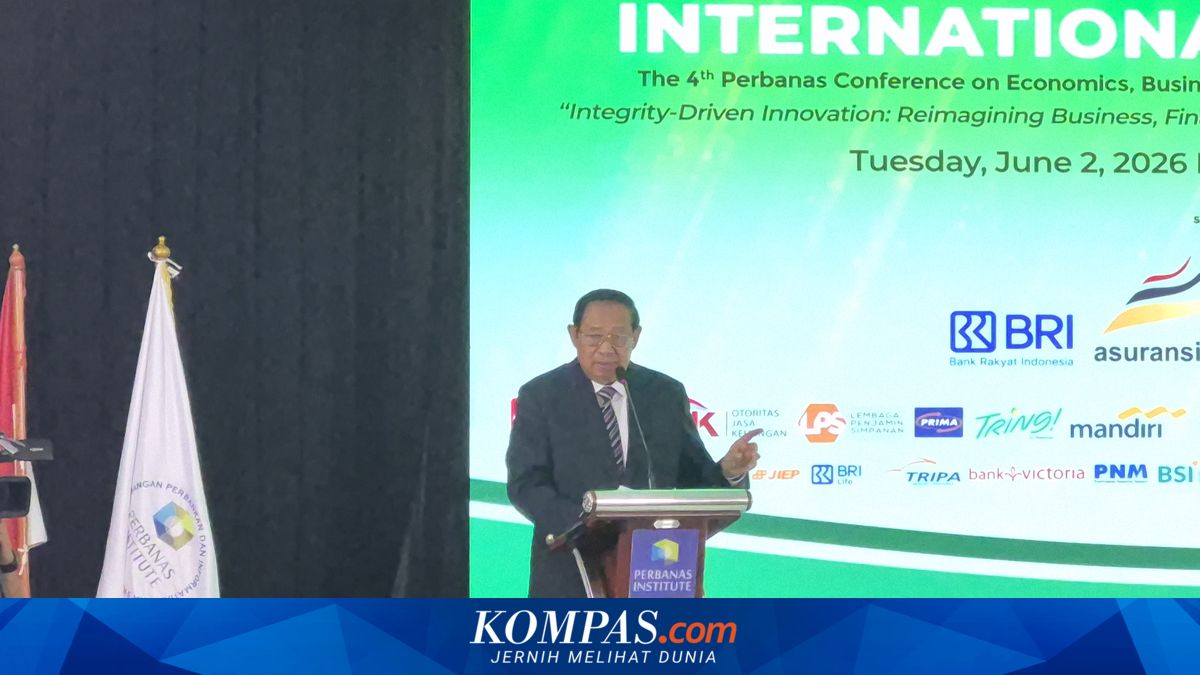
JAKARTA — The 6th President of Indonesia, Susilo Bambang Yudhoyono (SBY), has assessed that the current global condition is far from stable. SBY stated that Indonesia needs to possess its own development strategy to face increasingly complex global challenges.
Various crises are currently occurring simultaneously. These challenges arise from climate change, global economic fragmentation, technological competition, and pressures within the financial sector. Such conditions pose a significant challenge to many nations, including Indonesia.
“The world is currently not in a normal condition. We all know this. We are living amidst various overlapping crises,” he remarked while opening the PROFICIENT 2026 event at the Perbanas Institute in Jakarta on Tuesday (2/6/2026).
International trade is no longer driven solely by economic efficiency; geopolitical factors are increasingly influencing the direction of global trade. Furthermore, while technology has become a source of productivity, it has simultaneously become an arena for competition between nations.
Many developing nations are also facing increasing fiscal pressures. These countries must bear the burden of debt repayments while simultaneously managing rising financing needs for healthcare, education, infrastructure, energy transition, and climate change adaptation.
Consequently, SBY believes Indonesia must prepare specific strategies to navigate these global dynamics. These strategies must be formulated based on Indonesia’s internal conditions to ensure they are precisely targeted.
“In a global situation such as this, developing nations like Indonesia must act wisely. We cannot simply imitate the paths taken by developed countries. We must design our own development strategy,” he said.
He identified three essential pillars: policy, practice, and financing. Firstly, policy must provide a clear direction. This clarity is necessary to ensure that steps taken remain consistent in the long term. All stakeholders must also understand the nation’s direction. Furthermore, good policy must be integrated and credible, with credibility arising from good governance, transparency, and the rule of law.