
SBY Reveals Key Strategies for Indonesia's Resilience During 2008 Global Crisis
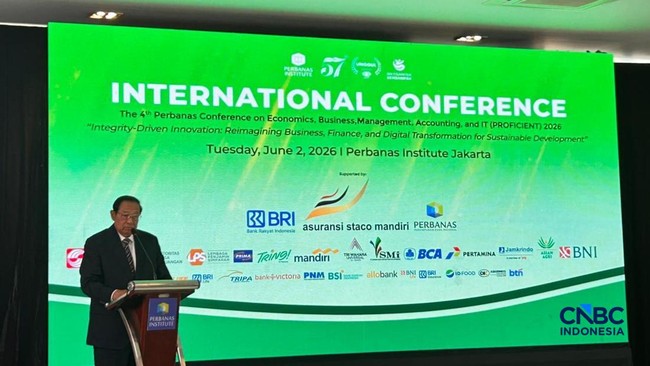
Jakarta, CNBC Indonesia - The 6th President of Indonesia, Susilo Bambang Yudhoyono (SBY), has shared his experiences in managing crises during his leadership, specifically referring to the 2008 global economic crisis.
During the 2008 global financial crisis, SBY noted that while Indonesia was not immune to the impact, the country managed to endure. This success was attributed to several key strategies: maintaining trust, exercising fiscal prudence, sustaining domestic demand, and ensuring effective policy coordination.
“When the global financial crisis hit in 2008, Indonesia was not immune to its effects. However, we were able to survive by maintaining confidence, upholding fiscal prudence, protecting domestic demand, and ensuring good policy coordination,” SBY stated during an International Conference at the Perbanas Institute, South Jakarta, as reported on Wednesday.
According to SBY, credibility is paramount, especially during periods of high uncertainty. He noted that market participants do not merely look at figures, but also assess the quality of governance.
Furthermore, he recounted his experience in the reconstruction of Aceh following the 2004 tsunami. SBY remarked that reconstruction is not solely about buildings, roads, and houses.
“It is about restoring dignity, rebuilding trust, and creating peace. Development becomes sustainable when the community feels they are part of the process. That is essential,” SBY said.
He also noted that through Indonesia’s participation in global climate diplomacy, including the 2007 Bali Climate Conference, the nation learned that developing countries must be part of the solution. SBY concluded that if sustainable development is Indonesia’s goal, the foundations for achieving it must be clear, involving three vital pillars working in unison: policy, practice, and funding.