
Savings Dwindle, Indonesians Increasingly Rely on Credit Cards and Paylater for Spending
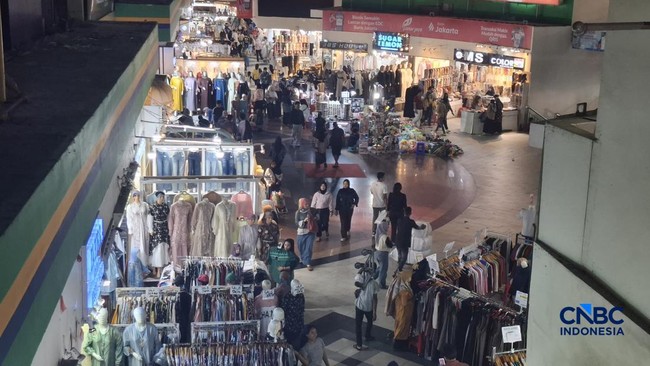
The fulfilment of living needs among Indonesians is increasingly reliant on loan facilities such as credit cards, paylater, and online loans. Based on the Mandiri Spending Index, the loan index in June 2026, which includes online loans or peer-to-peer (P2P) lending, credit cards, and paylater from non-bank finance companies, reached 157.7, growing 24.6% year-on-year (yoy). This indicates that spending continues to grow positively even as the level of savings weakens. Concurrently, the use of financing has increased.
According to data from the Financial Services Authority (OJK) and Bank Indonesia, the total outstanding value of online loans, credit cards, and paylater (non-bank) reached Rp160.7 trillion in May 2026. Of this total, outstanding online loans were recorded at Rp103.7 trillion, or approximately 65% of the combined total. Meanwhile, outstanding credit cards reached Rp43.8 trillion (27%), and paylater from non-bank finance companies amounted to Rp13.2 trillion (8%). The highest growth was shown by paylater at 53.6% yoy, followed by P2P lending at 25.7%, and credit cards at 15.6%.
The portion of online loans used for consumptive needs also increased to 86% in April 2026, up from previous periods. Conversely, the share for productive activities declined. This shift indicates that the rise in loans is increasingly driven by household consumption needs rather than business financing.
In contrast, the Mandiri Saving Index for June 2026 was recorded at 84.8, a contraction of 5.7% yoy. The report noted that the weakening of savings alongside the rising use of financing suggests that a portion of consumption is now being supported by household leverage rather than income capacity. Consequently, strengthening disposable income levels needs to be a priority so that consumption momentum can be maintained in a healthier manner, supported by policies that bolster job creation and manage cost-of-living pressures.