
Saving Indonesia’s Capital Market from the Threat of Foreign Capital Flight
The world’s largest index provider, Morgan Stanley Capital International (MSCI), has threatened Indonesia’s capital-market authorities with a downgrade of the Indonesia Stock Exchange (IDX) from emerging-market to standalone-market status. The IDX could then be grouped with markets including Argentina, Jamaica, Panama, Nigeria and Zimbabwe.
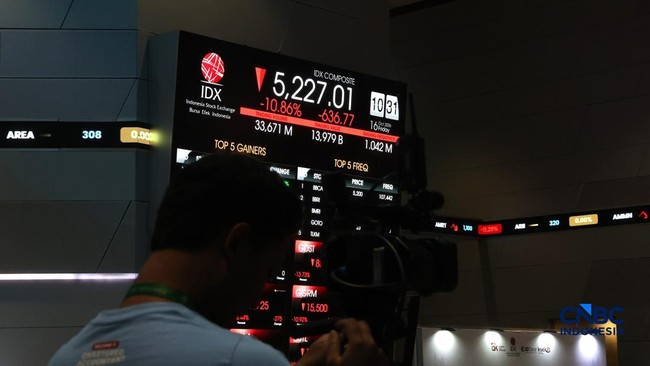
The threat has raised the prospect of passive fund outflows of around US$5.6 billion and sent the Jakarta Composite Index (JCI) down 11.57 per cent to 5,185.10 on 16 October 2026. It briefly touched a one-year low of about 4,996.6 on 19 October 2026 (Trading Economics, 2026).
A standalone market is one that is not included in MSCI’s portfolio-diversification universe. Such markets are generally new stock markets that MSCI does not cover, or markets downgraded from developed, emerging or frontier status.
The possible downgrade of the IDX from emerging-market to standalone-market status has been prompted by deteriorating market accessibility, low liquidity and inconsistent law enforcement. Accessibility concerns include the transparency of share ownership, such as disclosure of shareholders holding more than 1.0 per cent, down from the previous threshold of 5.0 per cent.
MSCI’s warning also relates to coordinated or manipulated trading allegedly carried out by issuers and investors affiliated with company owners. The aim is said to be to push up a company’s share price, encouraging institutional and retail investors to buy its shares.
As a result, the share price can rise sharply before reversing and falling. This harms retail investors who have followed the crowd into the stock (herding behaviour), or who sell at a loss to limit further losses (cutting their losses).
The minimum free-float requirement — the proportion of shares held by the public and traded on the capital market — is low. A 7.5 per cent free-float requirement makes it easier for a company’s shares to be “ramped” through coordinated trading.
This is also linked to high shareholding concentration (HSC). The proportion of shares available for public trading is very low, with an estimated 5.0 per cent free float allegedly held by investors affiliated with company owners. Only 2.5 per cent of shares are genuinely available for public trading.
As a further consequence, stock-market liquidity is very low. Foreign capital inflows and outflows into Indonesia’s stock market are impeded. Investors can also become stuck holding particular shares and only exit their positions by recording a loss.
The problem is compounded by inconsistent enforcement of capital-market laws. Coordinated or manipulated trading damages global investors’ perceptions of Indonesia’s capital market.
The culmination was MSCI’s threat to downgrade Indonesia’s stock market by two categories, from emerging market to standalone market, in June 2027. Indonesia’s capital-market authorities have less than a year to carry out comprehensive reforms in line with MSCI’s demands.
Why must Indonesia’s capital-market authorities respond promptly to the threat? MSCI serves as a benchmark for retail and institutional investors who are its clients, as well as global investors who are not tied to MSCI but use its recommendations as a reference.
Around 94 of the world’s 100 largest pension-fund managers use MSCI’s services. So do 98 of the 100 largest asset managers, while 82 of the 100 largest investment banks use MSCI as a benchmark for diversifying their international portfolios by sector and country (capital market).
MSCI’s assets under management (AUM), or the funds linked to its indices, currently total US$22.8 trillion. That is equivalent to 17.5 times Indonesia’s gross domestic product (GDP) of about US$1.3 trillion, or 5.33 times Japan’s GDP of about US$4.28 trillion.
MSCI also covers around 239,000 stock indices, of which about 18,700 are calculated in real time each day. It is also linked to global equity exchange-traded funds (ETFs) worth US$2.8 trillion. Equity ETFs are funds that invest most of their assets in shares.
Against this backdrop, foreign ownership in Indonesia’s stock market stood at about Rp2,805 trillion as of July 2026, equivalent to 40.29 per cent of total IDX transactions. Domestic investors accounted for around 59.71 per cent of shares on the IDX as of July 2026 (IDX, 2026).
In short, if Indonesia’s capital market is downgraded from emerging-market to standalone-market status, institutional investors associated with MSCI are likely to leave. Other foreign investors who are not tied to MSCI could also exit the IDX if they use MSCI as a benchmark.
The JCI could consequently fall sharply as foreign investors sell. The proceeds from share sales would be converted from rupiah into US dollars, driving capital outflows and putting pressure on the rupiah. The exchange rate could weaken to around Rp22,000 per US dollar.
There is no alternative: the capital-market authorities are being urged to meet MSCI’s demands by addressing institutional shortcomings, including raising the minimum free float to 15 per cent, publicly disclosing shareholdings above 1.0 per cent, increasing transparency about beneficial owners, eliminating coordinated trading and enforcing capital-market laws consistently.
Ultimately, the Financial Services Authority (OJK) should treat MSCI’s warning as an opportunity for comprehensive capital-market reform. Indonesia should take a lesson from the post-1998 banking-sector reforms, which made the national banking sector highly resilient to external pressures.
Source: jawawa.id (https://jawawa.id/newsitem/saving-indonesias-capital-market-from-the-threat-of-foreign-capital-flight-1793760676)
Originally published by CNBC Indonesia (https://www.cnbcindonesia.com/opini/20261104091839-14-782130/menyelamatkan-pasar-modal-indonesia-dari-ancaman-eksodus-modal-asing), translated from Indonesian