
Saudi Prince's Plan to Tow Icebergs from Poles to the Middle East
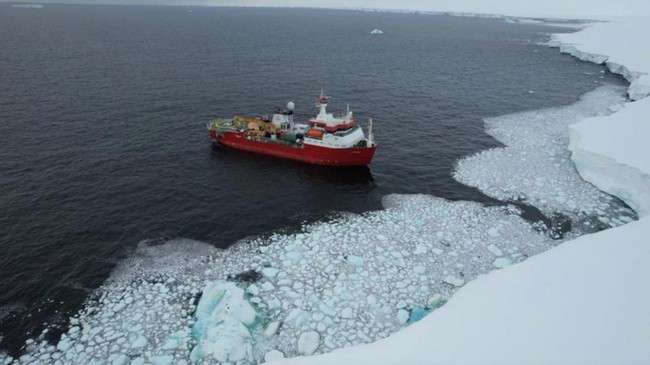
Saudi Arabian Prince Mohammed bin Faisal once had a unique plan to address water shortages in the Middle East. Rather than drilling new water sources or building more desalination plants, he proposed towing icebergs from the polar regions to the Middle East.
The idea was presented by Mohammed in 1977 when he hosted the First International Conference on Iceberg Utilisation at Iowa State University in Ames, Iowa, United States.
To demonstrate that iceberg utilisation was not merely a pipe dream, Mohammed brought a 4,000-year-old glacier chunk from Alaska to the conference venue. The two-tonne block was retrieved by a US Navy diving team using helicopters, aircraft and trucks before arriving in Iowa.
The ice was then used to chill the drinks of delegates who arrived on 2 October 1977. In a report by Time, Mohammed expressed his belief that icebergs could serve as a cheaper alternative source of fresh water compared with seawater desalination.
Each year, icebergs naturally break away from the main ice sheets in Antarctica and Greenland. Rather than letting this fresh water go to waste, it could be harnessed before mixing with seawater.
To make this a reality, Mohammed was willing to spend around US$90 million, with completion expected within three to five years. However, the idea was immediately met with doubt from a number of scientists attending the conference.
“Once you get north of the equator, all you have left at the end of your towline is a piece of rope,” said Wilford Weeks of the US Army Cold Regions Research and Engineering Laboratory, as quoted by Time.
The statement illustrated one of the biggest problems with the plan. The iceberg would have to pass through waters far warmer than its original environment in Antarctica or the South Pole. Without adequate protection, the ice would continue to melt during the journey.
Another issue was how to tow an object weighing tens of millions of tonnes over thousands of kilometres. The tugboats available at the time were not capable of performing such a task effectively.
In the end, Mohammed’s plan never materialised. No giant Antarctic iceberg was ever successfully towed to Saudi Arabia. Nevertheless, the idea did not entirely disappear.
According to a report by Science Blog, French engineer Georges Mougin, who was involved in developing the iceberg-towing concept, continued to study the possibility for decades. Advances in computer technology and the availability of better ocean current data later enabled more sophisticated simulations.
In 2011, Mougin again presented simulations on the possibility of transporting an iceberg by sea. The results showed that technological developments made the project more feasible than in the 1970s, although significant risks and costs remained.
Similar ideas have also resurfaced when various regions have experienced water crises. In 2018, for example, a proposal emerged to tow an Antarctic iceberg to South Africa amid the Cape Town water crisis. Another proposal was also directed at the United Arab Emirates.
To date, however, no giant iceberg-towing project has actually been realised to supply water to the Middle East or any other region in the world.