
Saudi Claims 1.5 Million People Take Part in Hajj Despite War Raging
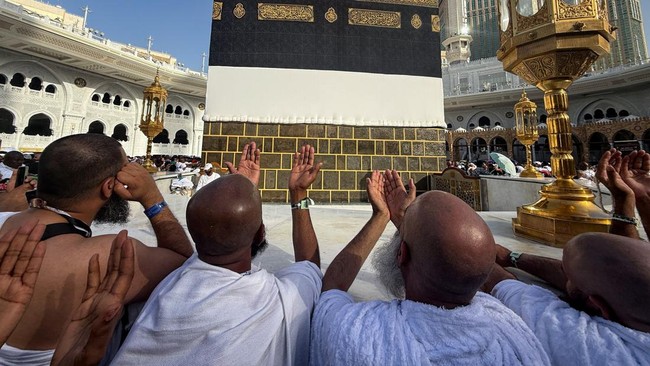
Jakarta, CNBC Indonesia - Around 1.5 million Muslims from various countries still departed to perform the Hajj in Saudi Arabia amid escalating regional warfare in the Middle East. This year marks the first time Saudi Arabia has held the pilgrimage while the region is at war. The Hajj will take place 25-29 May 2026 in Mecca. The annual rite has always attracted millions; the Hajj is an obligatory duty for able Muslims at least once in a lifetime.
In the last three years, the number of pilgrims has ranged from 1.7 to 1.8 million. Historically, Hajj has only been cancelled or limited about 40 times in more than 14 centuries, with the last restrictions during the Covid-19 pandemic in 2020.
The Hajj operation is a major logistical undertaking. Saudi authorities must coordinate international pilgrim tickets, security, flights, accommodation, food and water distribution, and healthcare in extreme heat.
This year, the challenge is greater due to the Iran war that broke out after February end following US and Israel strikes on Iran. Iran then retaliated by targeting several Gulf states, including Israel. Although a ceasefire remains in place, security is not fully stable. Last week, Saudi Arabia said it intercepted three drones believed to have been launched by pro-Iran militias in Iraq.
The United States has asked its citizens to reconsider travel to Saudi Arabia for Hajj. Germany, Britain and other European nations have issued travel advisories related to the ongoing conflict.
Nevertheless, many pilgrims still choose to depart. The German Central Council of Muslims said many pilgrims remain committed to the rite because Hajj preparations typically take more than a year and require substantial costs. ‘They are motivated by fulfilling a religious obligation, and for them this is more than just an ordinary journey,’ a spokesman told DW, cited on Saturday (23 May 2026).
Indonesia, which this year sent about 221,000 pilgrims, briefly asked citizens to defer travel in March until the war situation became clearer. But the government ultimately allowed departure and prepared supporting services as usual. The Indonesian government also said to have emergency evacuation plans if needed. This week officials from Indonesia have arrived in Saudi Arabia to assist services for pilgrims at the location.
Analysts say the risk of Iran attacking Hajj sites is unlikely; about 30,000 Iranian pilgrims are still going to Saudi Arabia this year. However, other risks remain, such as misfired missiles or falling debris from interception systems near the pilgrimage site. Saudi authorities have deployed Patriot missiles and anti-drone defenses around the holy area.
The war in the Middle East has also driven up Hajj costs. Jet fuel prices have risen and some airlines have cancelled routes to the region, making flights longer and more expensive. Inflation and currency weakness in various countries are also heightening travel costs. Saudi Arabia requires international pilgrims to hold travel insurance, while many insurance policies do not cover war or military conflict.