
Saudi Arabia's Dilemma Facing Houthis: Limited Options with Risk of Major War
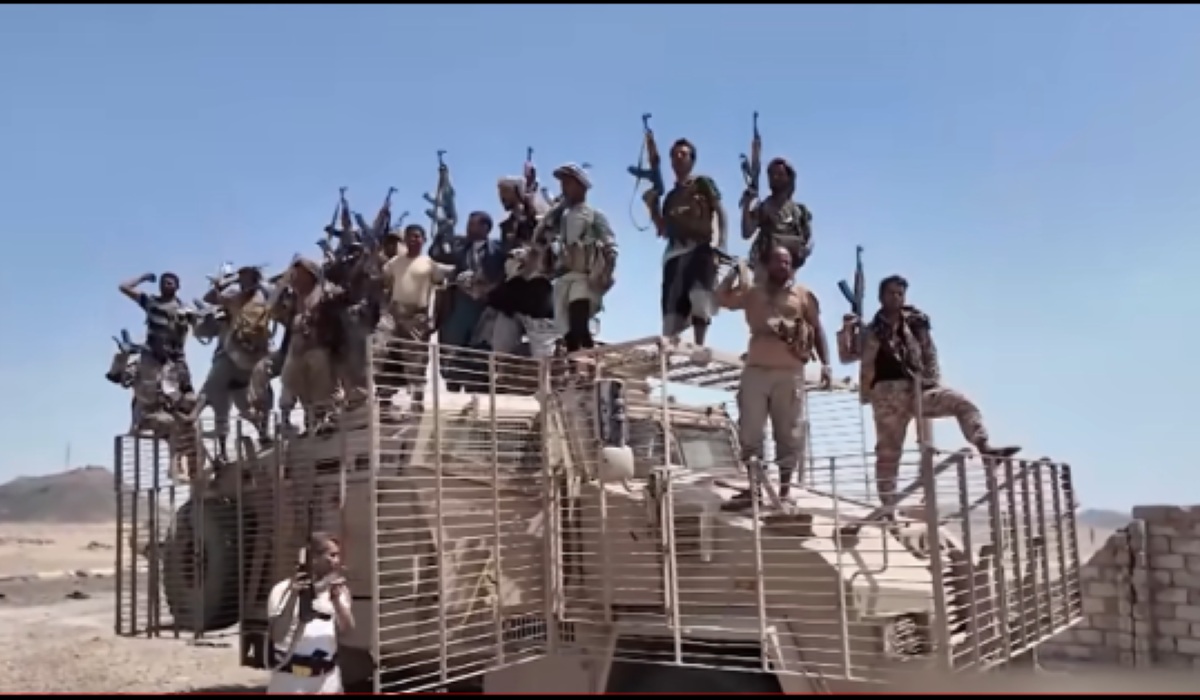
The rapid progress of the Iran-backed Houthi group in Yemen, alongside a series of attacks on vital Saudi Arabian infrastructure, has placed the Gulf kingdom in a difficult position. Riyadh now faces extremely limited response options, where every choice carries immense cost and risk consequences.
Although the primary message from the kingdom suggests that Riyadh does not desire an all-out war, experts assess that increasingly bold Houthi behaviour could drag Saudi Arabia into a wider conflict. Mohammed Al-Basha, a Yemen expert and risk advisor based in Washington, DC, stated that current signs point towards large-scale retaliation by Saudi Arabia.
This week, the Yemeni rebel group successfully seized the strategic Perim Island at the mouth of the Red Sea, along with the port city of Mocha. This move is a tangible attempt to control the Bab al-Mandeb strait, a crucial global energy route.
Pressure on Saudi Arabia is not only coming from the south. Saudi Arabia’s main oil pipeline (the East-West pipeline) was forced to close after being attacked by drones believed to originate from Iraq. Although no party has claimed responsibility, US President Donald Trump pointed to Tehran as the mastermind behind the attack, given that Iranian proxies are known to be actively operating in Iraq.
The closure of this pipeline is a significant blow, as Riyadh has increased the use of the East-West route since the conflict with Iran effectively closed the Strait of Hormuz, diverting approximately 5 million barrels of oil per day that are usually shipped through the Persian Gulf.
On paper, the conflict appears unbalanced between a wealthy Saudi Arabia with a modern military and a poor rebel group in Yemen. However, the Houthis have proven very difficult to dislodge. The group has spent years developing combat tactics and military technology.
Nasr al-Din Amer, head of the Houthi-run Saba news agency, asserted that they will continue to apply pressure until Saudi Arabia ends the economic and travel blockade that has lasted for 12 years. This demonstrates a clear Houthi intention to continue climbing the escalation ladder.
Cinzia Bianco, a researcher at the European Council on Foreign Relations, explained that Saudi Arabia has very narrow options. If Riyadh decides to ‘go all in’, the conflict risks evolving into an open war similar to the deadly Yemeni civil war, which has created the world’s worst humanitarian crisis.
Furthermore, an all-out war between Saudi Arabia and the Houthis would likely draw Iran directly into the fray. “It will be difficult to limit the conflict to just a Yemeni situation; rather, it will become a new chapter of the broader US-Iran war, where Saudi Arabia enters as a combatant on the US side,” said Bianco.
Amidst this tension, the United States, under the leadership of Donald Trump, appears reluctant to involve itself directly in military action. Trump stated that the Houthis have indicated a desire for the US not to intervene. Although the Saudi Crown Prince is reported to have urged Trump to attack the Houthis as they advanced towards the Red Sea, the request was rejected.
So far, US support has been limited to the deployment of approximately 100 military advisers to provide intelligence assistance. Nawaf Obaid, a former Saudi government adviser, emphasised that Riyadh was actually only requesting intelligence support, not American airstrikes, yet even that support is felt to be limited.
Efforts to find a political way out have also reached a deadlock. Saudi Arabia is assessed to have practised “strategic patience” over recent months by issuing warnings and condemnations, but these have yielded no results.
If Riyadh chooses to negotiate now, it would be considered a surrender to Houthi demands. “That would be a very expensive submission. Essentially, it would be surrendering,” said Al-Basha.
Now, the world awaits Saudi Arabia’s next retaliatory move. With the military campaign of the Yemeni government, supported by the Saudi-led coalition, already underway, the intensity of the conflict is expected to increase sharply in the near future, with impacts predicted to extend beyond the borders of Yemen and Riyadh.