
Saudi Arabia, Turkey, Pakistan Form 'Islamic NATO' Defence Pact
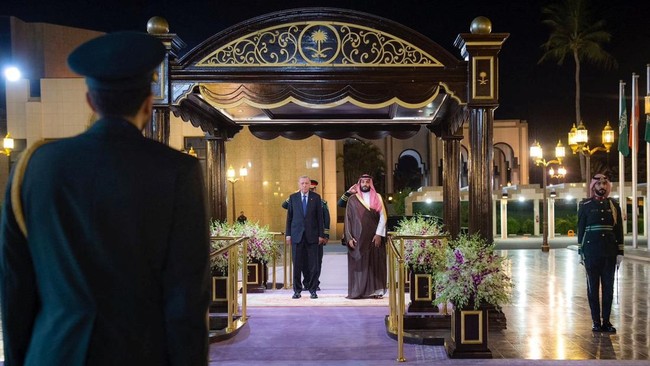
Saudi Arabia, Turkey, and Pakistan have established a new joint defence framework through the ‘Mecca Joint Defence Treaty’. The agreement, signed in Mecca by Saudi Crown Prince Mohammed bin Salman, Turkish President Recep Tayyip Erdogan, and Pakistani Prime Minister Shehbaz Sharif, stipulates that an armed attack against one of the three countries will be considered an attack against all members. However, the three nations have yet to detail the implementation mechanism for this commitment, including the form of military assistance to be provided or the possibility of forming a joint command.
Murad Sadygzade, President of the Middle East Studies Center and Visiting Lecturer at HSE University in Moscow, described the agreement as one of the significant geopolitical developments emerging from the current Middle East crisis. He noted that the combined strengths of the three countries create a significant strategic combination: Saudi Arabia possesses financial and political power, Turkey has a growing defence industry and military capability, while Pakistan maintains a large armed force and nuclear weapons. Sadygzade suggested the pact could be called a prospective ‘Middle East NATO’ or ‘Islamic NATO’, though the three governments have been careful not to portray the agreement as an offensive military alliance. Turkish Vice President Cevdet Yilmaz stated the deal is not aimed at any specific country, and Turkish officials emphasised the pact is defensive in nature and does not annul Ankara’s obligations to other partners.
According to Sadygzade, a driving factor behind the framework is the changing perception among regional states regarding their dependence on the United States. Military confrontations involving the US, Israel, and Iran have exposed the vulnerability of Gulf states despite their strong defence ties with Washington. He assessed that the Mecca agreement does not signify that Saudi Arabia or Turkey will abandon the US or NATO, but rather represents an effort to reduce reliance on a single security guarantor. ‘American power remains irreplaceable, but protection from America can no longer be considered unconditional or absolute,’ Sadygzade wrote.
Defence cooperation among the three countries had been developing prior to the Mecca treaty. Saudi Arabia and Pakistan already had a mutual defence pact, and their military relationship includes the deployment of Pakistani personnel and cooperation on fighter jets, drones, and air defence capabilities. Meanwhile, Saudi-Turkish defence ties have strengthened, with the Kingdom becoming a significant buyer of Turkish defence products, including drones. Turkey and Pakistan have also long engaged in military cooperation through training, naval exchanges, and defence industry projects.
Sadygzade also highlighted the potential involvement of Egypt, noting that the four countries have increasingly coordinated on regional security over the past year. The reconciliation between Ankara and Cairo has removed a political barrier to broader cooperation. While Egypt’s participation is not yet confirmed, its inclusion would add the largest Arab population, one of the region’s largest armed forces, and control of the Suez Canal to the grouping.
Regarding Israel and Iran, Sadygzade noted that the agreement could serve as a deterrent against Israel while also balancing Iran’s influence. He cited RUSI researcher Burcu Ozcelik, who suggested the pact can be understood as an effort to create deterrence against Israel. Although Saudi Arabia, Turkey, and Pakistan have no clear interest in starting a new war with Israel, the combination of their capabilities could influence the calculations of states considering escalation. Sadygzade also raised the possibility that Iran could eventually become part of a wider regional security system, allowing the Mecca framework to evolve into a regional balance system rather than merely a bloc to confront Tehran.
Source: jawawa.id (https://jawawa.id/newsitem/saudi-arabia-turkey-pakistan-form-islamic-nato-defence-pact-1786333923)
Originally published by CNBC Indonesia (https://www.cnbcindonesia.com/news/20260810093846-4-757842/nato-islam-muncul-1-serangan-dianggap-serangan-ke-seluruh-anggota), translated from Indonesian