
Saudi Arabia Spends Tens of Billions of Dollars, Yet Struggles to Counter Houthi Missiles and Drones
JAKARTA — Saudi Arabia spends tens of billions of dollars each year on defence. Yet the kingdom still struggles to protect strategic facilities, including airports, oil refineries and pipelines, from missiles and unmanned aerial vehicles (drones) launched by Yemen’s Houthi group.
Despite purchasing advanced weapons systems from the United States and Europe and deploying layered air defences, Saudi Arabia has faced a series of deadly attacks on the main airport serving the capital, Riyadh, over the past week.
According to the Stockholm International Peace Research Institute (SIPRI), Saudi Arabia spent US$83 billion on defence last year, placing it among the world’s 10 biggest military spenders.
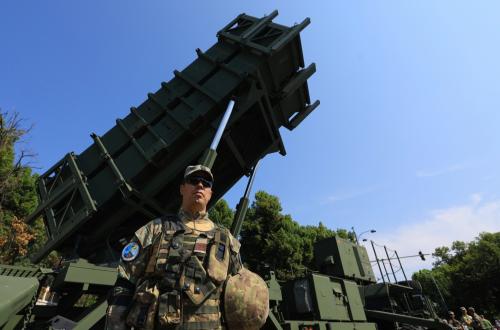
Saudi Arabia has bought US fighter jets, Patriot and Terminal High Altitude Area Defence (THAAD) air-defence systems, as well as a range of advanced weapons from France and the United Kingdom.
But Saudi Arabia has an extremely large area to defend. Its territory is roughly one-fifth the size of the United States, and threats come from three directions.
From the east, Iran launched about 1,000 missiles and drones at targets across Saudi Arabia during the most intense phase of this year’s conflict. From the north, Iran-backed militias in Iraq sent drones to attack the kingdom’s strategic East–West oil pipeline.
From the south, meanwhile, Iran-backed Houthi forces launched missiles from shelters and mobile launchers concealed in Yemen’s mountainous regions.
Defending Saudi Arabia means protecting an extensive network of strategic facilities, not simply the capital, Riyadh, or a single oil refinery.
According to Vision2030.ai, an independent website analysing Saudi Arabia’s economic transformation, the kingdom’s defence system must detect incoming threats, decide which targets to intercept and warn civilians within a very short time.
Saudi Arabia has succeeded in intercepting many missiles and drones launched by the Houthis. However, some projectiles have still penetrated its defences.
A source in Saudi Arabia said the Defence Ministry faced difficult choices in allocating the available air-defence systems, as so many critical installations could potentially be targeted.
Houthi military capabilities
The Houthis have learnt to combine ballistic missiles, cruise missiles and long-range drones to overwhelm Saudi Arabia’s air-defence systems.
The approach resembles Russia’s military strategy. Moscow often uses large waves of drones alongside cruise and ballistic missiles to launch repeated attacks on Ukraine.
Cruise missiles fly at lower altitudes, making them harder for radar to detect and track. The Houthis have also introduced a new generation of ballistic missiles which, they claim, can manoeuvre in flight.
No single air-defence system can guarantee that every incoming threat will be intercepted. But the Houthis’ growing weapons capabilities have not developed without outside assistance.
Eight years ago, United Nations (UN) experts identified remnants of missiles, related military equipment and military unmanned aircraft that originated in Iran and had reached Yemen despite an international arms embargo.
Two years ago, the same UN panel of experts said the scale, nature and extent of transfers of military equipment and technology to the Houthis from external sources were unprecedented. The assistance included financial support and training for Houthi fighters.
Experts have noted that the Houthis’ latest missiles, such as the Hatem-2 and Palestine-2, bear strong design similarities to Iranian weapons. The missiles are fast and have a worrying degree of accuracy.
Last year, a Houthi missile penetrated Israel’s air-defence system, which has long been considered highly advanced, and struck an area near Ben Gurion Airport.
Military analyst Amir Bar Shalom told CNN at the time that the accuracy of Houthi missiles was impressive.
“Their missiles are very accurate. If you launch one from a distance of 2,000 kilometres and it can still hit its target very precisely, that is an impressive achievement,” he said.
The Houthis have also modified Iranian air-defence weapons for use against aircraft and cruise missiles.
Brigadier General Majed al-Nazili, spokesman for Yemen’s government forces, said the weapons had relatively advanced target-tracking capabilities. “These missiles can stay in motion for up to 25 minutes per missile and operate using a thermal tracking system,” he said last month.
Source: jawawa.id (https://jawawa.id/newsitem/saudi-arabia-spends-tens-of-billions-of-dollars-yet-struggles-to-counter-houthi-missiles-and-drones-1791946262)
Originally published by Republika (https://news.republika.co.id/berita/tmvedg451/saudi-habiskan-puluhan-miliar-dolar-tetapi-kesulitan-hadapi-rudal-dan-drone-houthi), translated from Indonesian